Turning Japanese, I think I’m turning Japanese, in Kyoto.
Posted on August 6, 2010 1 Comment
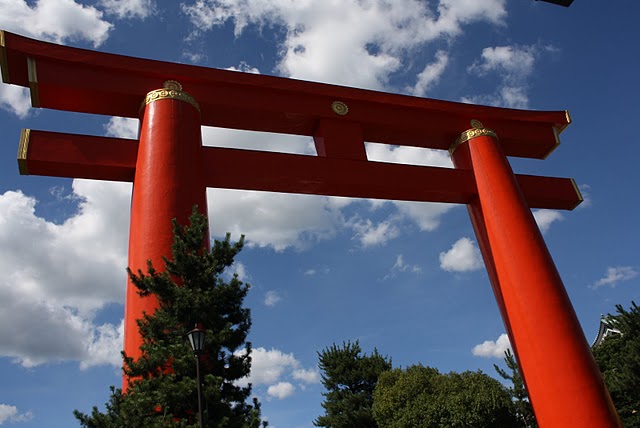
There are places I never dreamed I’d visit, art I never thought I would be worthy of seeing in person, food I never imagined sampling and landscapes too rich and wild that seeing them in person feels like a dream. Japan was on this list of “nevers.” That is until a week ago when Matt reminded me that due to work priorities and my need to spend two months of the upcoming Fall finding my way through the Australian outback, that we had one last chance at an adventure together before heading back to Seattle. We booked ferry tickets that evening and took off on what has been one of our most fulfilling, spontaneous and life-changing adventures to date.
 The beetle ferry from Korea’s southern port in Busan takes three hours to cross into Japan’s Fukuoka port city. With speedy and clean transportation and affordable rates this was the best option for us to get from Korea to Japan. Upon arriving at Fukuoka’s train station we broke one of the cardinal rules of travel: always check currency conversion rates. We boarded the bullet train headed for Kyoto after purchasing what we THOUGHT were equivalent to 29,000 won tickets. Three hours later after arriving at “bullet” speed to our next destination it occurred to us that we had just spent 29,000 YEN on train tickets. I’m not even going to convert to USD for any of you folks because it is just too painful to admit. Never the less the Shinkansen (new main line) is a scene in and of itself reaching speeds of 300km/hr! This was certainly the most luxurious transportation Matt and I will EVER have the pleasure of taking.
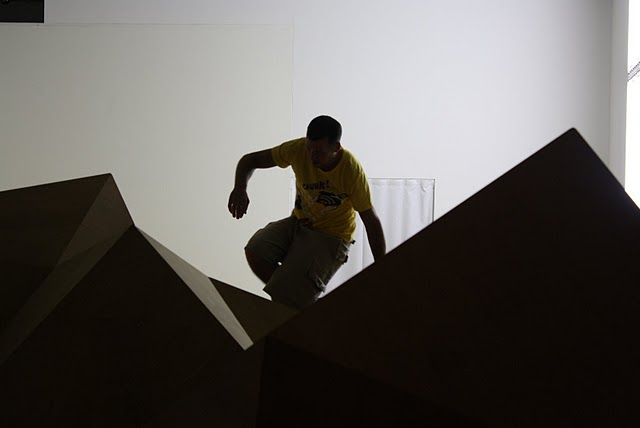
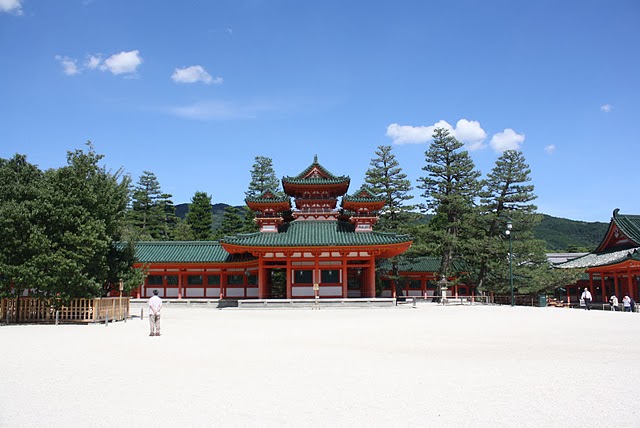
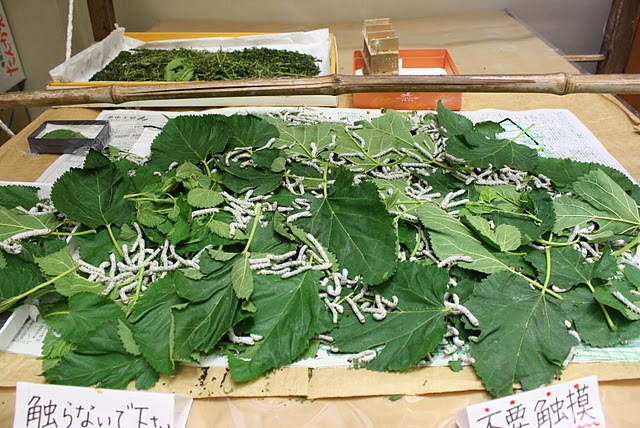
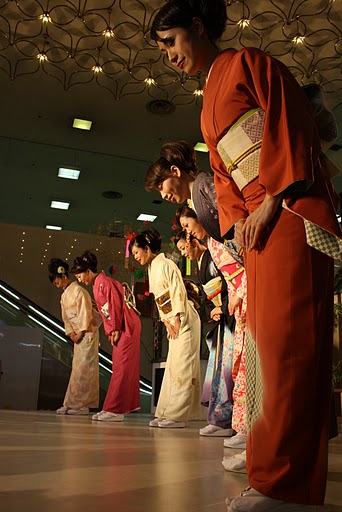
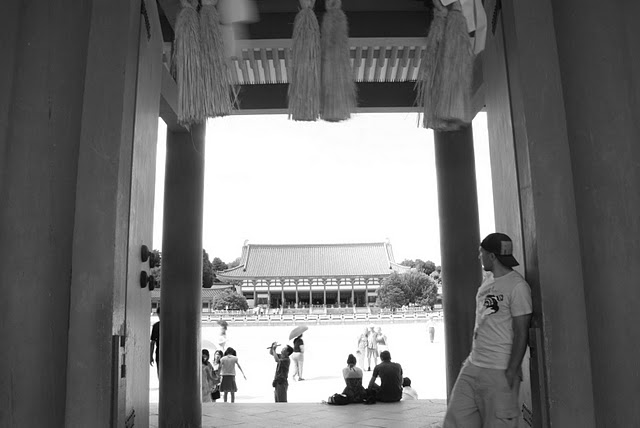
With only two days in Kyoto and plans to meet up with some long lost friends from Australia, we had a packed itinerary. First stop was the Higashi Hongan-Ji temple close to Kyoto’s train station. The temple was founded in 1603 and exists as a massive, gleaming reminder of Japan’s Daimyo rule. Each beam glitters with gold making this temple a dazzling must-see sight. Next up was the National Museum of Modern Art displaying Trouble in Paradise/Medi(t)ation of survival. We spent a good three hours playing in the museum’s second floor, hands on exhibition, exploring relationships between space and object. After hunting for silk kimonos and Geisha sightings in Nishijin textile center I was lured into a kimono fashion show where not only did I get to feast my eyes on dozens of beautifully handcrafted silk garments, but also had the pleasure of meeting the little green work-a-holics behind the scene, SILK WORMS! After purusingChicago for a second hand kimono, the Vapor’s “Turning Japanese” was officially on continuous play in my mind and I wanted nothing more than to live and breathe Japan the rest of my days.
We sampled sake into the wee hours in the famous Geisha district, Gion, and I quickly saw the international and quirky appeal of Kyoto. Within six blocks we hit up a wine bar, an underground reggae joint (underground I mean in the most literal sense as the music was completely mainstream but refreshing), the “Bob Dylan bar”, and a private party held inside a sake bar the size of a tea shop. A night-cap ontop of Kyoto-eki (train station) perfectly summed up a vibrant and whirlwind look at one of the world’s most intricate cities.
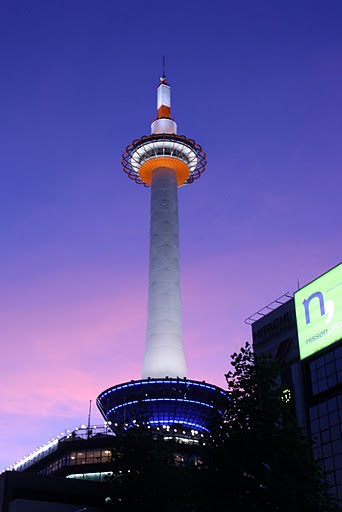
Maybe it was the company I was so fortunate to be sharing, old travel stories coming up for air, the sake, the delicate and meandering sidewalks, the neon signs perched next to edo architecture or that feeling of being back on the road, but Kyoto is where I fell in love with Japan and back in love with the hobby I have restled with the past year. I will never stop travelling and I would be a lucky lucky girl if I found myself back in Kyoto any day. Off for the climb of my life, Fuji here I come.
Jeju-do part 2: Jeju-Si
Posted on July 27, 2010 Leave a Comment
After three sun-drenched days in Jeju’s southern city: Seogwipo, we headed north along the coast toward the more metropolitan city: Jeju-si. There is an island bus that is on a loop route around Jeju, providing the perfect means to hop on and off when a sight, view or orange stand tickles your fancy. There is no all-day ticket from what we gathered so you have to pay the 1,500won fee at every pick-up, which adds up if you are like me and EVERYTHING in Korea tickles your fancy!
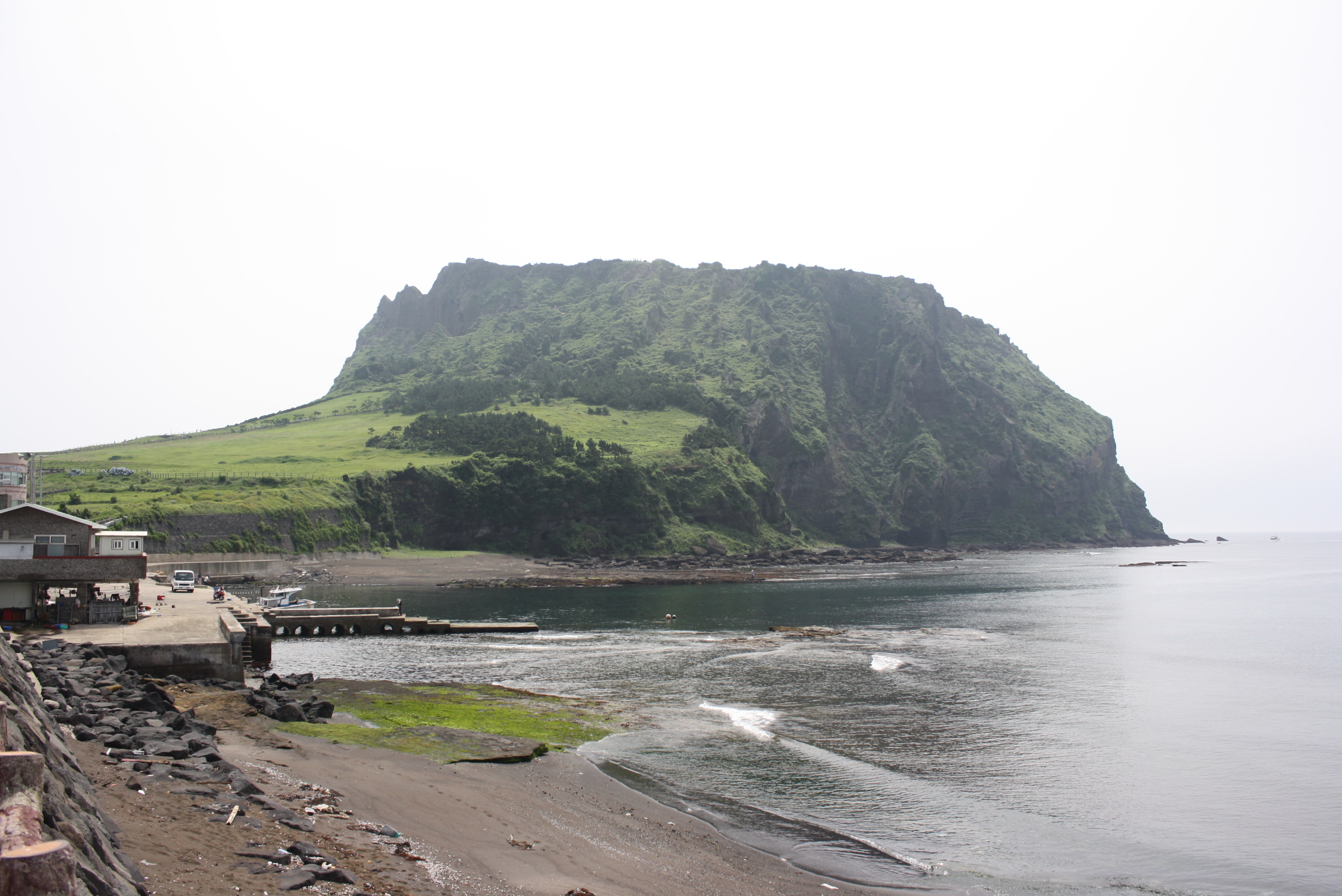
Our first stop was the sunrise peak Seongsan Ilchulbong Peak, the result of a volcanic eruption over 100,000 years ago that caused the peak to rise from the sea and form a massive crater spanning 600m in diameter at its top. The steep stairway up to the crater is brutal in Jeju’s muggy July heat, but well worth the buckets of sweat for the fantastic view of the island and sea you are awarded. If you are like us and carrying your packs, the very kind folks at the ticket office will gladly hold them for you while you make your ascent. Stop number two during our trip north to Jeju-si was the lava tubes. At only 2300won for an entrance, the naturally occurring lava tubes provide a mysterious place to cool off in Jeju’s summer heat. A sturdy pair of walking shoes and head-lamp are recommended due to the cave’s slick, dark atmosphere.
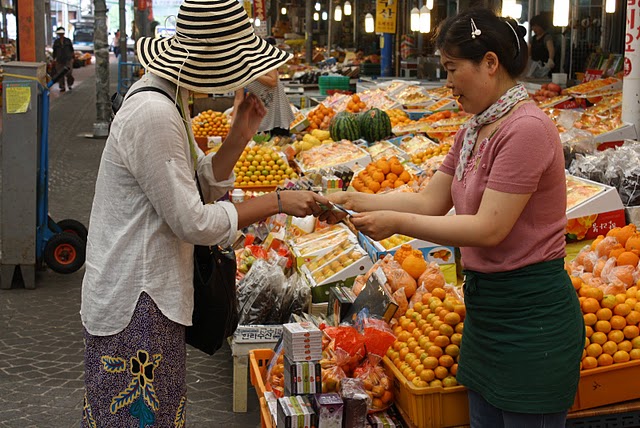
Once in the city limits of Jeju-si we spent the evening wandering the harbour and through the fish market. Although not quite comparable to Busan’s fish market, the Heanyeodivers present a fascinating tradition and history making Jeju seafood worth a try. Heanyeo are Korean female divers, a tradition that conflicts with Korea’s strong preference for men and values the ability for these women to provide for their family and continue a long-standing source of cultural pride in Jeju. Ancient shrines indicate that women have been diving off of Jeju’s shore since the beginning of food gathering in Korea, long before a common era.
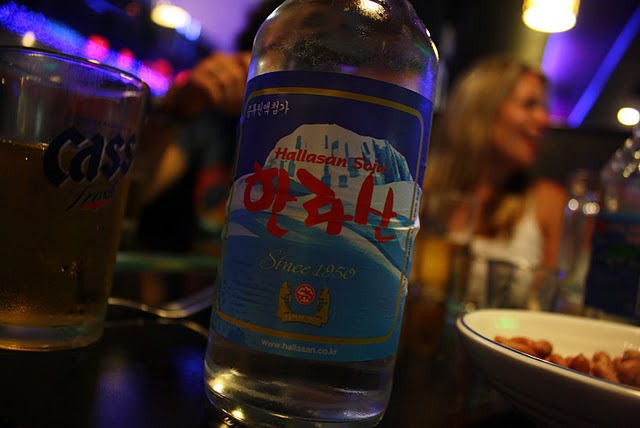
There are not many options for anything besides Korean food in Jeju-si, not a problem considering the seafood is fresh and delicious, but we did come across an Indian restaurant with outstanding food, great atmosphere and …wine…! In my top three reasons for leaving Korea this coming Fall is the shortage of quality, affordable and available vino, so when this Italian bred girl finds a restaurant fully stocked, chances are she will be back for more. Bagdad cafe is across the street from city hall, tucked in among the boutiques, nore-bangs and PC cafes and certainly worth a hunt. After a leisurely meal our party of six meandered into an underground nore-bang (singing room) and as per usual the night disappeared into a melodic, soju drenched haze.
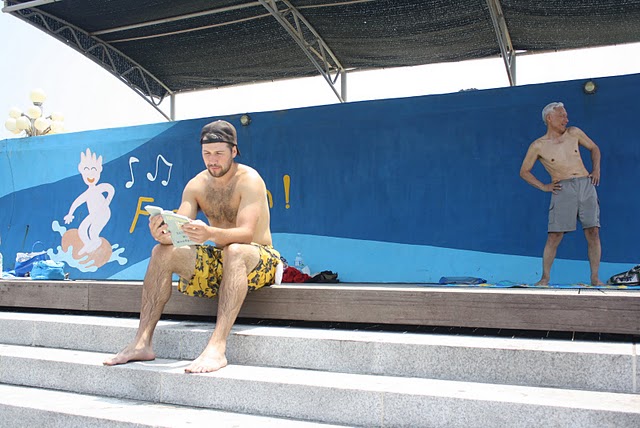
Our flight back to Busan was late in the afternoon of our last day, giving just enough time for one last dip in the ocean at Geommeollablack sand beach. Although swimmers are not allowed to go out past shoulder deep without frantic life guards pouncing in a whistling fury, the beach is quiet, the water divine and the locals so inviting and friendly that we wished for one more day of island life.
Leaving a vacation is always difficult for me, but that is the wonderful thing about expat life: it’s all an adventure filled vacation! There has been so much travel and play thrown into the mix of this year that my short lived career as a middle school teacher has flown by and I am left with tan toes, a full passport and fulfilled nomad soul….well almost fulfilled.
Off to Japan tomorrow to see for myself if the Korean/Japanese feud really exists and just how different their cultures are. Happy summer vacation to all you teachers, travelers and playahs.
Jeju-Do: Part 1 Seogwipo
Posted on July 13, 2010 7 Comments
Anyone who is a teacher can attest to the fact that we REALLY look forward to and even live for our vacations, and in Korea the options for long weekend getaways are endless! Last week Matt and I jetted off to Korea’s “Honeymoon Island” paradise: Jeju-Do. Jeju is a 45 minute flight from Busan’s Gimhae airport making it the perfect 2 or 6 in our case, day getaway. So with our students in the throws of finals week we took advantage of our days off and reveled in Jeju’s juicy orange breeze, black sand beaches and golden rays.
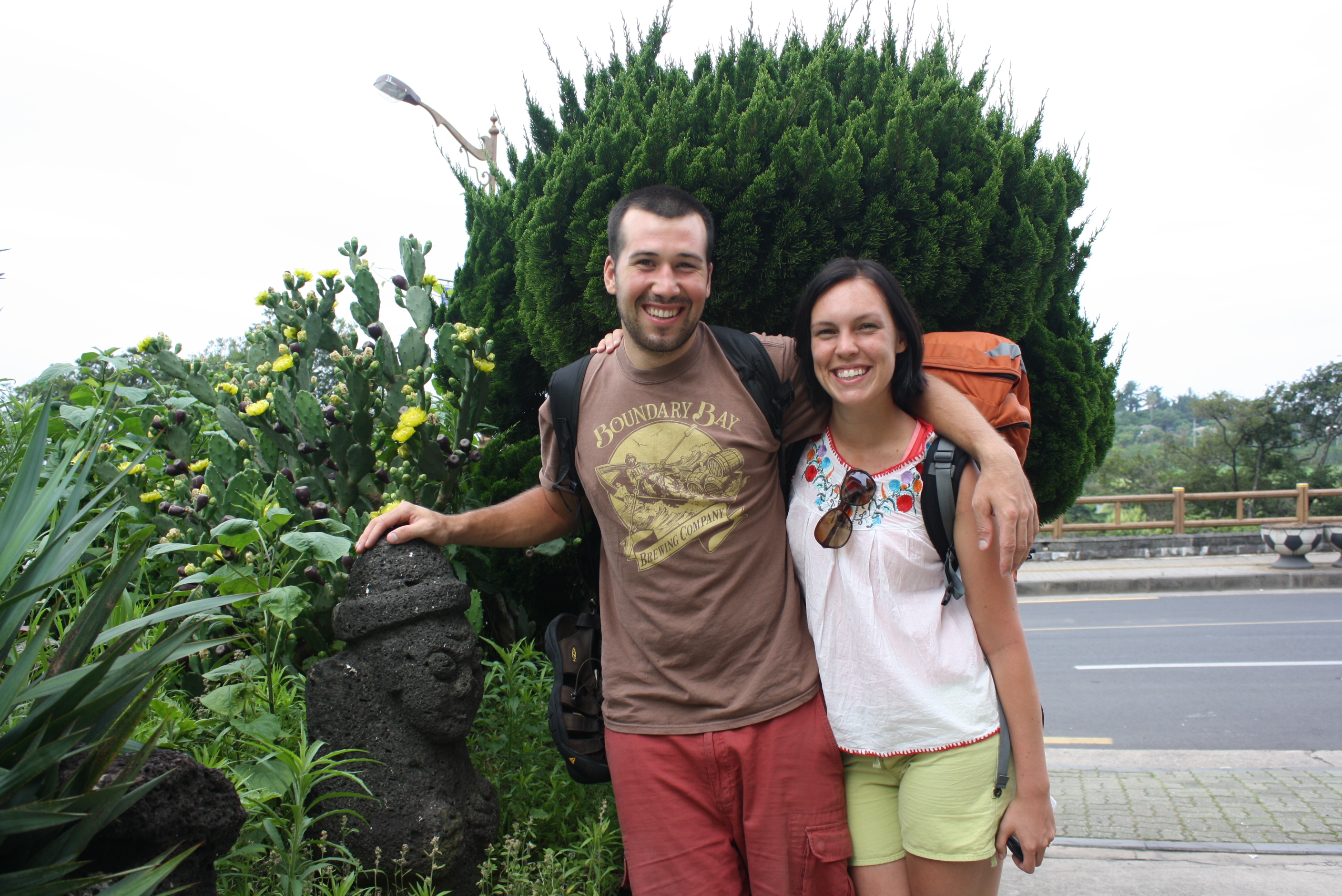
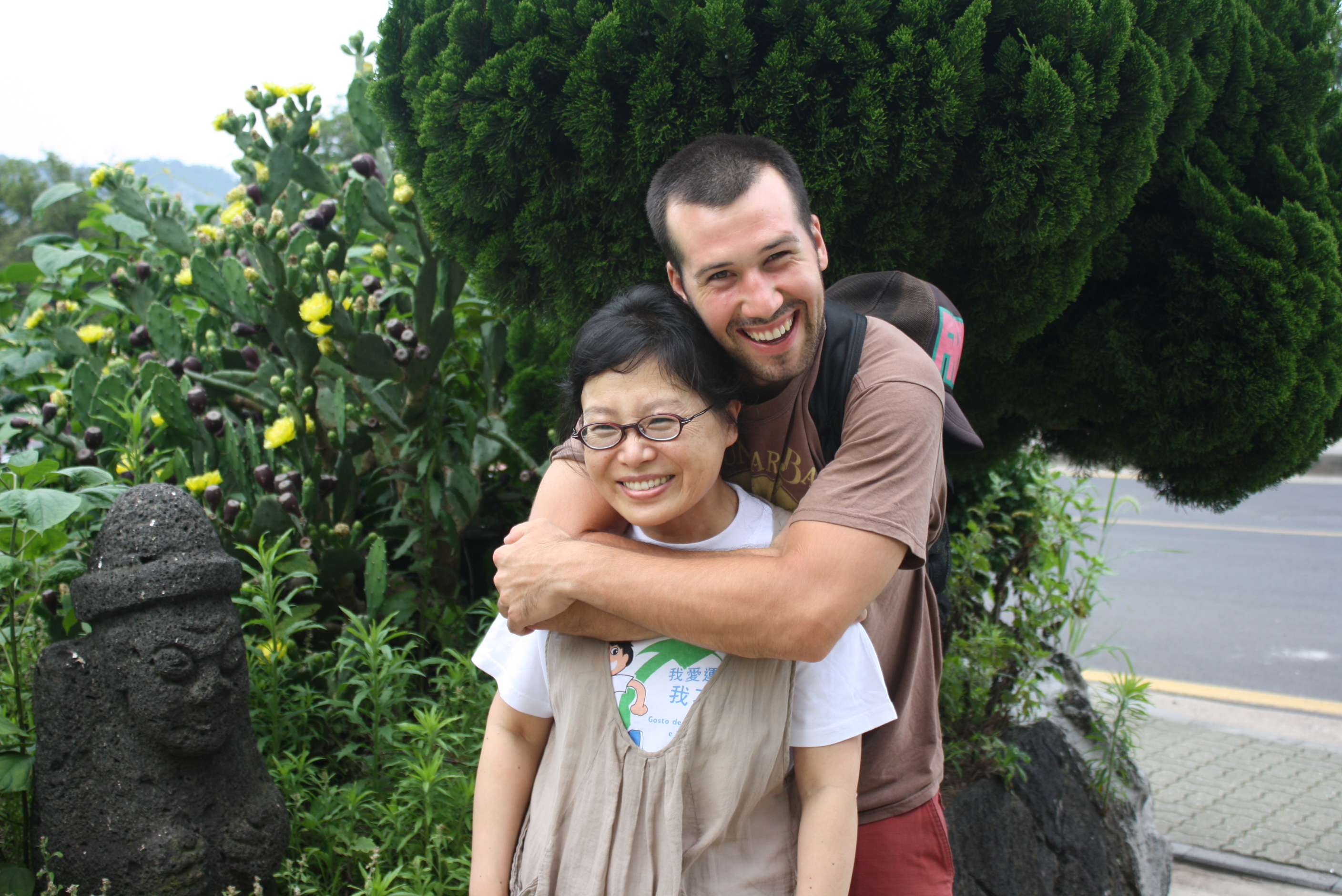
We opted to hop on the island commuter bus and head as far south as we could after landing in Jeju’s airport on the North of the island. Seogwipo is a lovely beach town in the South with mangroves, a plethora of interesting and corky museums and posh hotels. We stayed in what I will safely claim as my favorite hostel…in the ENTIRE world: Tae Gong Gak. Now I have to briefly sidetrack for a moment to bring attention to the momentous nature of this claim. I began hosteling at age 19 and have stayed in the likes of the Peace and Love hostel/absinthe bar in Paris, a beach bum hammock hangout in Mal Pais Costa Rica, an all night party crash pad just off time’s square and above a rowdy Irish pub, a tiki hut with 5am rooster alarm and 24hr cold San Miguel in the Philippines and I can’t forget the log cabin in the middle of the Olympic national park complete with morning wood chopping and banana pancakes. While each and every hostel has its charms; like Hostel Sol in Naples with their staff led pizza tour and free lasagna night, or Chicago’s HI free architecture tour and impeccably clean and organized facility; Jeju-do’s Tae Gong Gak hotel has it all. Sylvia and Peter who run the hotel make a point of not only remembering your name, your itinerary while on the island and where you have traveled from, but they make themselves available 24/7 with suggestions, tips and general care and concern for the enjoyment and well being of their guests. While the hotel is a bit more expensive than most backpakers at 50,000won a night for an ondol room, the clean facilities, location and standout breakfast (bagels, cream cheese and french press coffee are not easy to come by in Korea) make your stay well worth the price.
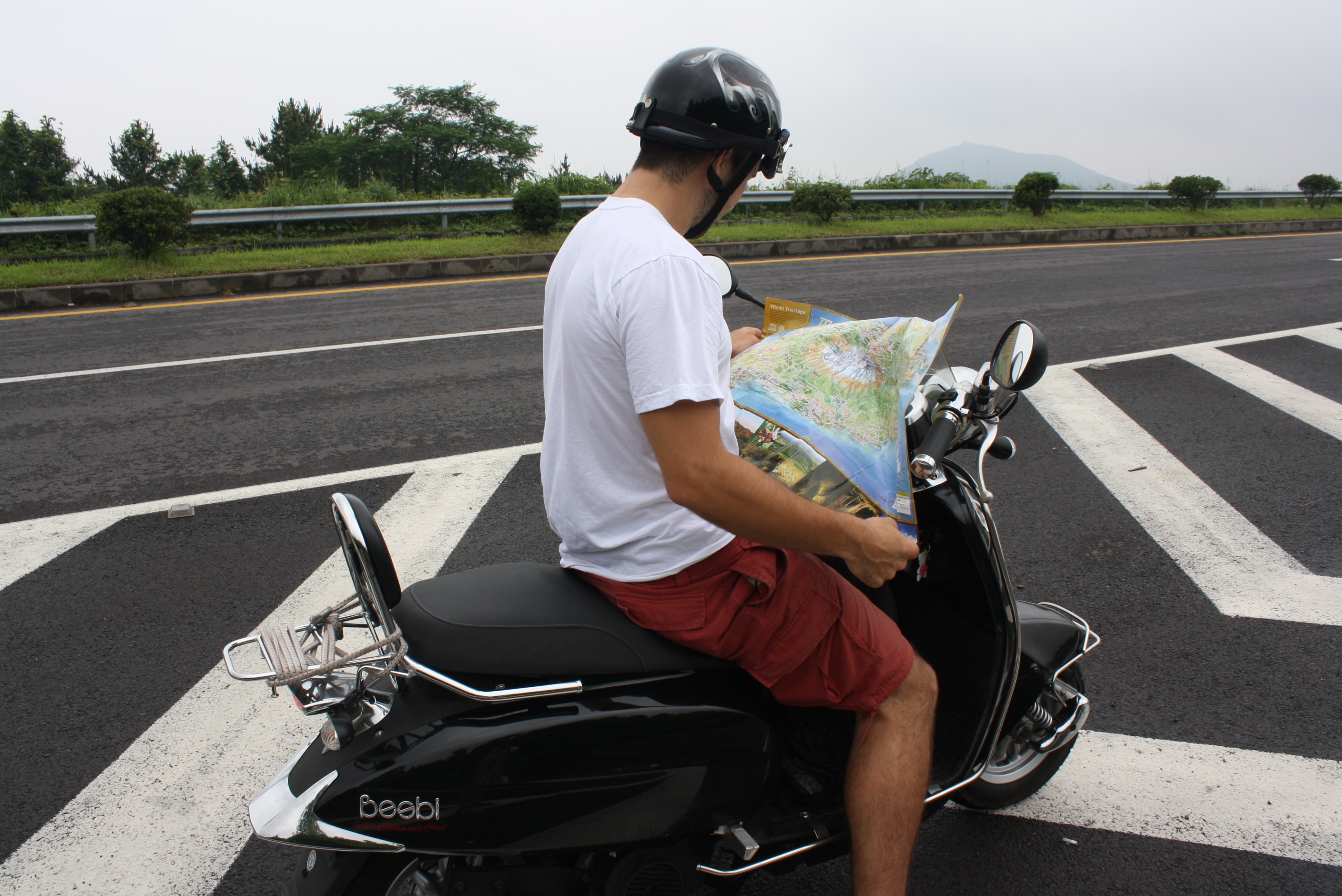
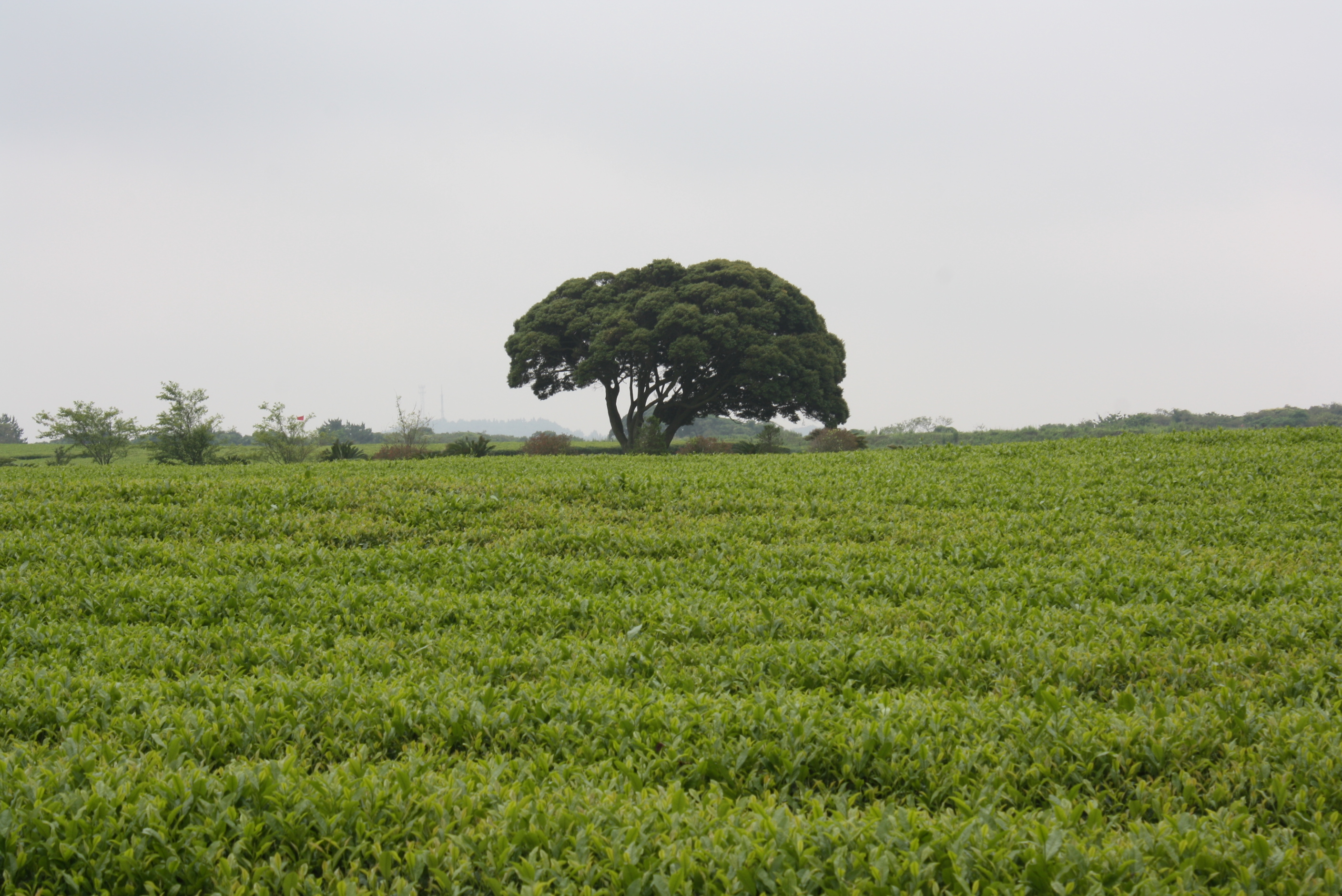
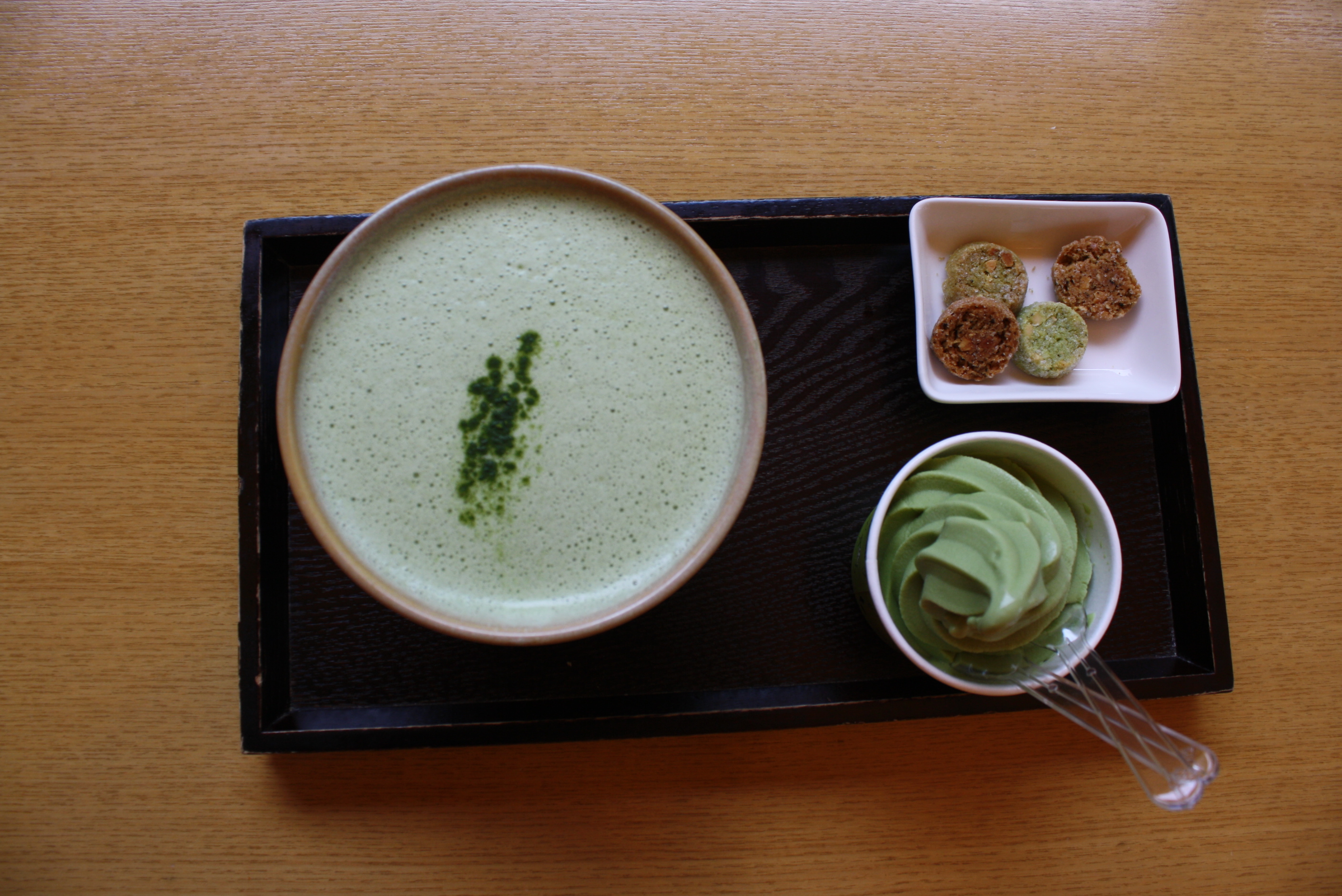
On our first day in Seogwipo we bee-lined it to a scooter shop to pick up some wheels for the day. Jeju has ample bus transportation but with so many sights to see and a lot of ground to cover a car, scooter or at least a bicycle are good options unless your itinerary is relaxing on the beach with a good book…not a bad idea either! Neither Matt or I have an international driver’s license, but this didn’t prove to be a problem when renting a scooter on Jeju, although chances are you will need one for a car rental. We payed 30,000won for a full 24hrs with our cute retro bike and off we went to the green tea museum. The museum itself is small, boasting a hallway of tea sets from around the globe and an upscale gift shop but what really drew me was the architecture of the building and its lush, green surroundings. The building is a mix of floor to ceiling glass panels, un-finished wood and cement, translucent enough to blend into the landscape making it look like a modern hobbit hut. The grounds are absolutely breathtaking with green tea plants as far as the eye can see. The museum cafe also has over-priced, but un-avoidably green snacks that were too tempting to pass up.
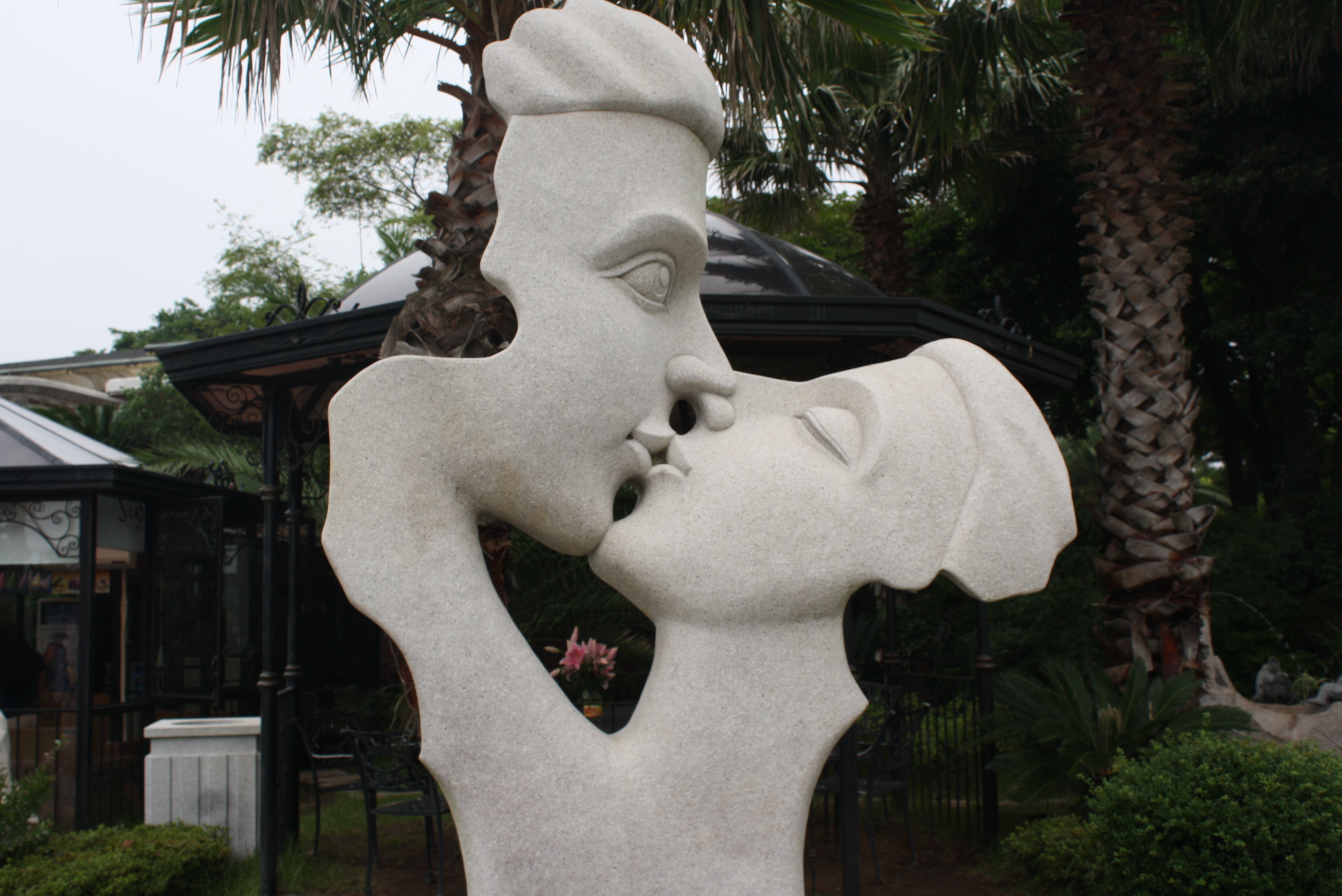
Our next stop was the chocolate museum, mostly in hopes of free samples. I’m not sure if it was the sign that reads “Christmas every day” or the lack of samples that turned me off, but the museum was a bit of a disappointment, miles from anything and in serious need of some updates, and an overhaul of all Christmas related decor. Admission at only 2,000won including a free cup of coffee made it at least a comical stop on our way to the Sex and Health museum. In our defense, Matt is a certified P.E and health teacher and I, aside from having a perverted sense of humor, was greatly interested in the rumored “Sex sculpture garden.” The museum’s parking lot is larger than the building itself and was packed with cars.*Remember Jeju IS the number one honeymoon destination for Korean newlyweds. Inside is everything you would expect from the museum’s title: a rotating stage of manicans in various sexual positions, statistics of everything from average number of partners, to average time spent on foreplay, and a complete sensory playground with various scents, textures and sounds to delight visitors. I was making a bee-line for the exit after discovering that there were no English options on any wall captions and that someone had accidentally left the Pamela Anderson look alike doll “on” who’s moans could be heard throughout the building. I gave the museum another chance when I came across the Chinese scroll and tapestry room depicting courting traditions of early Chinese emperors. These works of art held my attention long enough for Matt to find me and us to call our museum tour a success.
That evening, after sampling some of Jeju-do’s famous Black pig Sam-gyup sal we visited the Cheonjiyeon waterfall. The waterfall is a sight at night when it is lit up and Korean couple’s in matching clothes stroll romantically through the park’s windy pathways. We hit the hay early in preparation for our early morning ascent to the top of South Korea’s tallest mountain Hallasan.
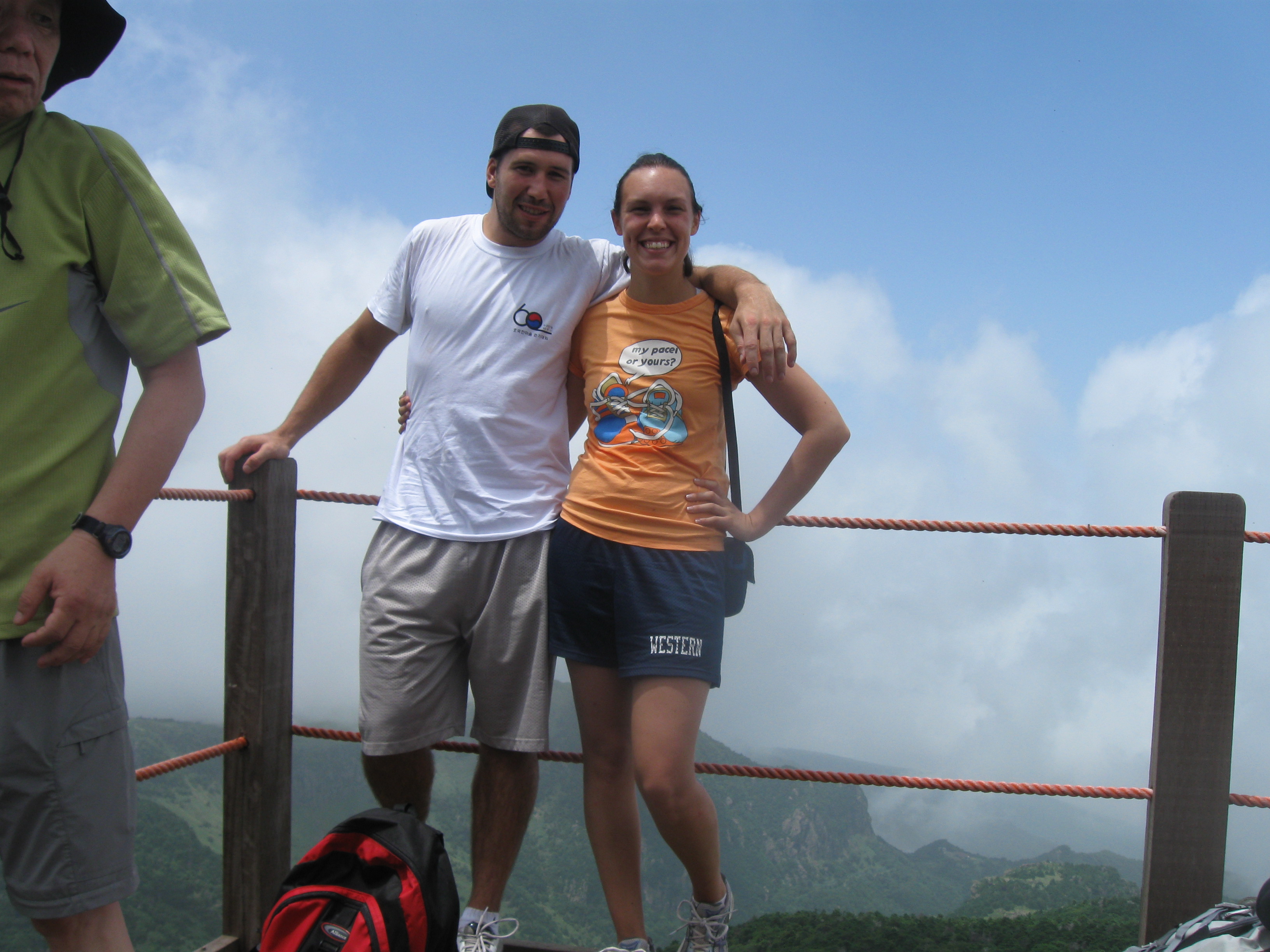
Hallasan is easy enough to get to from Seogwipo by 30min bus ride. There are two routes commonly taken to get to the crater at the top of the volcano peak and we opted to take the longer but less steep 10K route (Seongpanak) up and the 8.7K steep trail (Gwaneumsa) down. The view from the top is not much on a cloudy day but we were able to see the crater and after nearly seven hours of hiking we felt blissfully exhausted and proud of our accomplishment.
Our last day in Seogwipo we spent on bikes cruising to Jungmun beach. The island is actually great for biking because of its smooth paved roads and limited traffic but I’m not sure I’d recommend the hilly course from Seogwipo to Jungmun the day after hiking Hallasan. Stopping at the Hyat hotel for a glass of wine was an absolute must once we made it to the beach. We spent a glorious afternoon playing in the waves, observing Koreans fully clothed brave the water and truly loving all that Jeju has to offer!
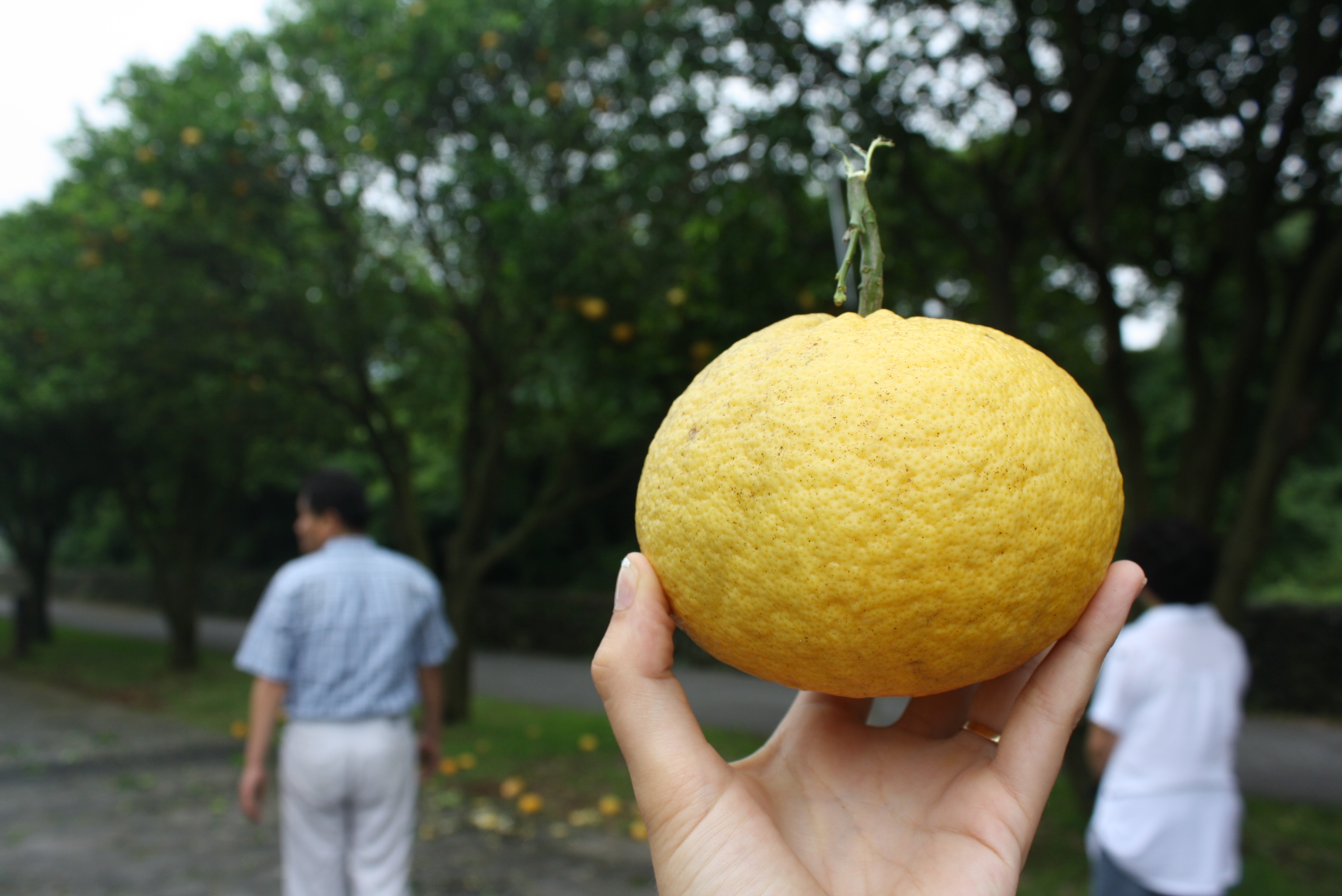
Stay tuned for part two of our trip to Jeju, hope you are all enjoying some vacation time this summer season!
Game 4: And that’s a wrap…crap!
Posted on July 1, 2010 3 Comments
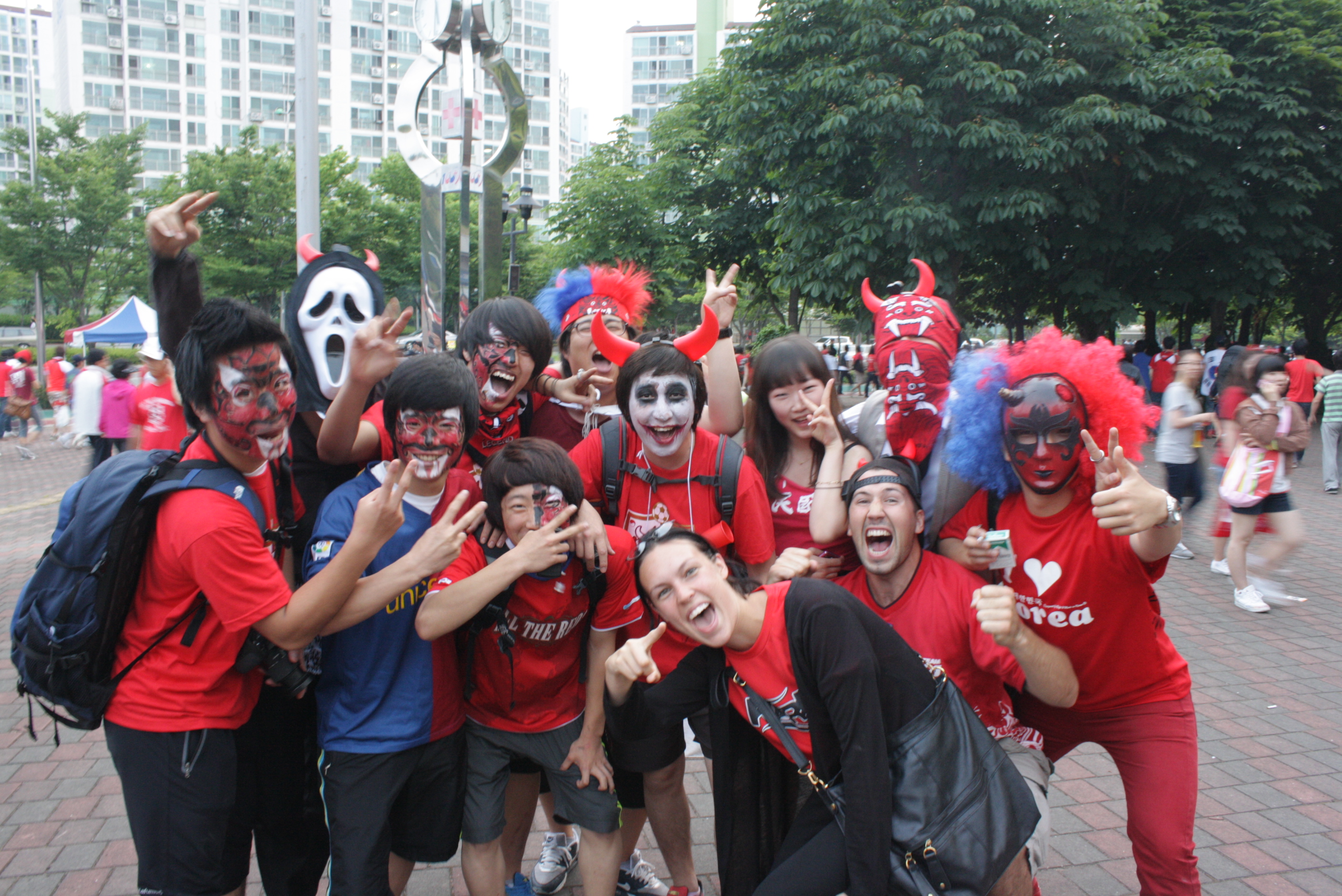
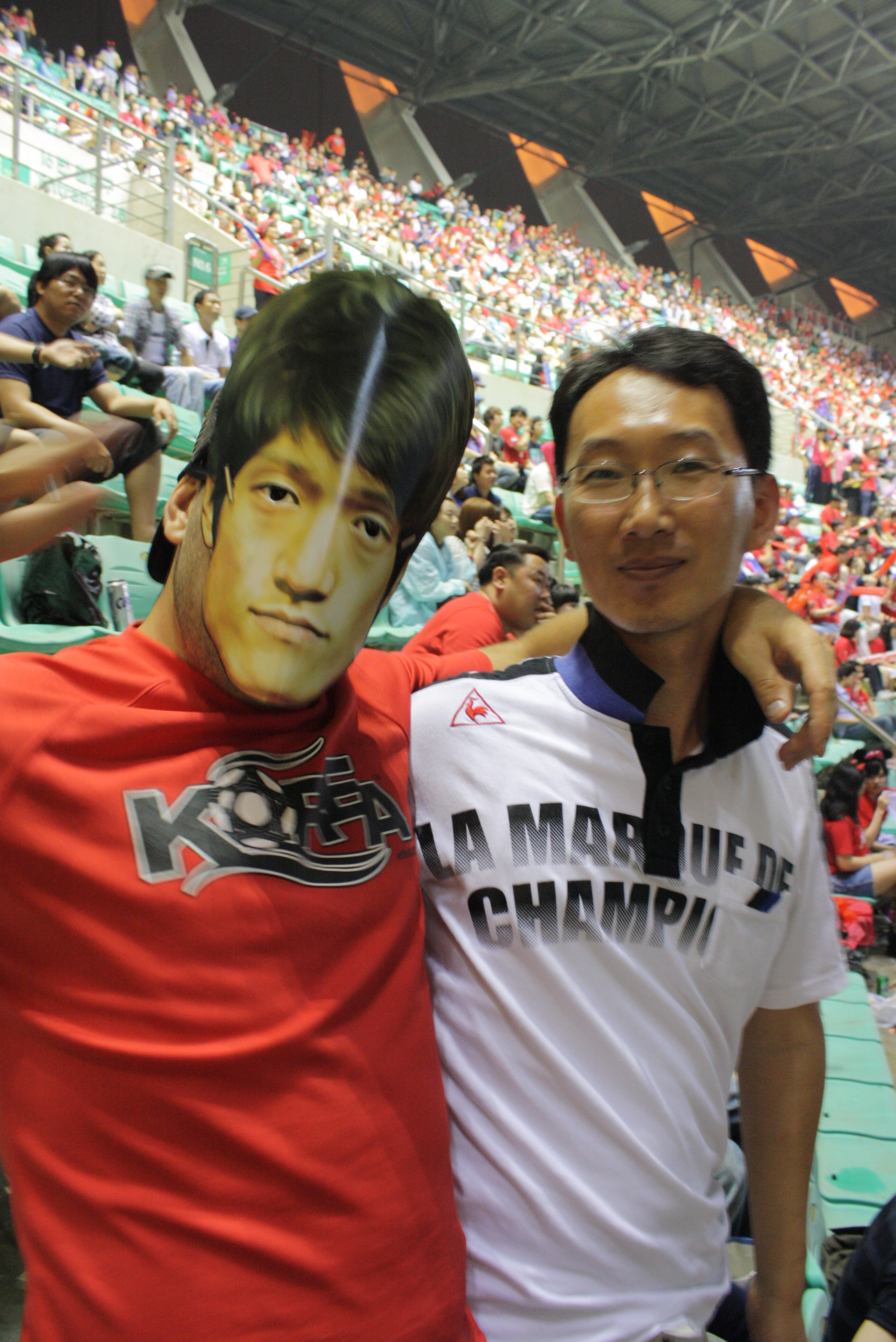
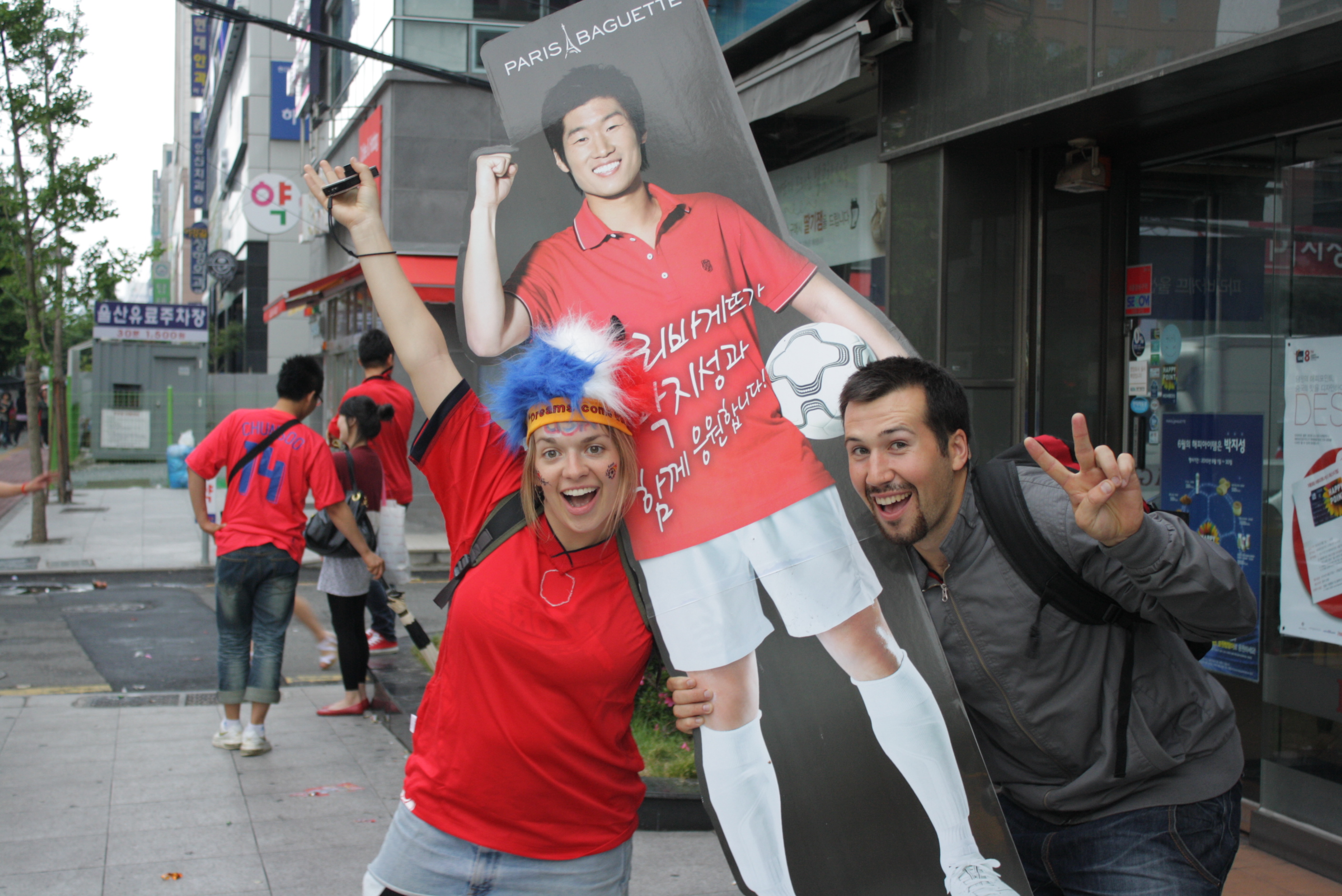
While I will NOT miss attending 3am games mid-week in the pouring rain after a night of watching four hours of play by other teams that I support, the thought that I may never again hear “Dae Hamin-Guk” chanted througout the day or have another chance to dawn my red devils jersey and Park-Ji Sung face mask to work nor will I be able to fill a 45 minute lesson teaching middle schoolers numerous world cup songs from around the globe…makes me wish Korea opperated in world cup mode on a regular basis.
Here’s how it went down: Korea’s tie with Nigeria 2:2 put them through to the next round of 16 teams. Fantastic game to watch! I showed up at 3am to the outdoor stadium in Ulsan with my mug of coffee in one hand and noise maker in another. Even if I decided to try and sleep through this early morning game my efforts would have been in vain, with car horns beep-ing out chants and everyone from my school principal to the old woman who sells me salt on the corner out to support Korean national heros. I was home by 6am with just enough time to re-group and head out for work…what a day!
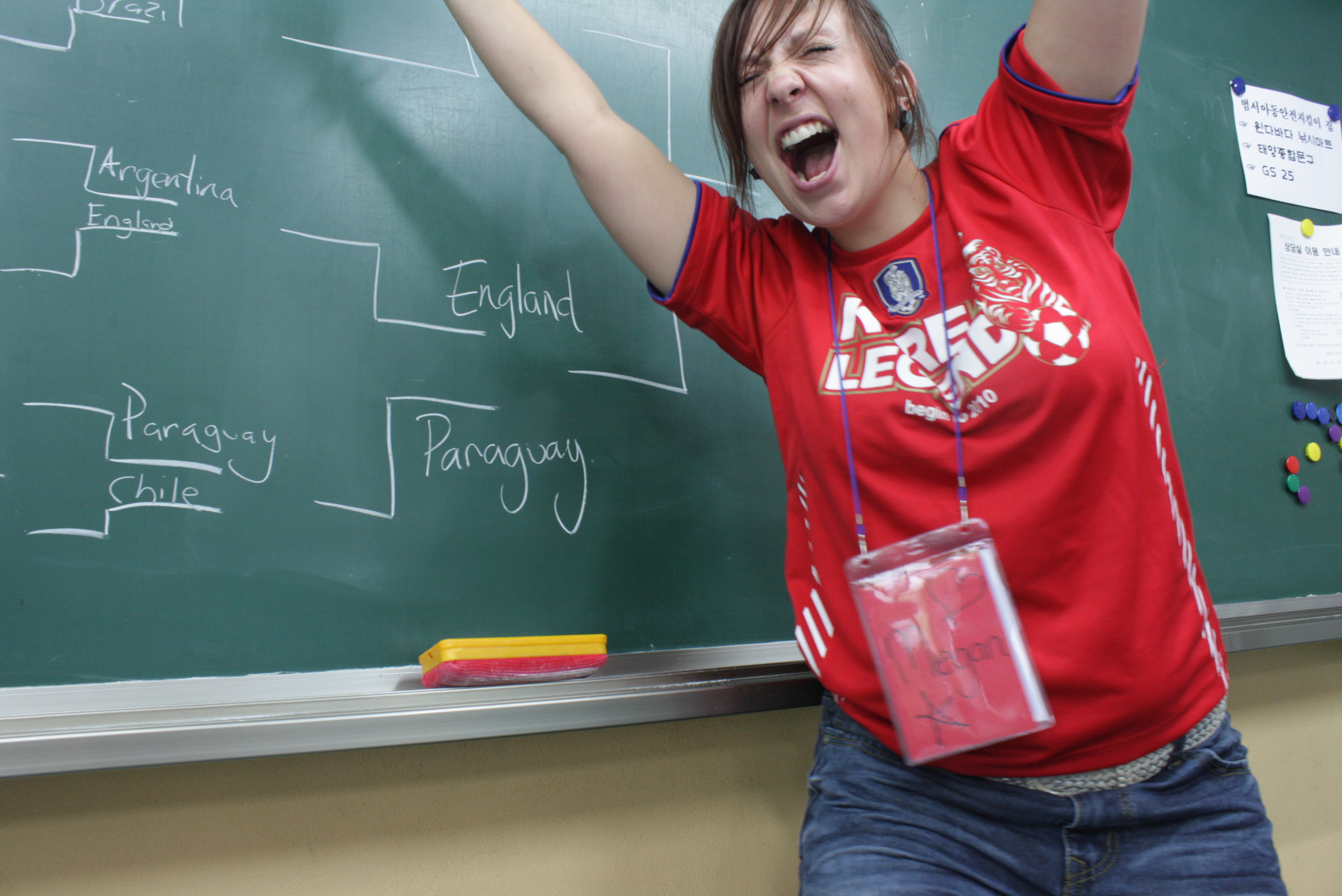
Game four rolled around with a lot on the line for me as an American living in Korea. South Korea was due to play Uruguay in an automatic elimination round while America was taking on Ghana the same weekend. Everything went sour from here. Uruguay led with a 2:1 win over Korea and Ghana hung on in overtime with a 2:1 win over the USA. The majority of Expats in South Korea are American or English so coupling Korea’s and America’s loss with the defeat of England to Germany has put Ulsan in a funk so deep it will take more than a night of norebang and soju to cheer us up.
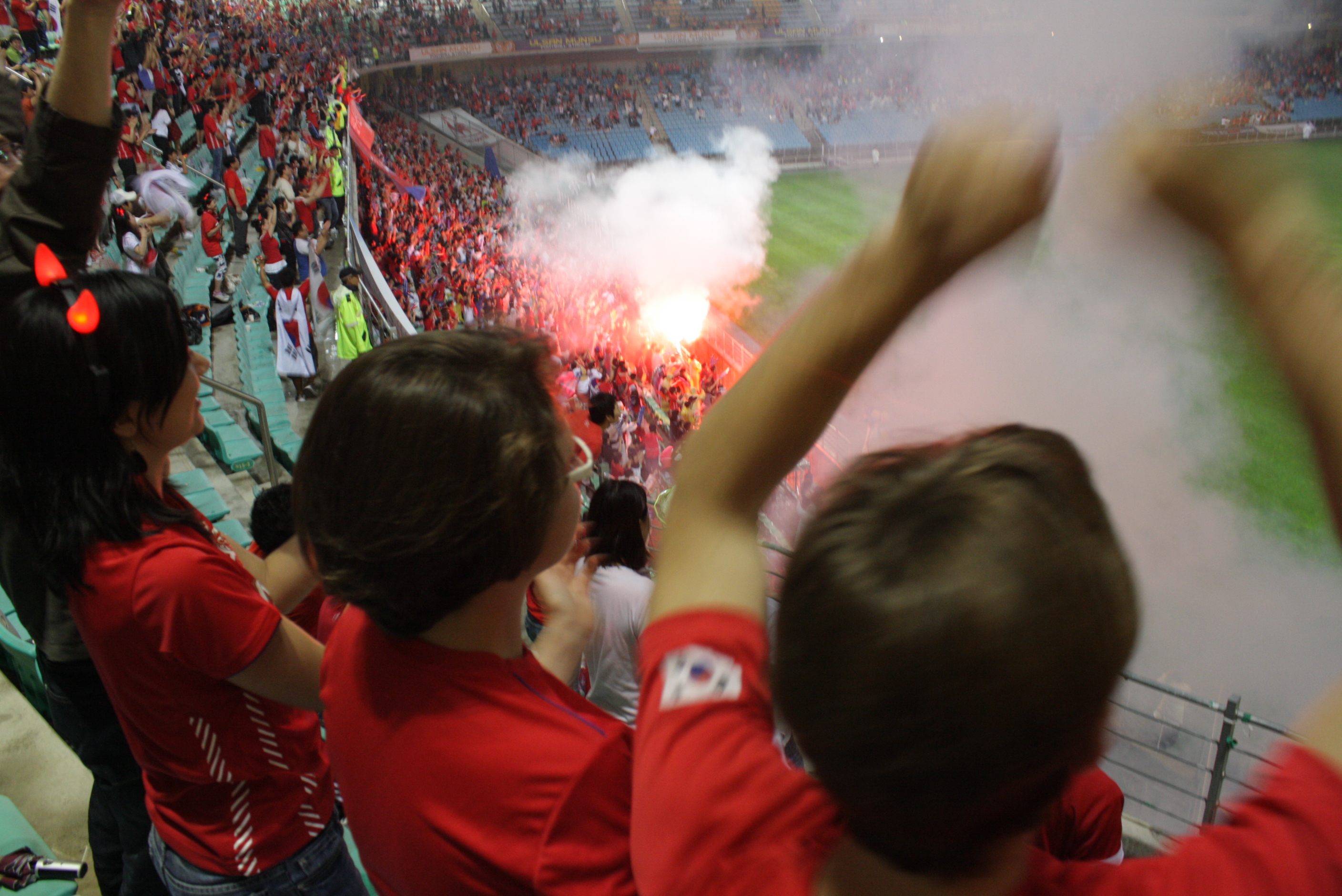
The world cup lives on and I am certainly still watching, but I have to wonder: What will become of the chants, the masks and the red devils? Enjoy some wrap up photos and a special congratulations to Spain for their win over Portugal!
Week 1: We Win Some and Sometimes We Get Schooled
Posted on June 20, 2010 2 Comments
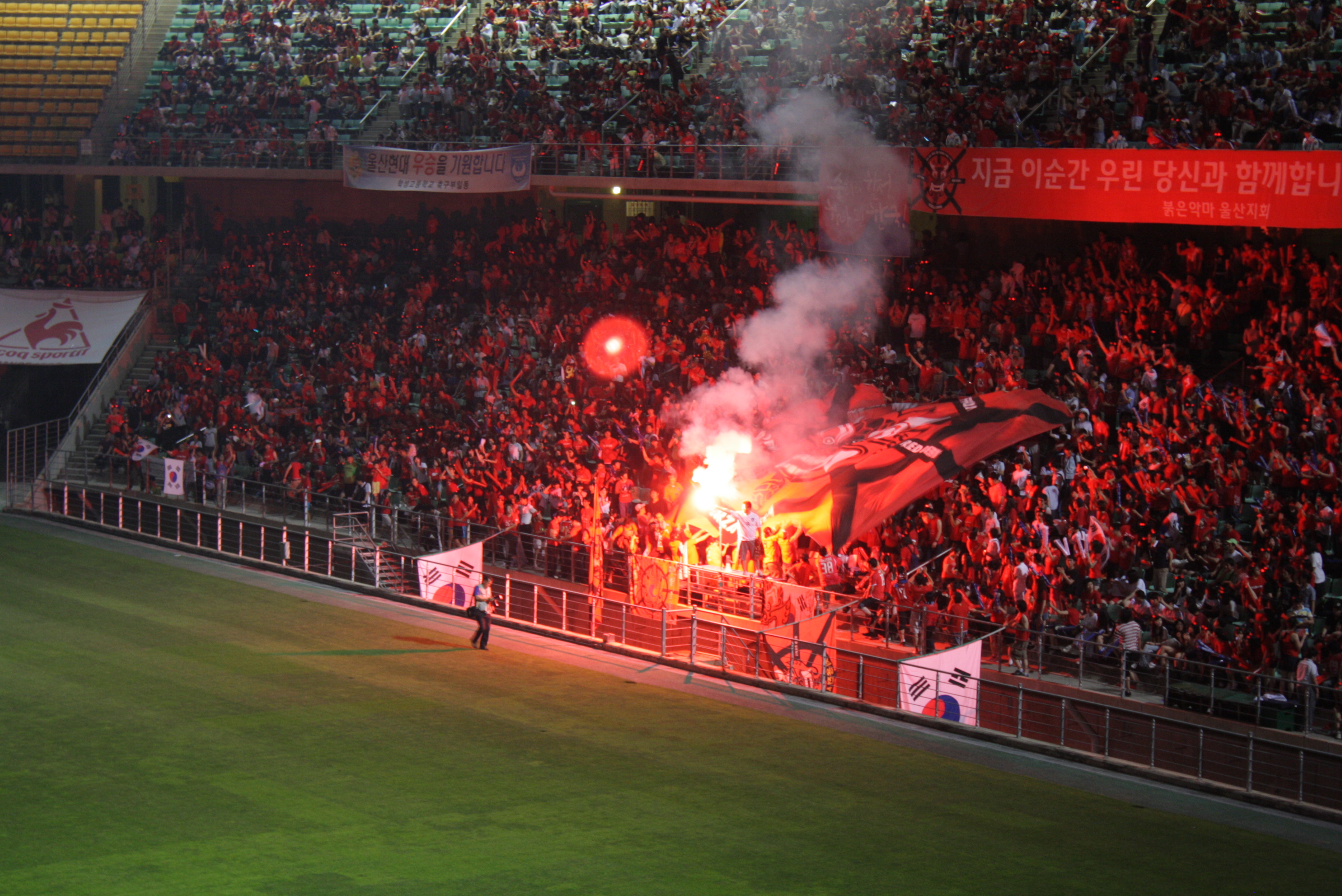
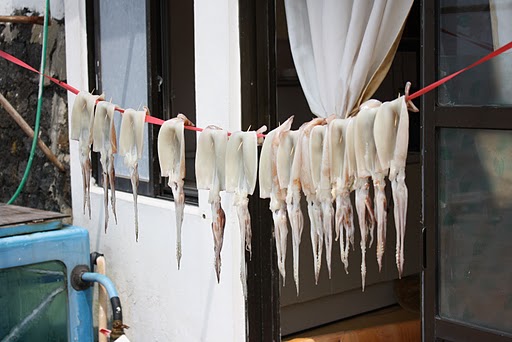
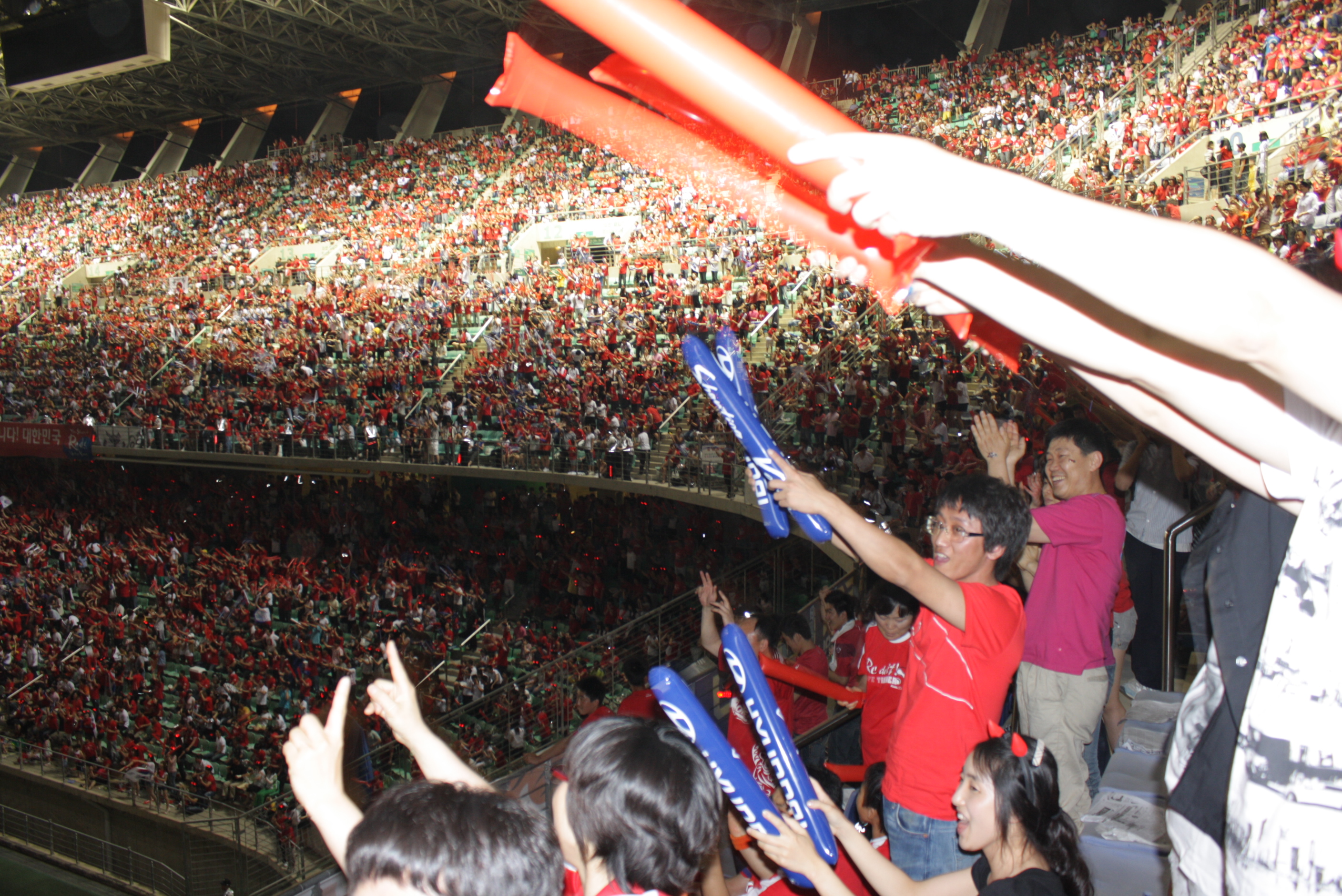
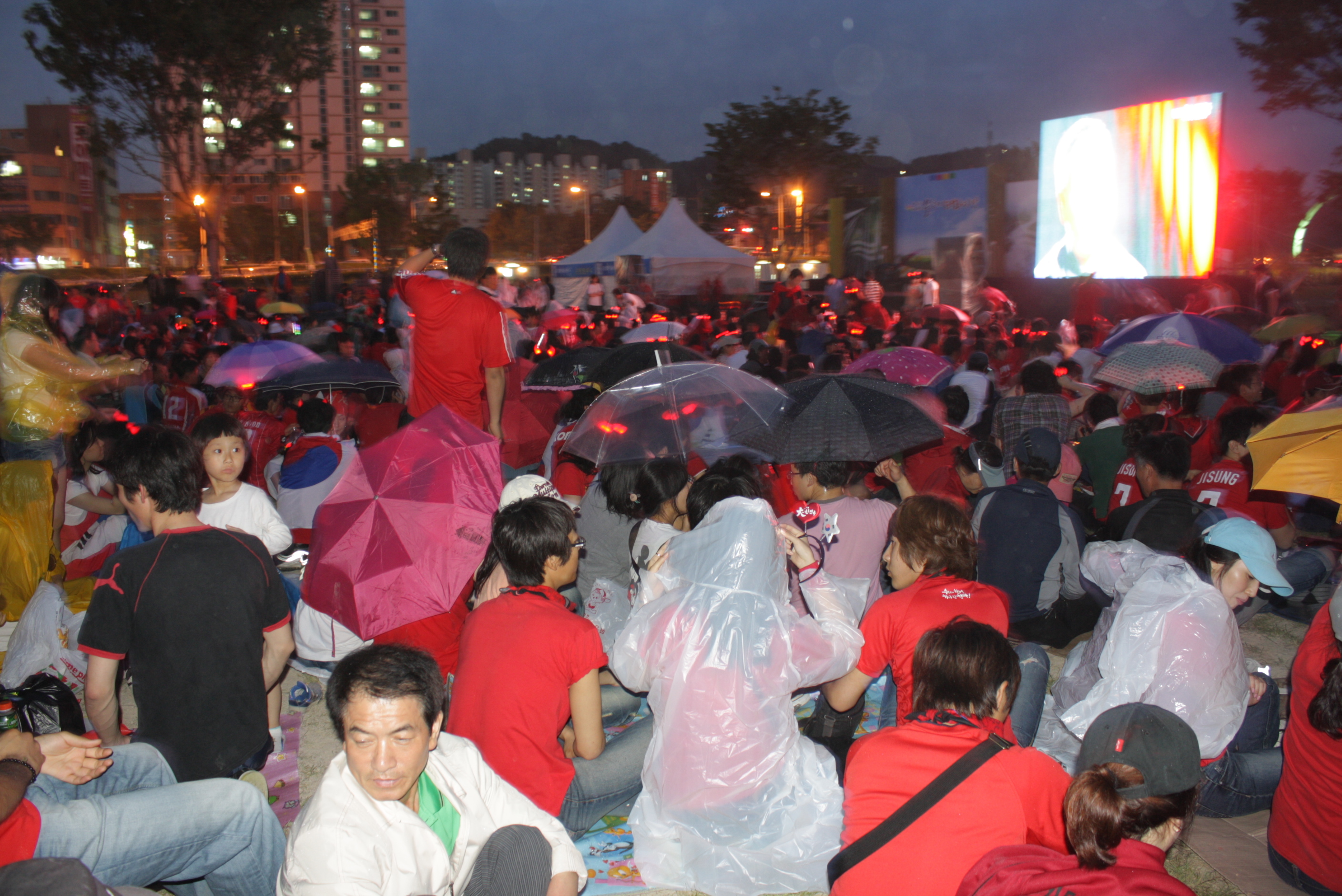
Korea is a convenient place to watch the world cup because of the seven hour time difference between South Africa and Seoul. Games play at 8:30pm, 11:30pm and 3:30am daily so for the Korea vs Greece game fans had plenty of time to throw back a few bottles of soju, cover themselves in face paint, put on every piece of red clothing they could muster and make it to the nearest park, stage or pub before the 8:30 kick-off. Walking up to Taewha river park in Ulsan can only be described as what it must look like walking into Hell with thousands of red faced fans wearing glowing devil horns, banging drums and sticks together chanting Korean game cheers. With Jung-Soo Lee’s first goal against Greece the audience erupted even before the fireworks did and by the second goal Korea was in a state of perpetual celebration. Hite, kimchi and dried squid were passed through the crowd, and nothing but “Dae Hanmin Guk!” could be heard for miles. I drug my cheer weary lungs home at 6am after watching a surprising draw between England and the USA and had sugar plums and Park ji Sung dancing in my head until the next afternoon.
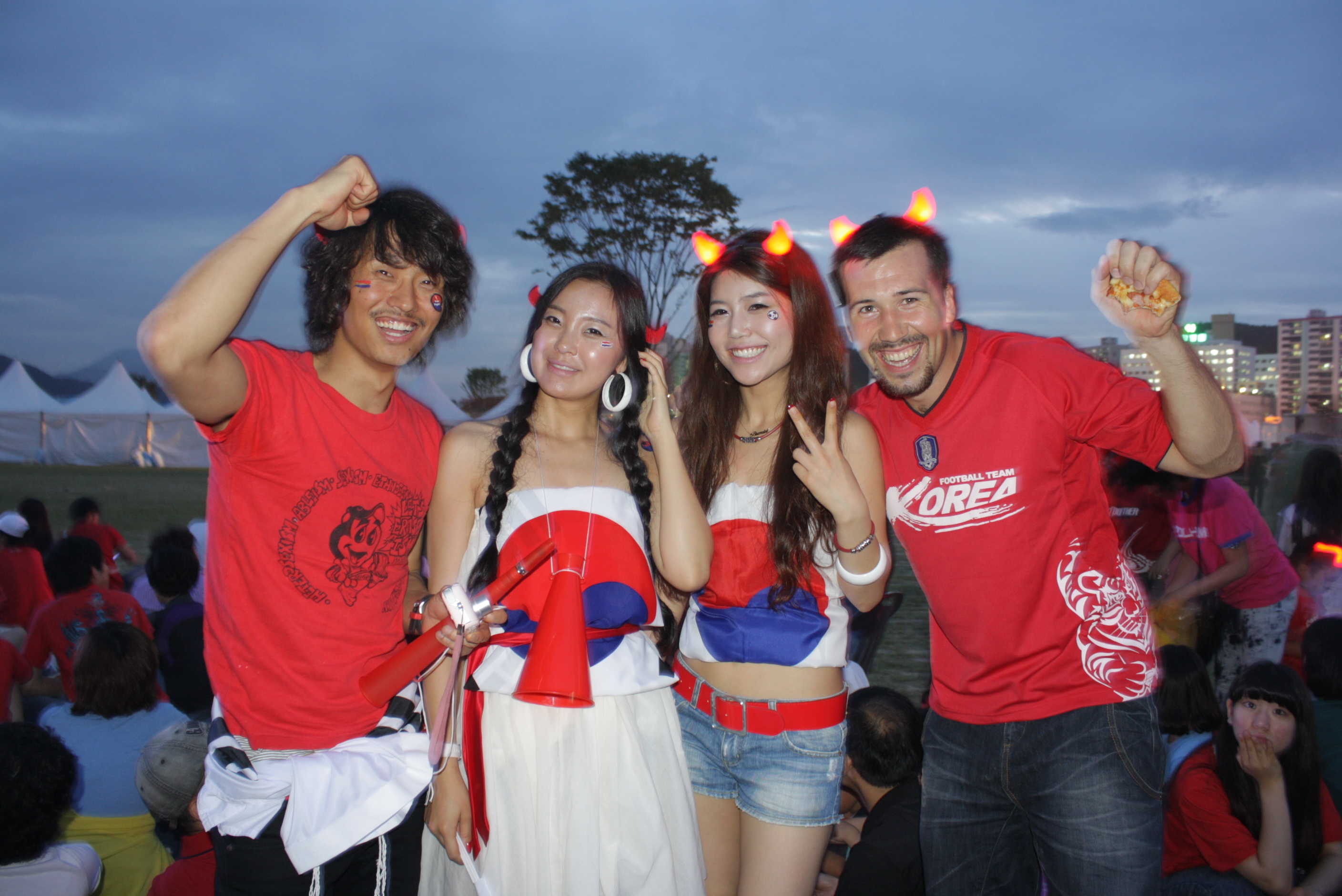
Game two for Korea was an expected but devastating defeat against Argentina. The stadium across the street from my house in Ulsan packed 15,000 people in to watch the game live on a flat screen and dedicated fans cheered right through Higuain’s goal streak. I have always known Korea to be a patriotic country but the extent of their loyalty has not been crystal clear to me until now. It was a rough Friday at school with middle schoolers in tears pleading with me to teach them swears and insults in English that they could hurl at the Argentinian team. The one phrase that I felt appropriate and that I am sure will now never hear the end of is “you got schooled.”
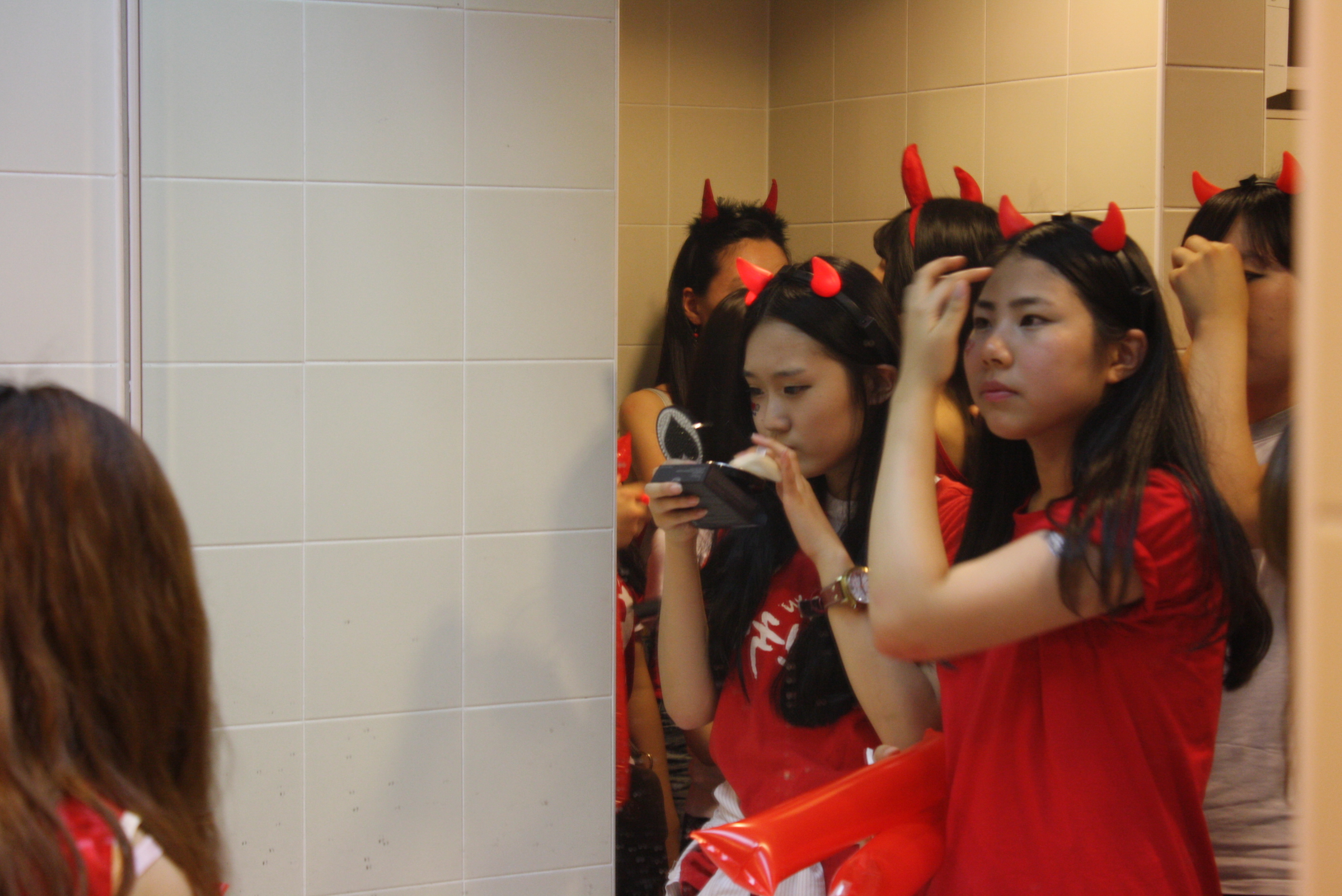
With Korea’s next game to be played against Nigeria at 3am I would expect a smaller crowd this coming week, but something tells me Koreans will be out in full force to stay up through the night to support the Red Devils with unwavering adoration and pride. Stay tuned…
World Cup Fever in South Korea
Posted on June 7, 2010 5 Comments
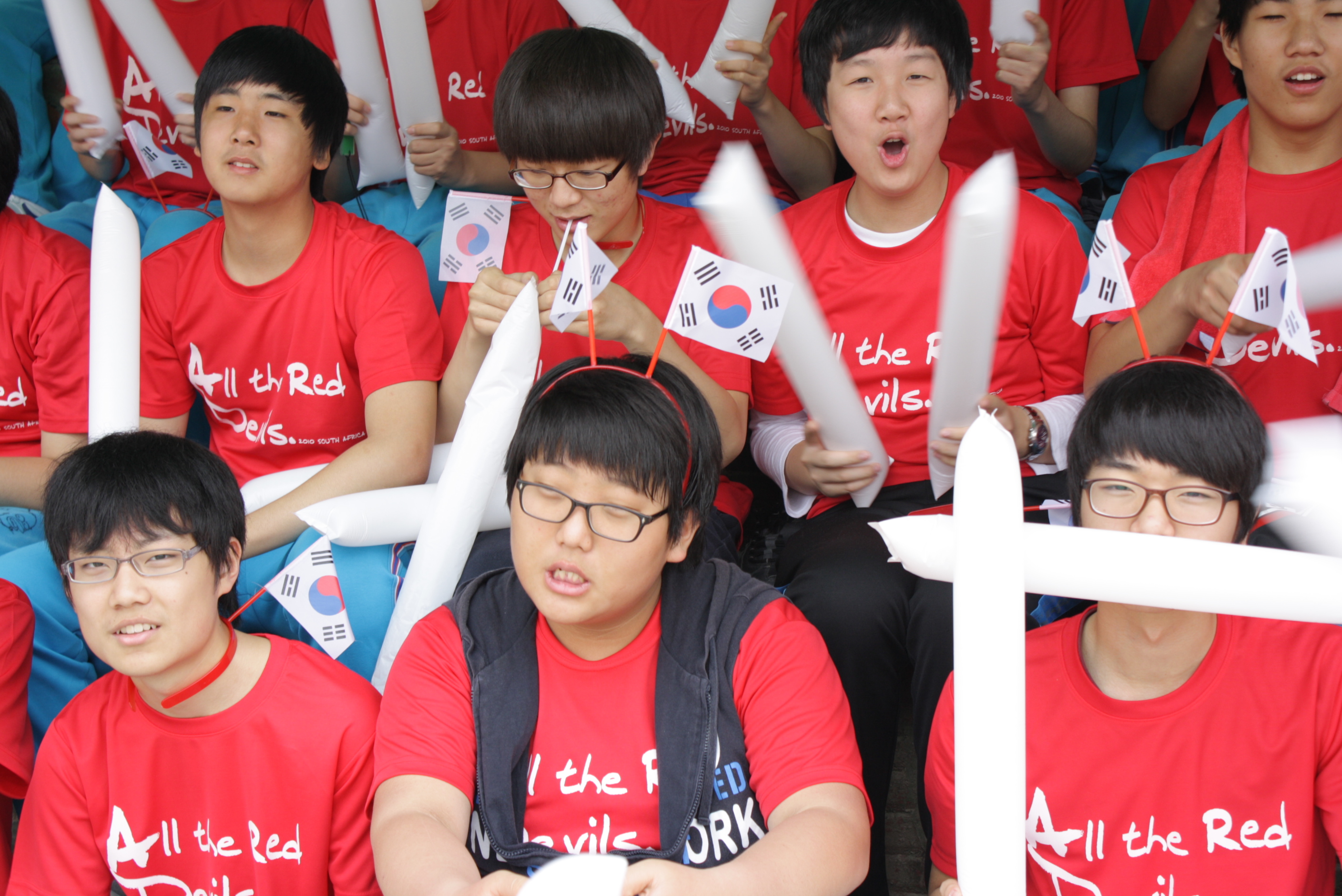
A new and contagious epidemic is sweeping South Korea and the rest of the world and it’s not the swine flu or yellow dust. The upcoming world cup has brought out radical fans, new theme songs and every excuse to party from Seoul to Busan as a red sea of patriotic football fanatics sing praises to the “Red Devils.”
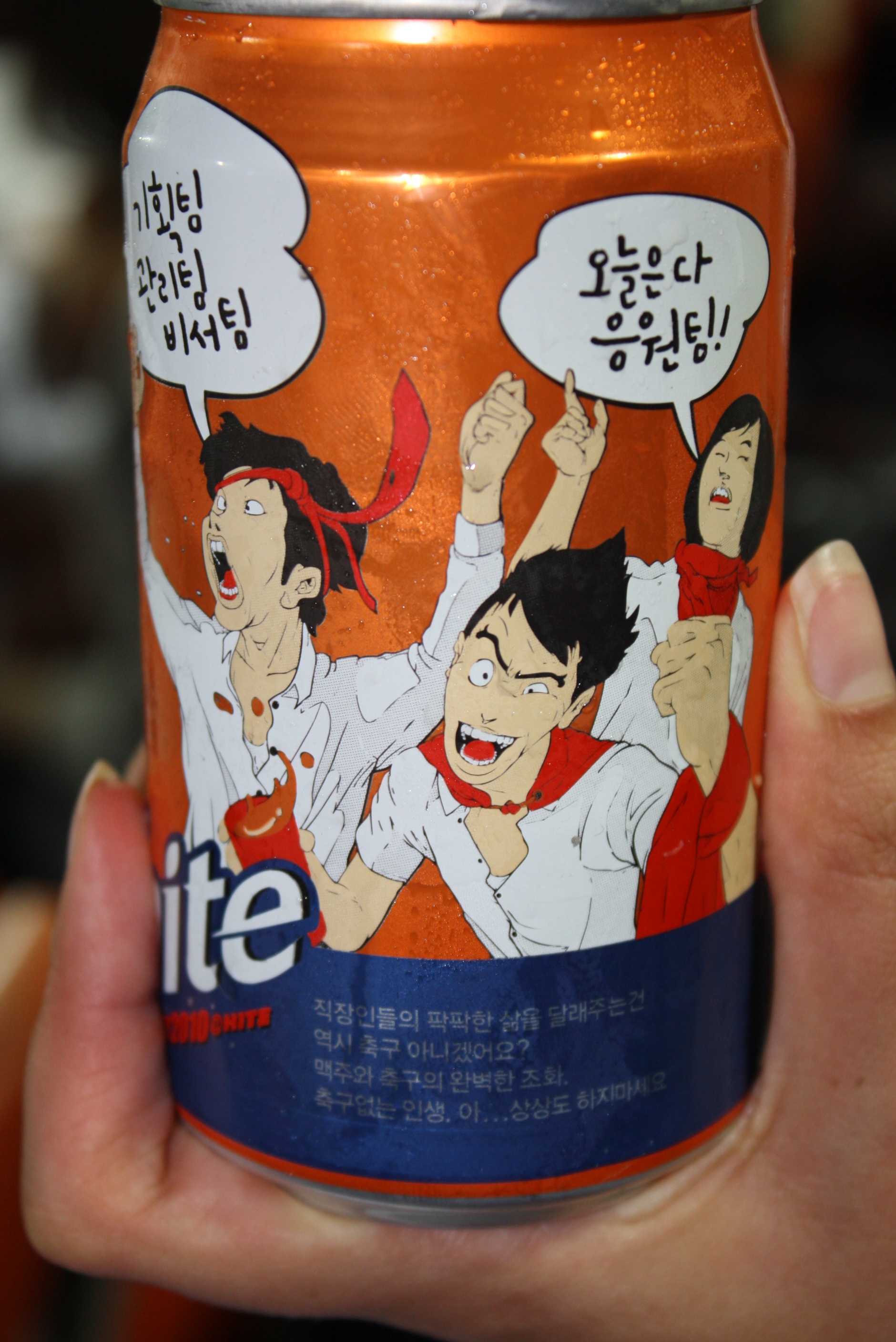
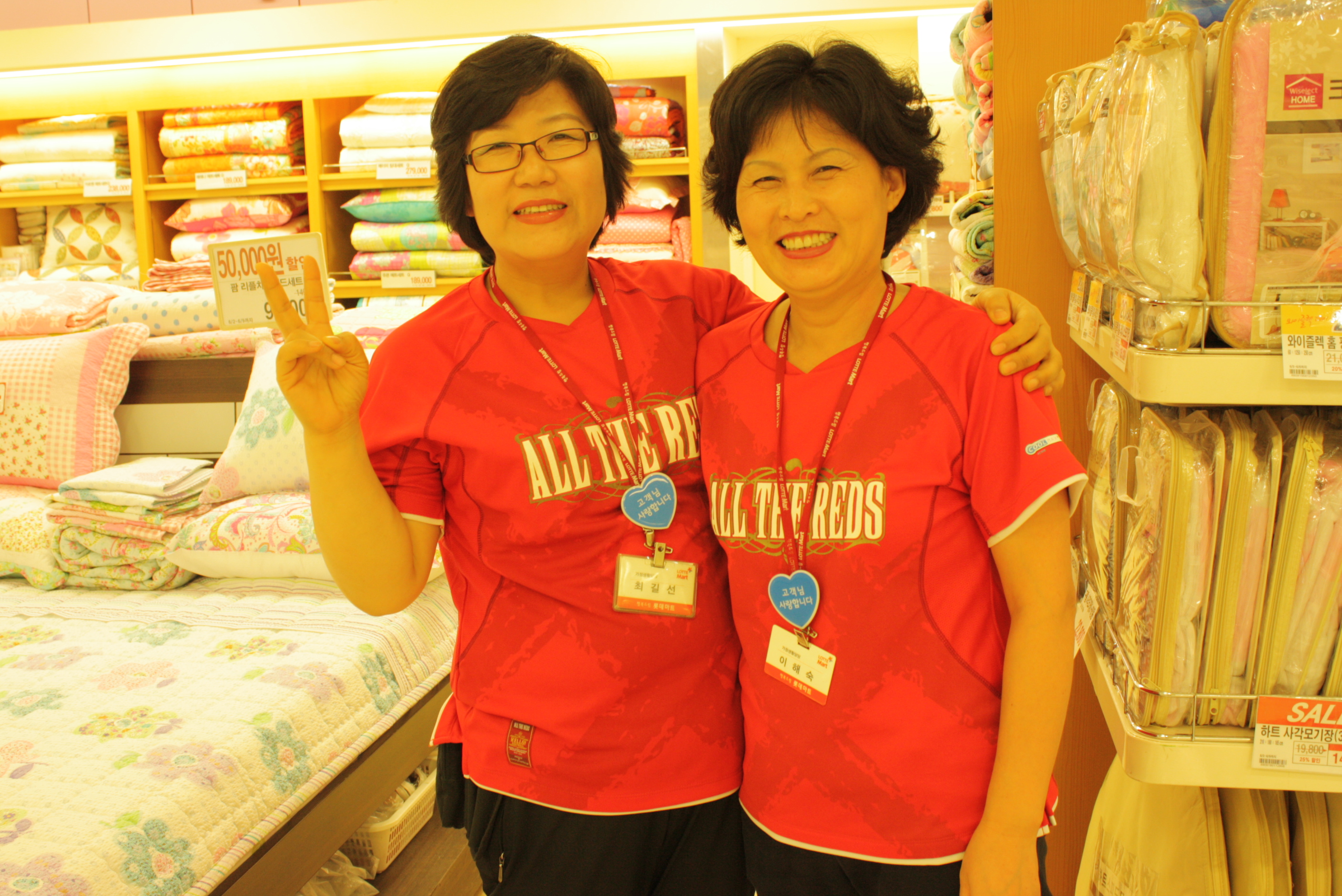
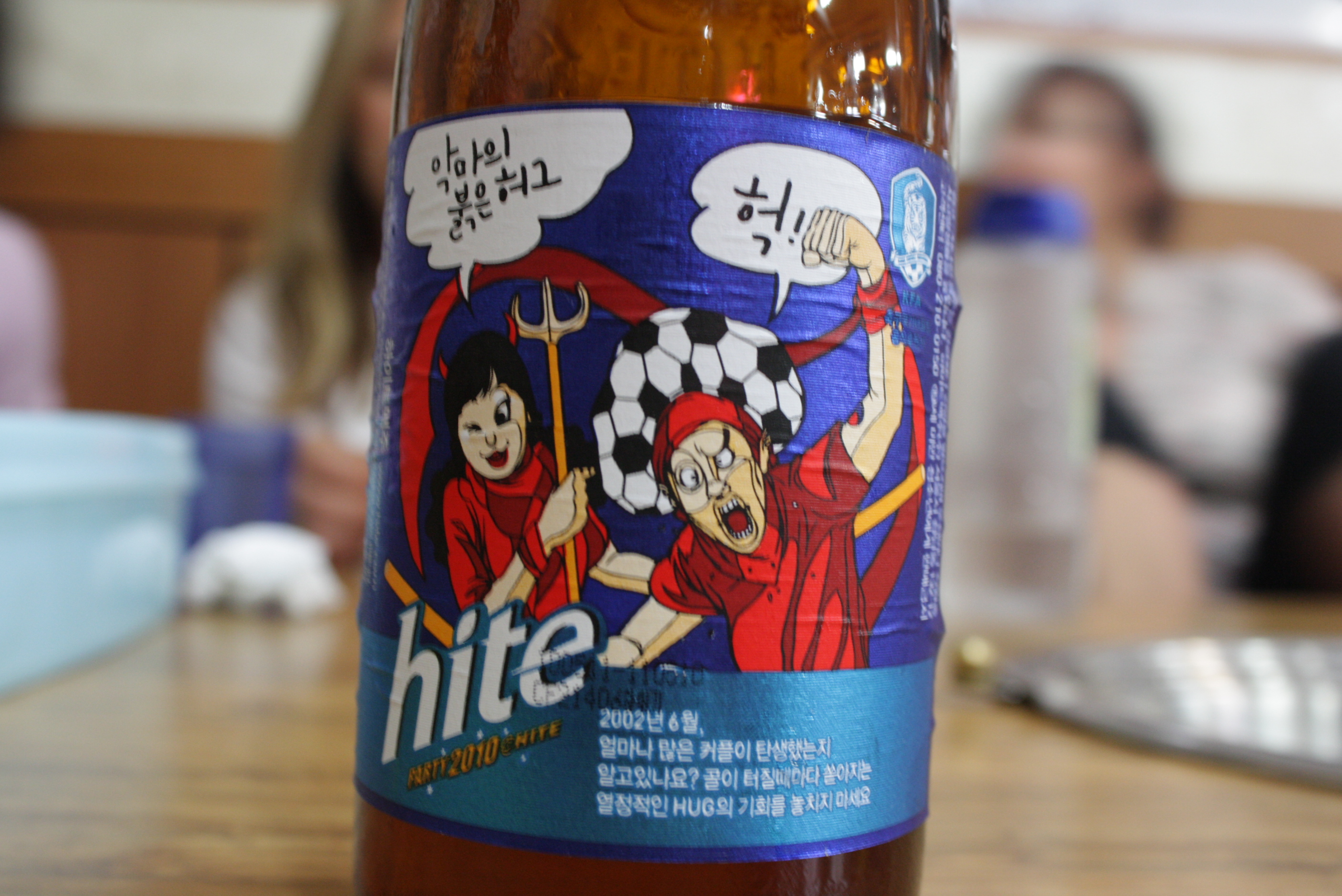
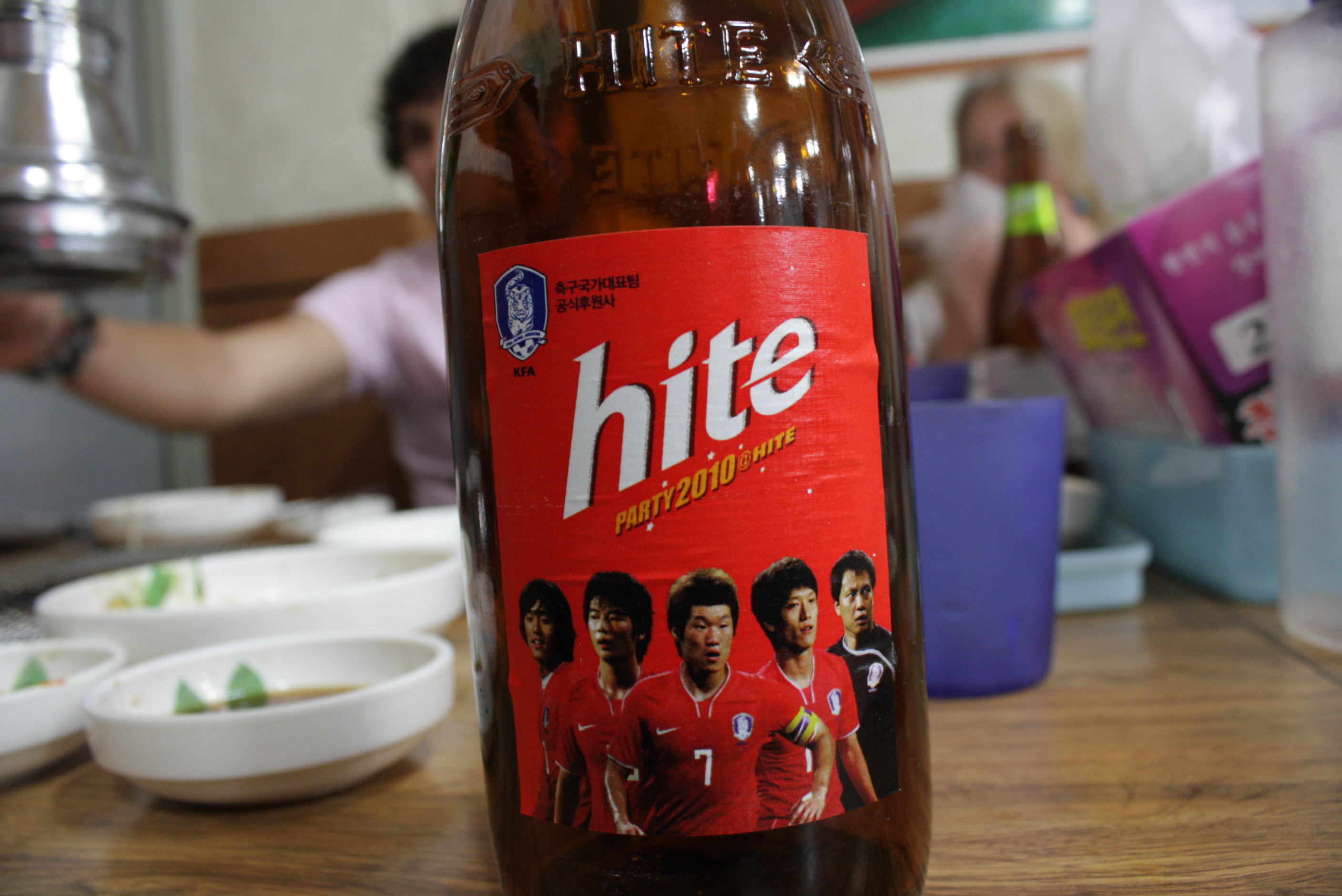
With kick off in less than a week Korea has made sure to clothe every citizen working in hospitality from hotel staff to grocery clerks in red jerseys in support of the South Korean team affectionately called “The Reds” or “The Red Devils.” Korea’s beer “Hite” has changed its label from a generic looking orange and blue motif to a series of football comic strips. Schools have held world cup themed sports days where classes compete in massive football games emulating their favorite players. Little is known about pre-game build up coming from the North Korean fans but NPR recently reported that key Northern player Jong Tae-Se has vowed to score a goal in every one of the team’s scheduled matches. Not an easy task given the tough draw the North Koreans have been stuck with.Jong Tae Se
The most advantageous aspect of the games for us will be the live broadcast being projected onto an 80′ tall screen in the open-air stadium across the street. With the time difference from South Africa to Korea all games will be played between 8pm and 3:30am Korean time. I can safely forecast three weeks of summer nLonely Planet’s homepage ights tailgating Korean style in the very near future. Stay tuned for world cup updates from Korea and be sure to check out as bloggers from around the globe write in about their world cup experience.
May the Best Dance Crew Win!: Korean Election Season
Posted on June 3, 2010 1 Comment
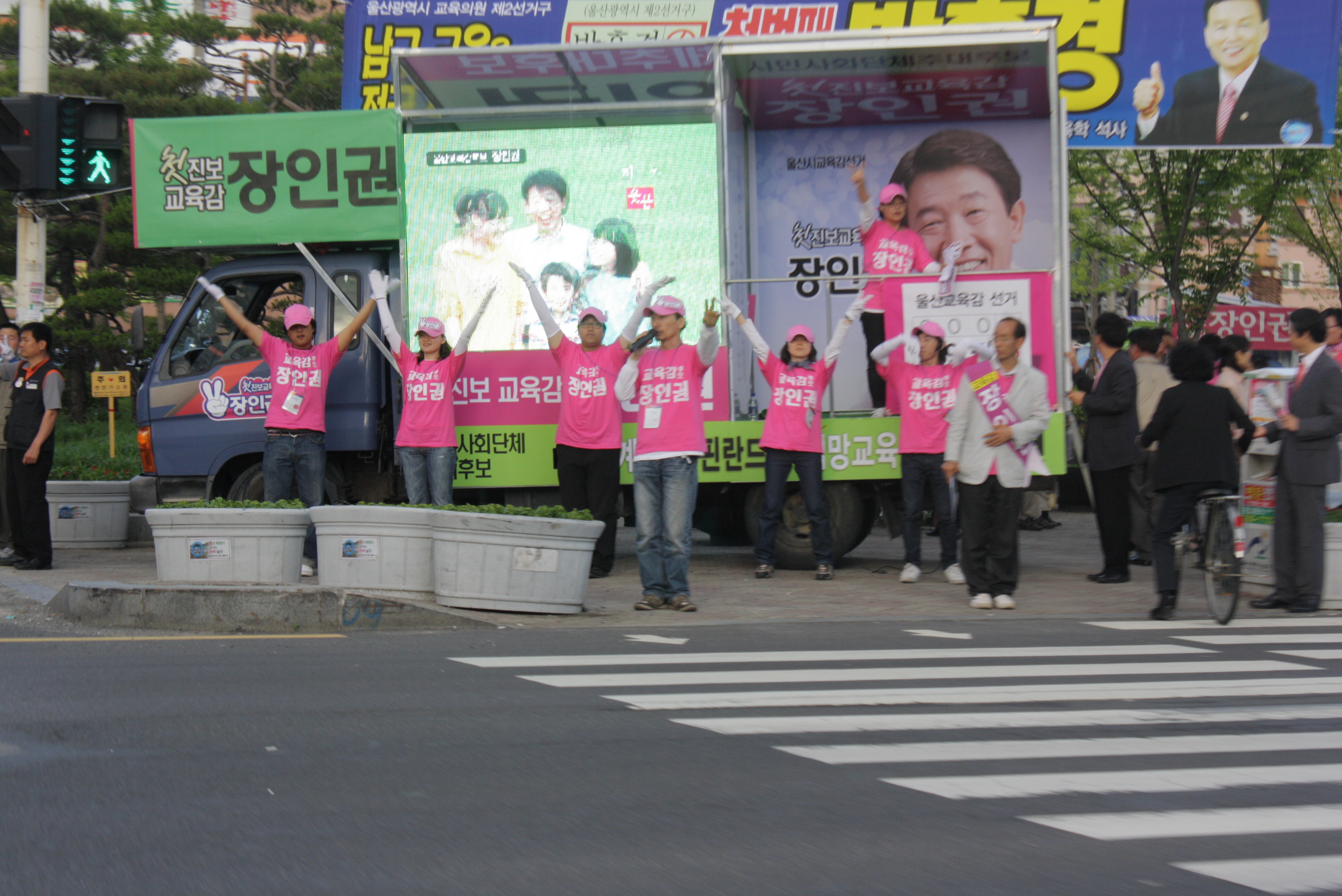
Not that the 2008 presidential election in the united States wasn’t entertaining enough, because let’s face it, it was; but I have to think it would have been even more so if McCain and Obama had engaged in a dance off to determine who would lead our great nation. This may seem like a far out idea, but for the Koreans it is no stretch at all. It is voting day here in South Korea and for the past month every street corner has been overtaken by a chorus of singing and dancing campaigners, each group with its own color scheme and theme song. By far the most colorful election season I have had the privileged of witnessing!
In total there are about a dozen political parties currently functioning in South Korea with the two major parties being: The Grand National Party and the Democratic party. Conservative Grand national party President Lee Myung-Bak will not be up for re-election until 2013, after serving his five year presidency and most Koreans I have spoken to seem to be in favor of him leaving office in a hurry. With recent investigations of the sinking of a South Korean naval vessel, today’s elections will no doubt undergo protesting against candidates associated with the President’s conservative party. With excess police force out patrolling the streets in fear of riots and thousands of colorful t-shirt wearing campaigners in Ulsan alone, this has been an another exciting cultural experience getting to witness the 2010 local elections from South Korea.
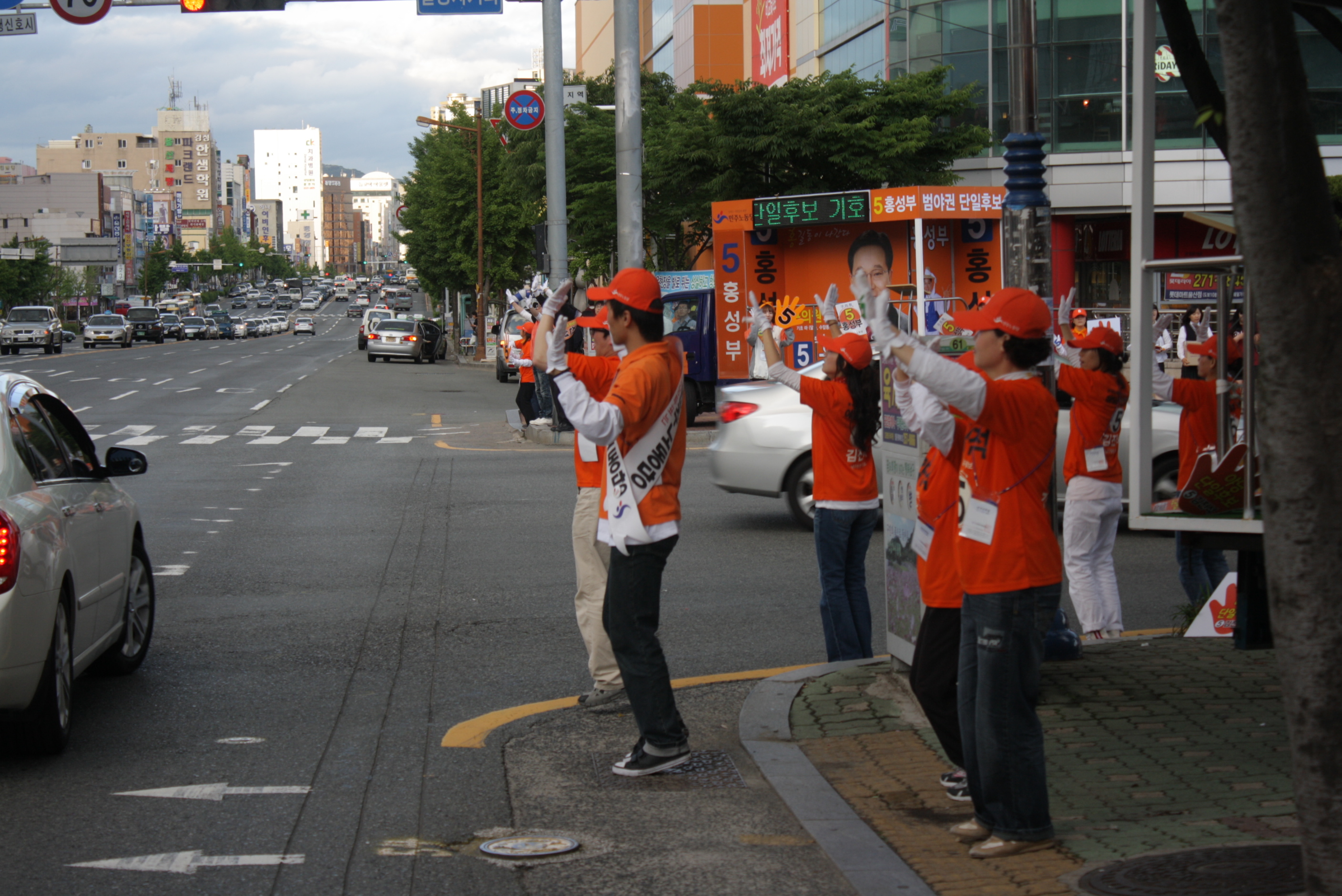
If you would like some more Korea election reading material, check out the
Korea’s English newspaper. P.S I apologize for the photo quality, these were taken on the back of a scooter 😉

A Very Buddha Birthday!
Posted on May 22, 2010 2 Comments
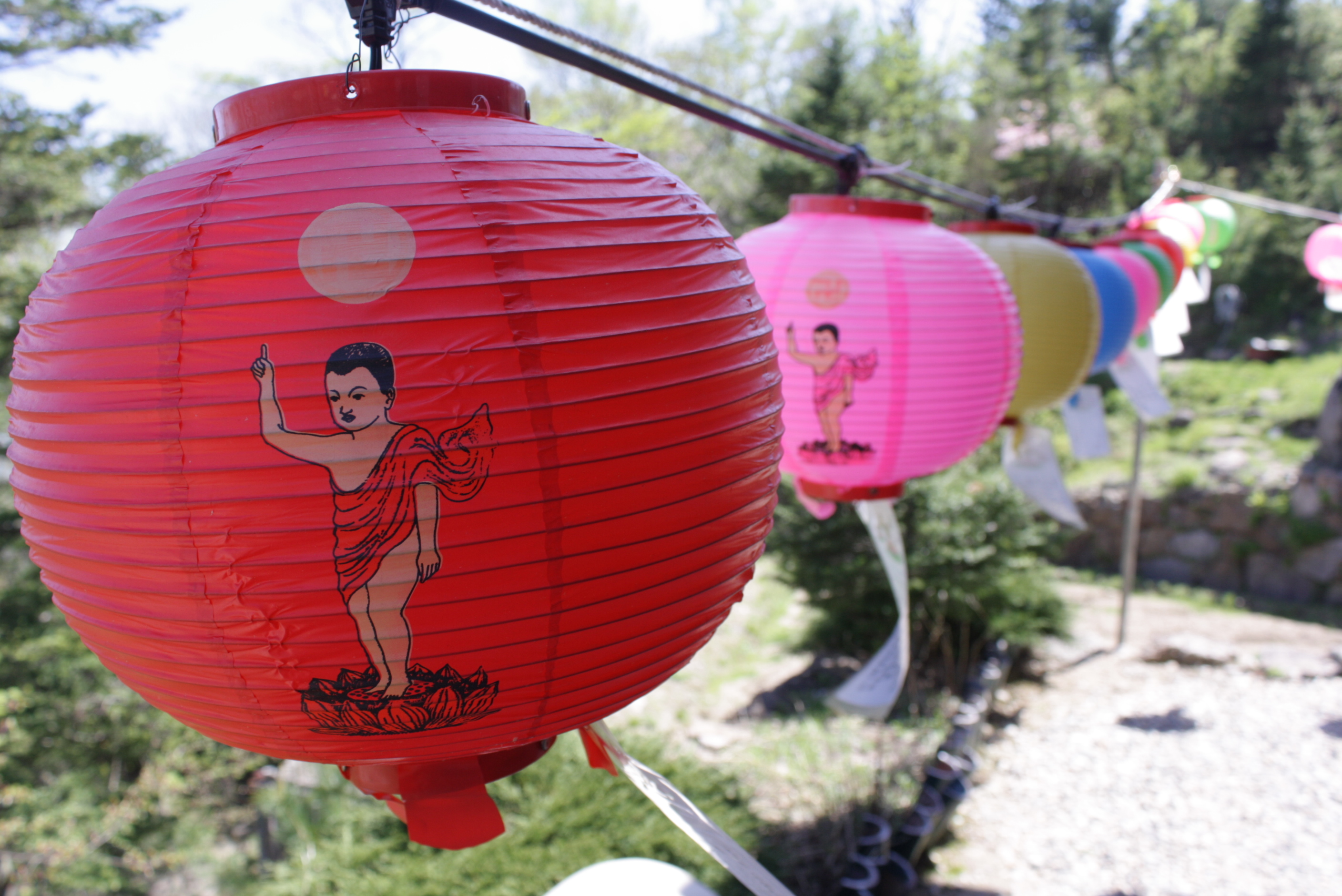
This weekend a month of celebrating culminates in Korea’s all around favorite guy turning a year older. It’s Buddha’s birthday and the streets are lined with colorful lanterns to mark the special day. Last weekend a group of us went up to Seoul to see how the holiday is celebrated in Korea, as well as kick off our last 3 months in Korea ( I can hardly believe it!)
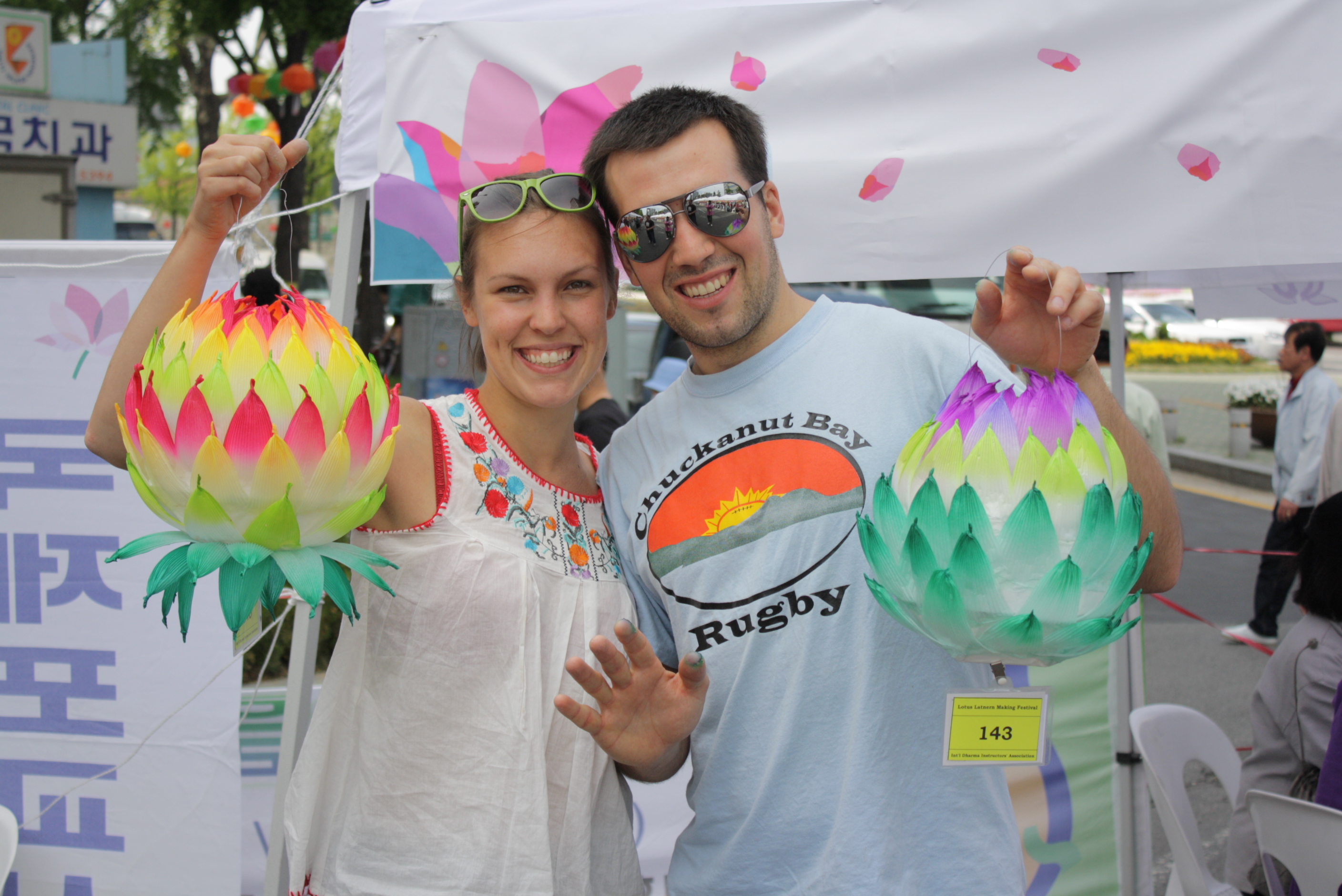
This is truly the best season to have a birthday and Koreans and foreigners alike were out in this weekend’s sunshine to honor an Asian Icon. Buddhists believe that Buddha died over 2500 years ago, yet walking along the river this evening he seemed very much alive to the Korean people, with the image of his peaceful grin and jolly belly, illuminated by thousands of lanterns lining the walkway. My dear friend at: TIK arranged a weekend full of events including traditional lotus lantern making, a trip to the secret garden inside Changdeokgung palace, and an all night dance party in Seoul’s Hangik University neighborhood. If you are near Insa-Dong and have a few hours to spare I would highly recommend spending them in Changdeokgung’s palace, gardens and green house. There is a beautiful pond with Koi the size of kimchi pots and a greenhouse with ikebana style flower arrangements and exotic plants on display. The secret garden charges a 2,000 Won admission and closes at 5:30PM (make sure you are out in time or you may be scaling the rock wall after dark). Like many Korean monuments, the palace was demolished on numerous occasions by the Japanese after its 1405 construction and what remains is an intimate look into what was once Korea’s center of power.
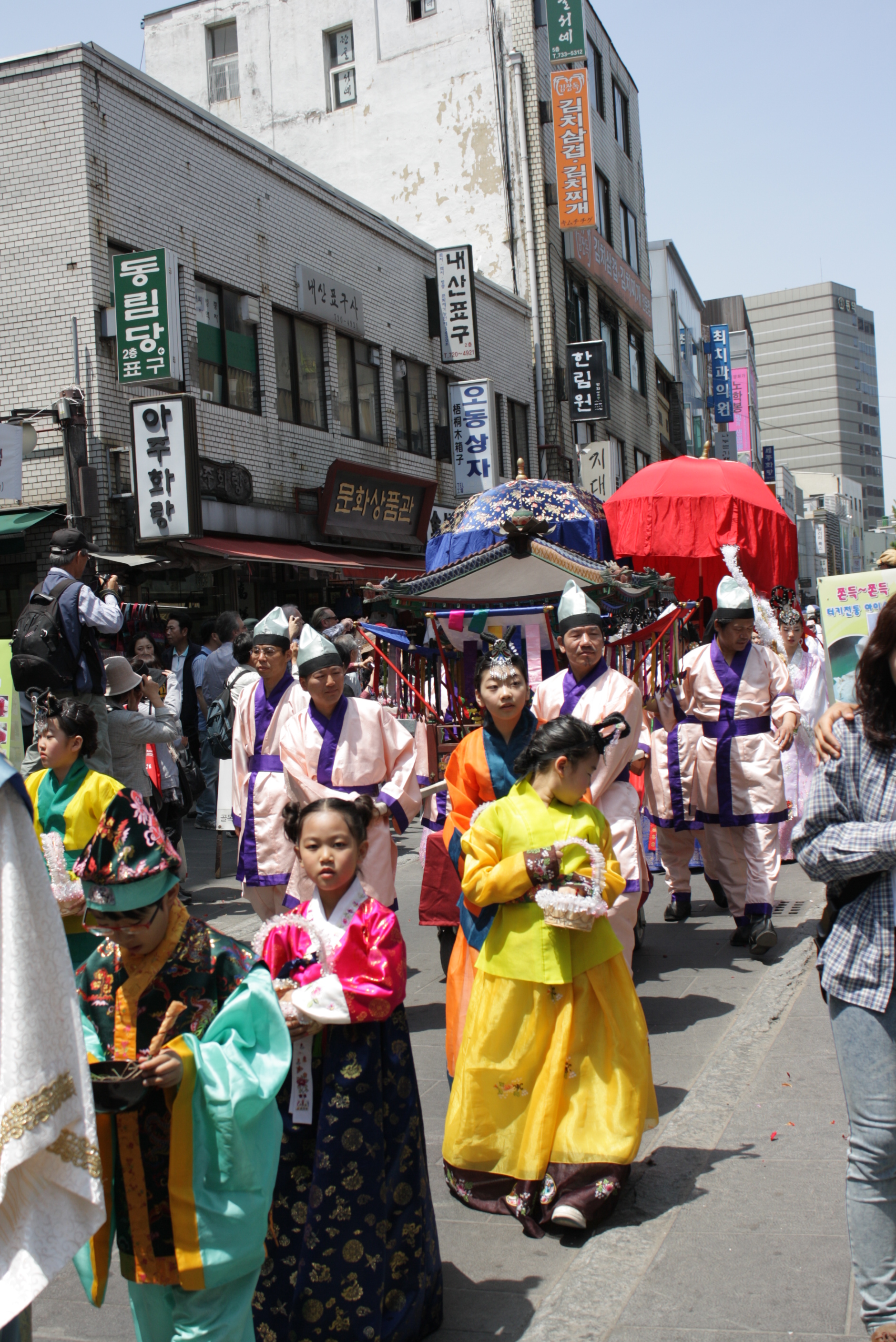
On Sunday we made our way through Insadong’s busy market street, and to the lantern making festival where not only did we get to participate in the traditional lotus lantern making, but we were in the company of practicing monks. One young man was at the festival with his parents who were visiting him for the first time since he had left his home in Saint Louis to study Buddhism and train to become a monk in Korea. He was gracious enough to share with us a bit about his experience living in a Korean temple, and practicing Buddhism as a foreigner saying that he did between 100-200 bows a day!
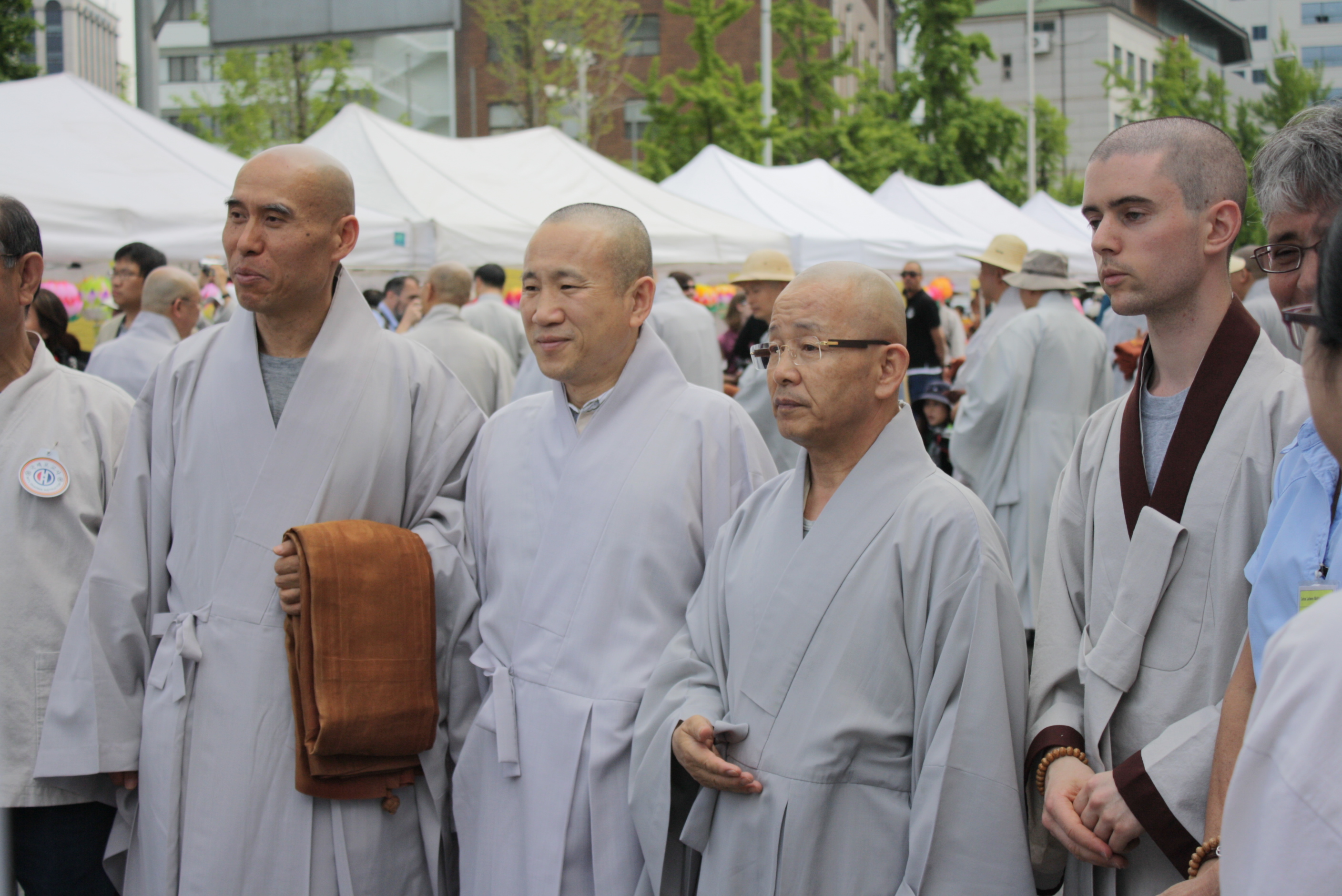
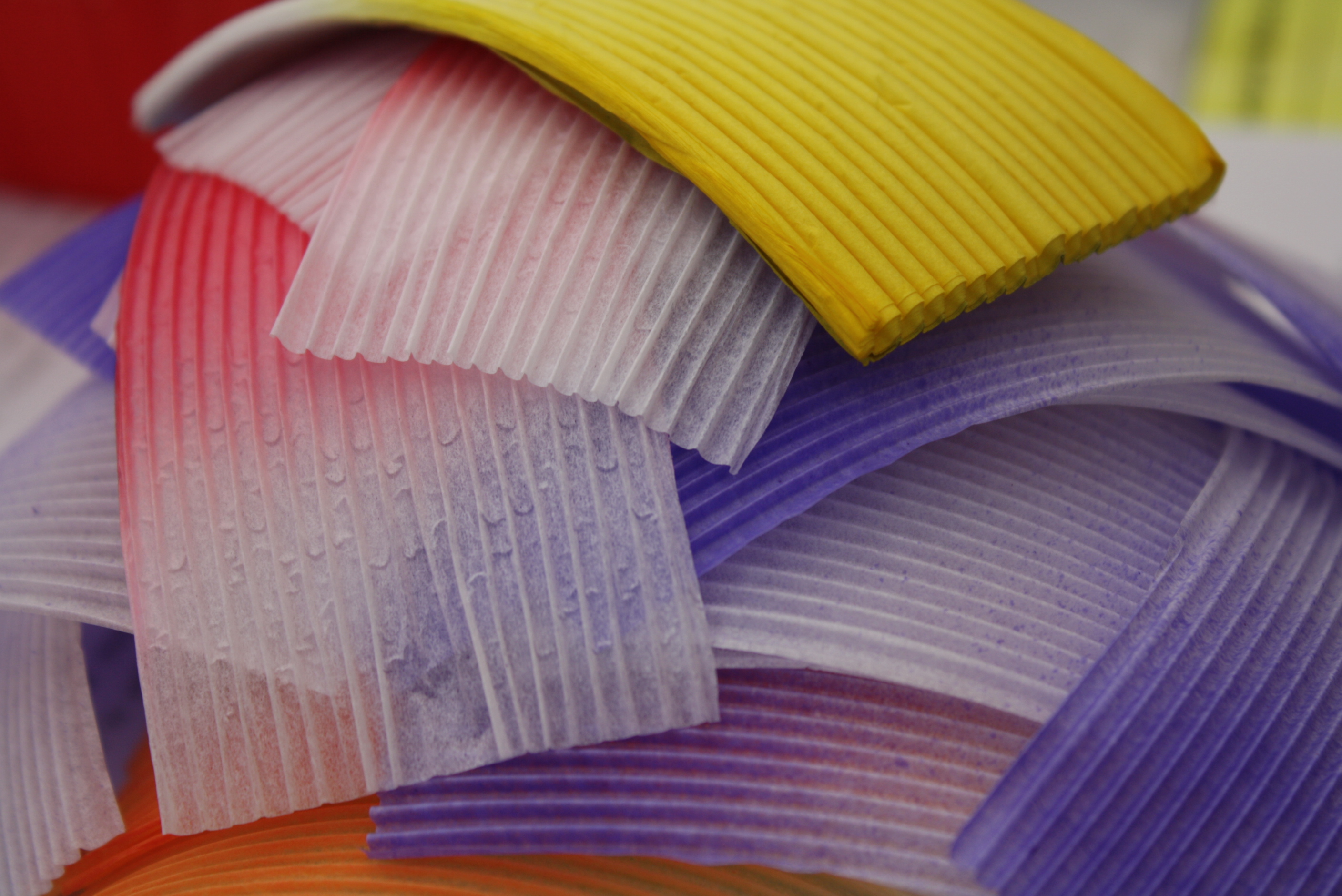
Although the festival was filled with monks, all with shaven heads, the same matching robes and peaceful demeanor, there was so much individuality in the lotus lanterns. Each with a different style and color pattern. We managed to carry our delicate lanterns the 5 hours back to Ulsan that evening and they hang now in our bedroom, their significance to us much different than to the monks who hang them in remembrance of a man whose birthday they celebrate this weekend in May. Happy Birthday to all you spring babes!!!

Posted on May 12, 2010 1 Comment
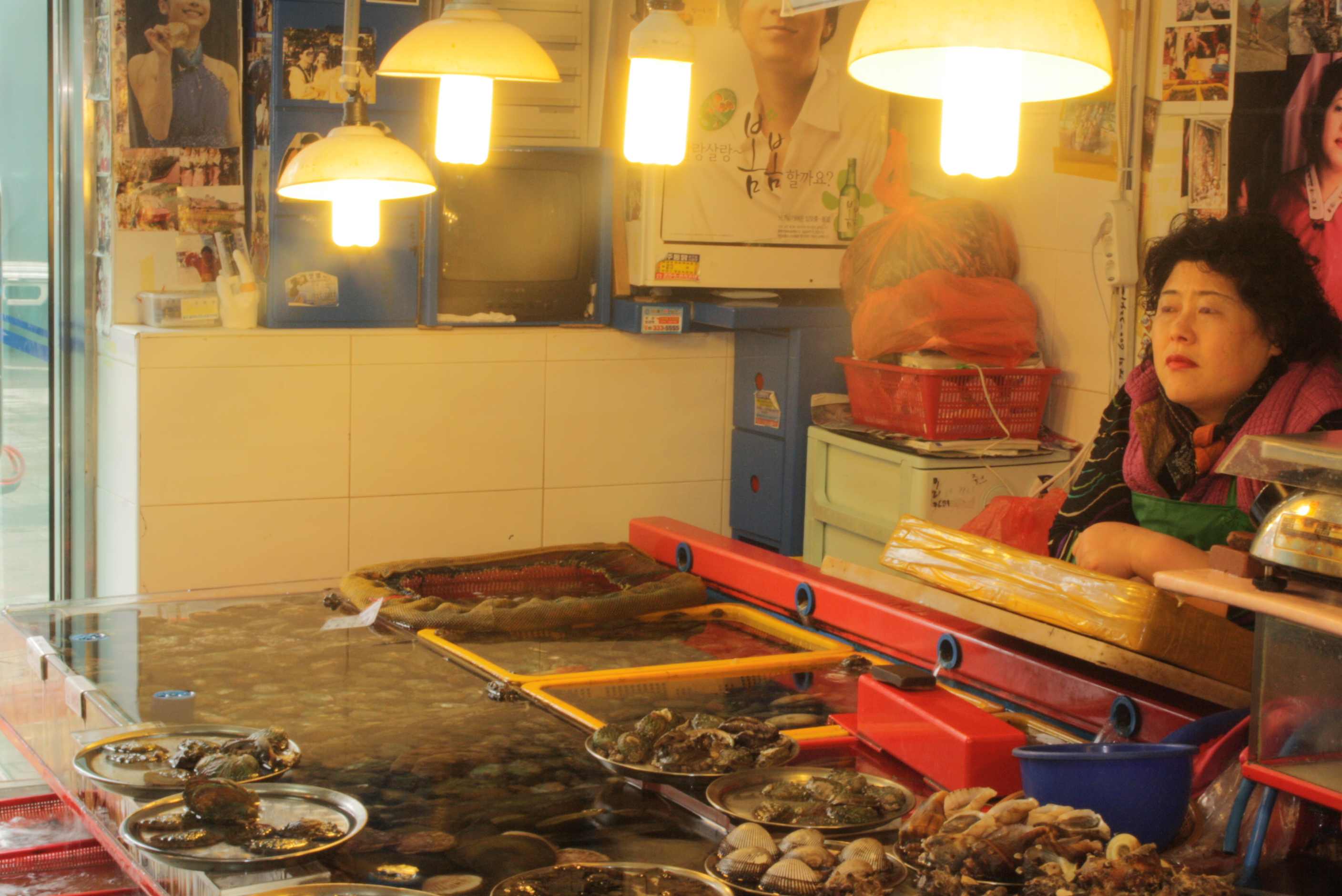
Shopping the stalls of Seattle’s Pike Place and our local farmer’s market in Bellingham Washington has nurtured my love of open air markets, where choosing the ingredients that will make up your meal is not a rushed endeavor and a personal relationship between grower and consumer is possible. Although my verbal communication to vendors in Korea is limited, the Korean street market presents a unique and colorful shopping experience, one that I so eagerly anticipate I have it marked on my calendar every five days.
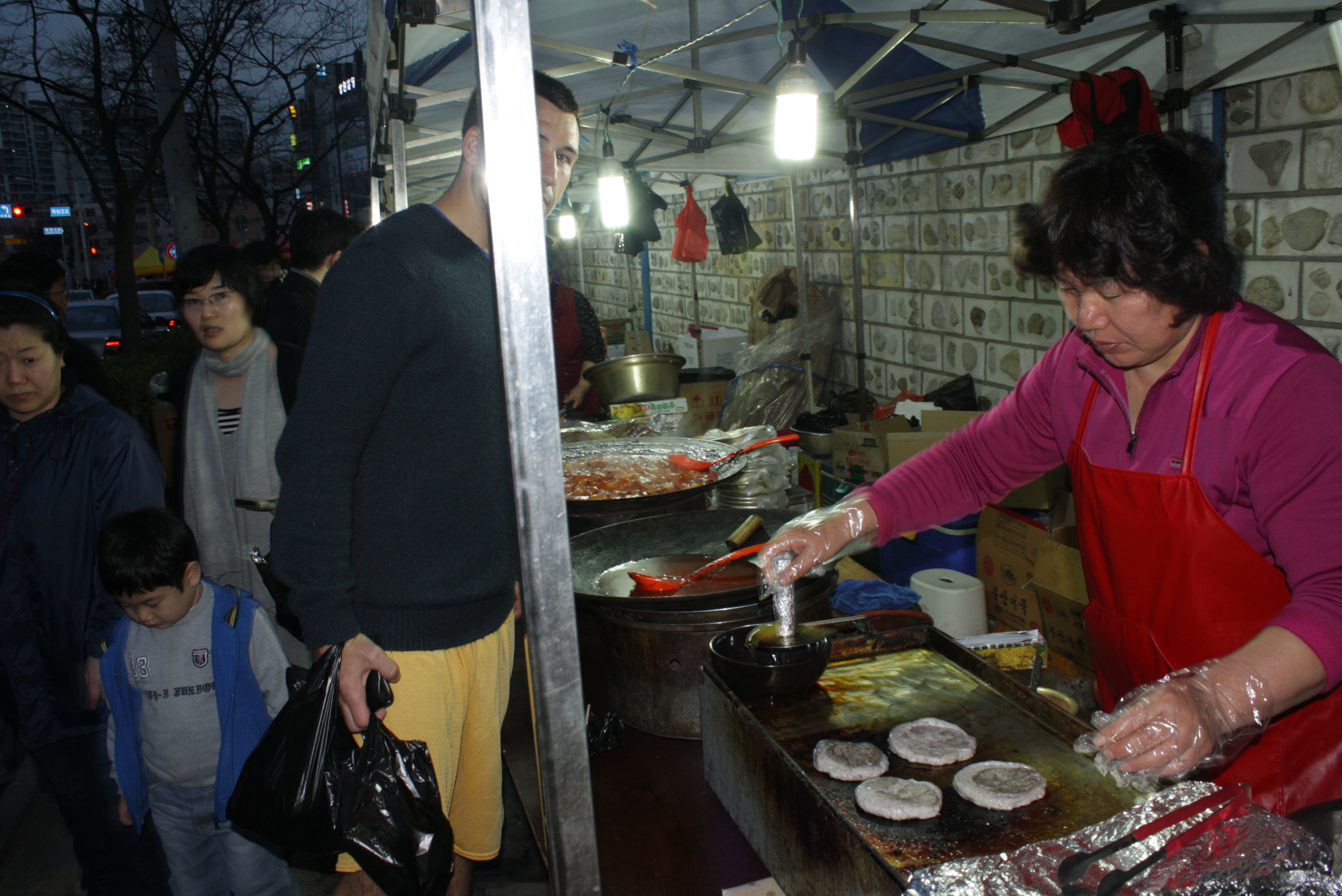
Like in any outdoor market, the Korean market sells fresh, seasonal fruits and vegetables, affordable hand-made goods and local fare. What separates the Korean market from the rest is the oddities that are unique to this very culture:
- Live octopus
- Korean Pancakes
- Kimchi
- Dried Fish
- Insect larvae …
Among my favorite outdoor markets in Korea is the Jagalchi fish market in Busan. Visitors can wander through over ten blocks of undersea curiosities and enter a two story indoor group of stalls for even more seafood delights. On the second floor of this seafood market are restaurants who encourage customers to purchase fresh fish downstairs and then bring it on up to be cooked and served with a variety of side dishes.

The 24 hourDongdaemun market in Seoul is designed for the bargain hunting night owl. Whenever Matt and I take the midnight train to Seoul, arriving in the city by 5am, we stop in at this bizarre and unique market for a late night/early morning snack and whatever other oddities we can find at a haggled price. We’ve woken up Saturday afternoons wondering why we now own a giant whisk broom and 500 pair of knock-off “abbibas” socks.
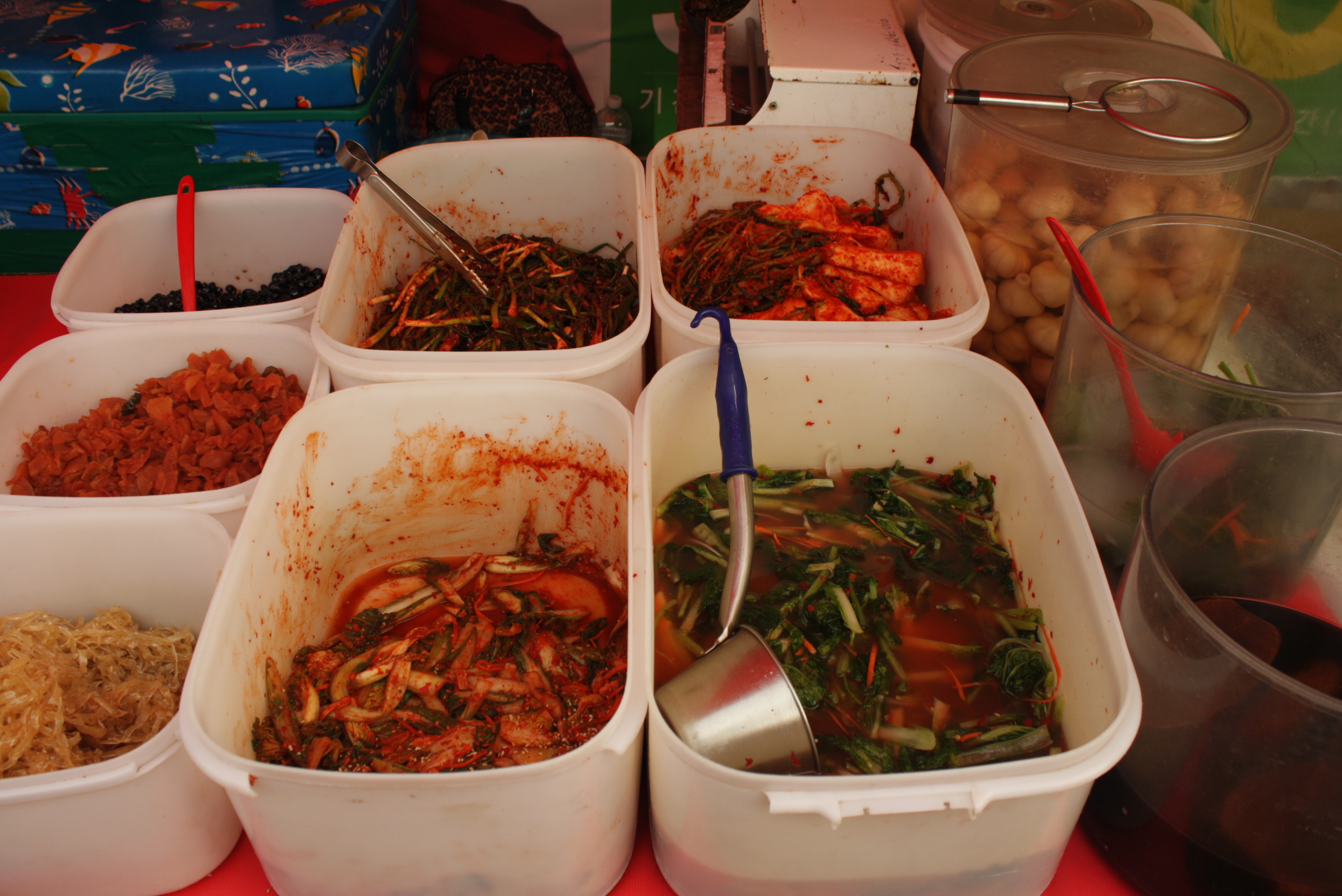
The highlight of all my marketing experiences is our very own traveling neighborhood market that comes to our quiet street every five days. There are 40-50 stalls selling produce, live eel, bamboo salt, hand made pasta and Matt’s favorite: Korean pancakes. The experience is never complete without a few nudges from a pushy Adjima, or someone stopping you at the kimchi booth for a free English lesson, and I never arrive home without something new and curious. This week I was invited to sample four different types of bamboo salt, inspired by my dear friend SaltySeattle
Enjoy your farmer’s markets, late night markets, street fairs and taco stands in whatever open air you find yourself in this outdoor season!
Travel The World One Blog at a Time: Introducing Lonely Planet’s Bloggers.
Posted on May 7, 2010 1 Comment
Ever wonder how you could feel short on inspiration when living in a foreign country, experiencing a new culture every day, eating live octopus for crying out loud!? Well that’s exactly how this last month has been for me…un-inspiring. That is UNTIL I started reading stories of world travel from some of my fellow Lonely Planet bloggers. In recent months teachtravelplay has been accepted into Lonely Planet’s Blogsherpa program, and featured on the LP website along with other handpicked travel blogs. The program has not only opened up the possibility for more traffic on our web-sites but it has been a fantastic networking resource.
This week our creative and proactive group of travel bloggers launched a World Travel Squidoo page where all World Travel blogs participating in the blogsherpa program can be found in one location. Please come check us out as we travel the world! If you are interested in following some of teachtravelplay’s favorite Lonely Planet featured blogs then check out the link list on the Fellow LP Bloggers page. The list continues to grow so stay tuned for updates on new blogs, Happy reading!


 Teachtravelplay's Blog