Sugar, Spice, and Souks: Deira Spice Souk
Posted on July 11, 2011 4 Comments
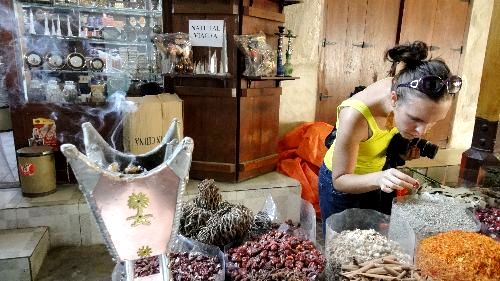
Photo Credit: Jo Kelly over at http://www.theweeklyjo.com/
If you came to the United Arab Emirates in search of old world vignettes, tucked in narrow alleyways, filled with magic carpets, Arab men in colorful head scarves and puffs of jasmine flavored incense, you may be disappointed when confronted with the modern city. While Dubai rises high into the clouds with its contemporary sky scrapers, tradition can still be found around every corner. One sure spot to scope the cultural heritage of the UAE is the Deira spice souk, along the Dubai creek.
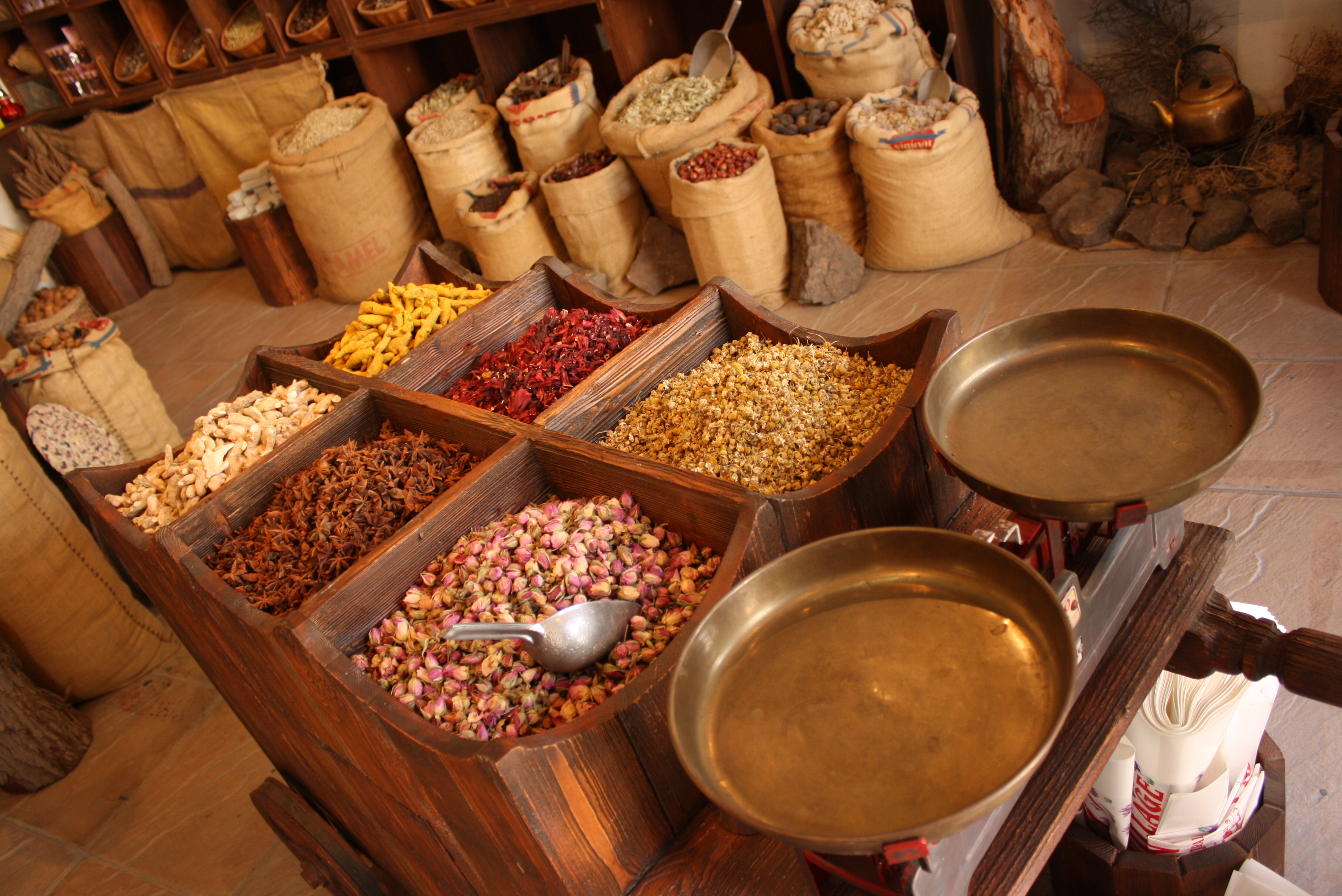
Starting on the creek’s West bank, visitors can meander through the textile souk, picking through cashmere pashminas, and stalls filled with vibrant fabrics. Beware of zealous merchants going to extremes in order to catch your attention with their goods. Within moments of entering, the vultures descended, not even bothering to circle first before throwing scarves and bangles over my unsuspecting body. The technique worked, and I ended up walking away with a hand stitched garment from Pakistan, a pair of Ali Baba shoes for a very special three year old, and a giant hookah… My arms were in serious need of some pack camel assistance to carry my loot, and I hadn’t even crossed the creek yet!

The real treasure hunt begins on the East bank of the creek, known as Deira. This collection of souks hold spices, gold and other precious trinkets, as well as picture perfect photo ops in every turn. To get across to Deira from the textile souk, simply hop on one of Dubai creek’s Abra boat taxis, costing only 1 dirham, leaving approximately every other second, from wherever you are standing. The abras go across to a few different points along the creek so just gesture toward the spice souk and your driver will make sure you get to where you want to go. Matt wasn’t satisfied with just one ride on the traditional boat, with its cool breeze and ample people watching, but after three trips across I distracted him with a coconut vendor and we finally docked.
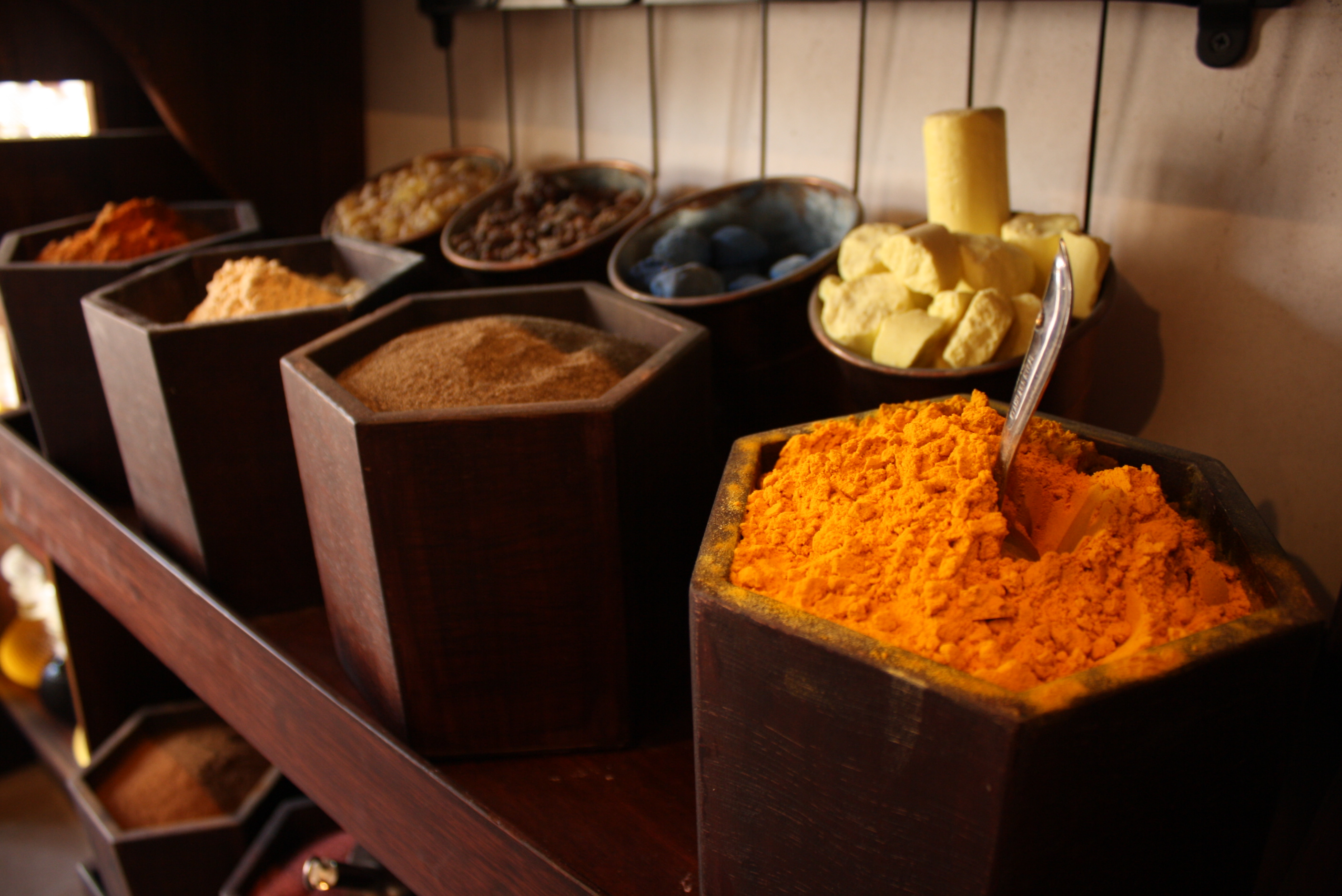
At the mouth to the Deira markets is a bustling intersection with bus transfers, water taxi stations, and street vendors selling “Natural Viagra.” Yes the souk really does carry something for everyone. Now one might think that shopping for spices involves buying three lbs of vacuum sealed black pepper at your local Costco, but I assure you, there is so much more sniffing and tasting fun to be had!
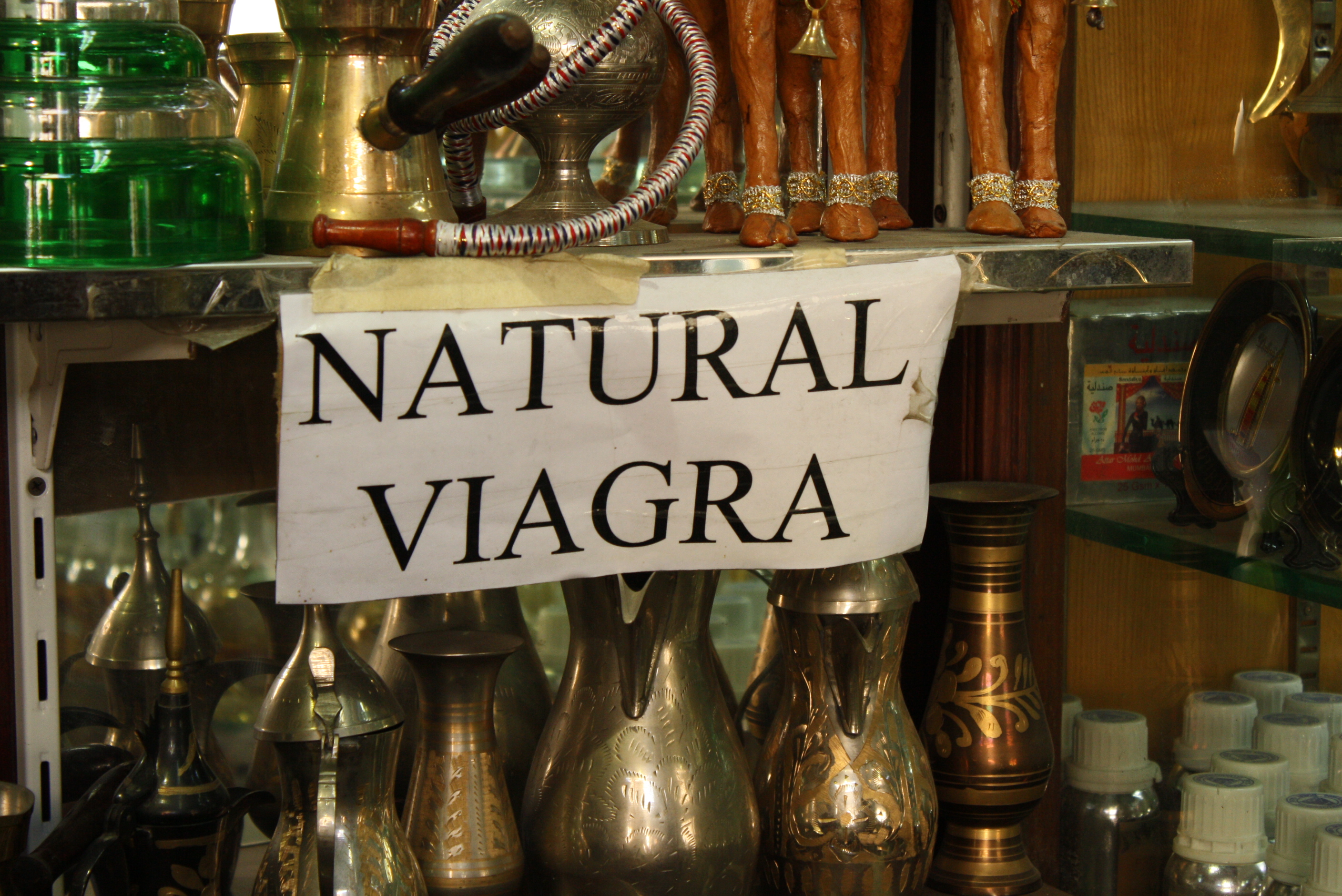
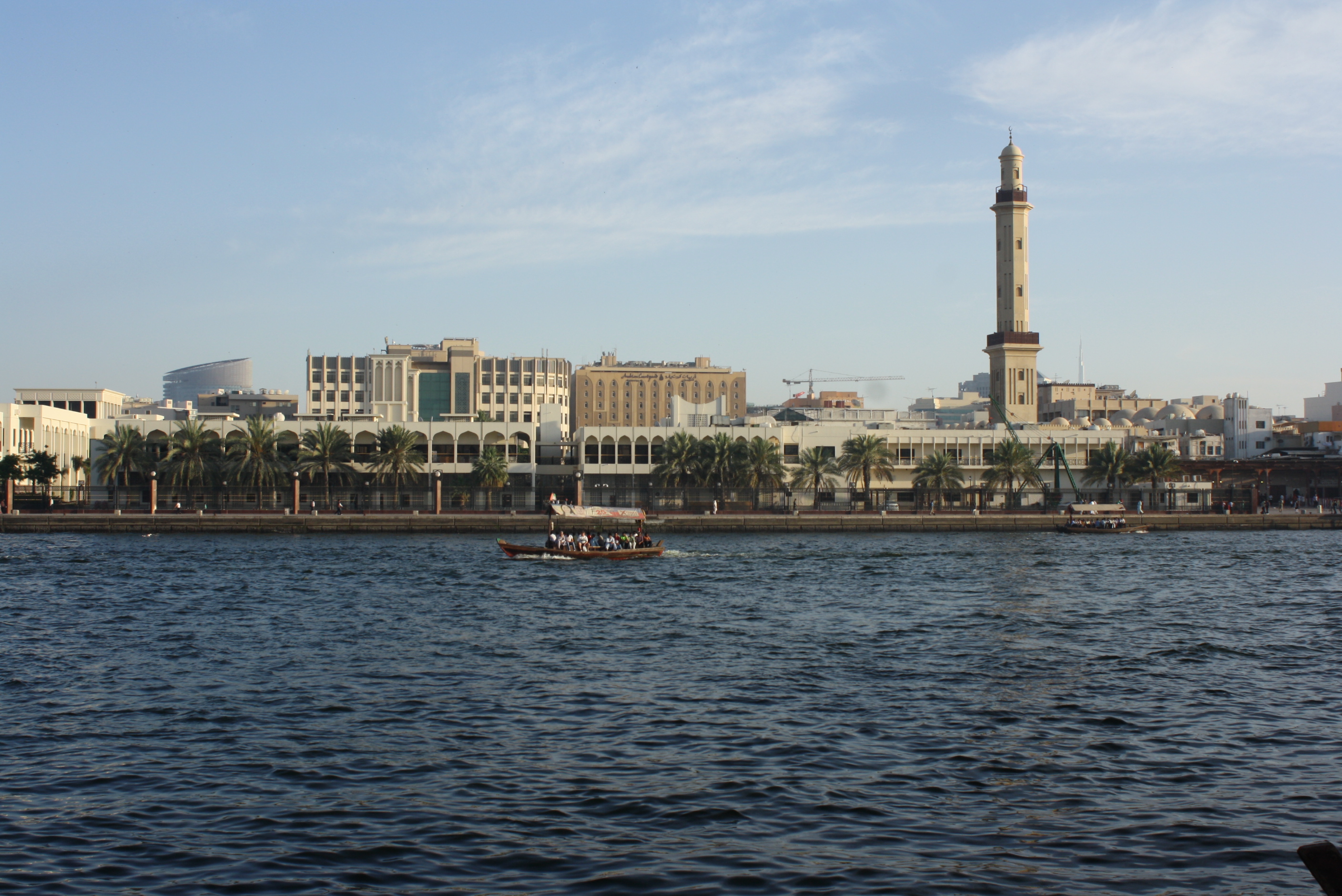
I pride myself on a well developed palate, thanks to a few years of traveling and sampling a diverse range of flavors, so I was thrilled when the first vendor we happened upon wanted to test me on my spice knowledge. By sight I passed five out of six spices including: Frankincense, lemon balm, dried rose hips, cinnamon, and saffron. Where I went wrong was failing to identify the Arabic spice combination that is Ras El Hanout. In my defense, this traditional spice combines many of the ingredients I called out in a guessing frenzy including, cardamom, ginger, and turmeric. I can’t wait to take my Summer holiday to the USA next week and deliver a few new salts to the one and only, SaltySeattle!!!
The complexity of layered flavors in Arabic cuisine can be attributed to a long standing history of spice trade throughout India and the Middle East. A trip to the Deira souk provides a look at the rich and spicy history of a nation becoming quickly modernized. Enjoy your backyard grilling and seasoning this July, and save me a salty salmon burger!
Size Matters: The Burj Khalifa
Posted on June 28, 2011 2 Comments
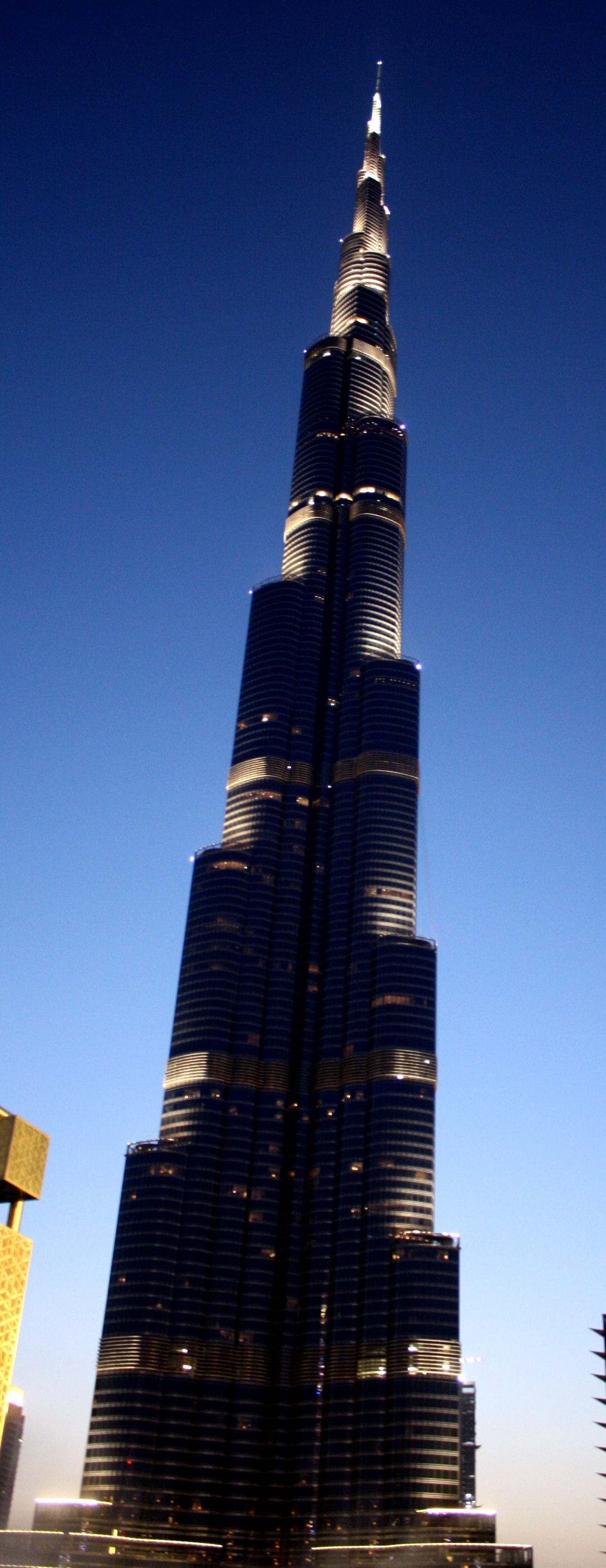
If you are like me, and a large population of Australians, you are intrigued by, and often duped into making detours in order to view “The world’s largest can opener”, or “The longest dreadlock.” While hopping around Australia last Spring I was taken by how many signs I saw for “Broken Hill’s Big Bench” Or The Big Yabby.” I was equally surprised by how many times I stopped and even paid money to view these one-of-a-kind anomalies. When I found out that I was moving to the home of the world’s tallest building, I was thrilled to add another “tallest…” to my list.
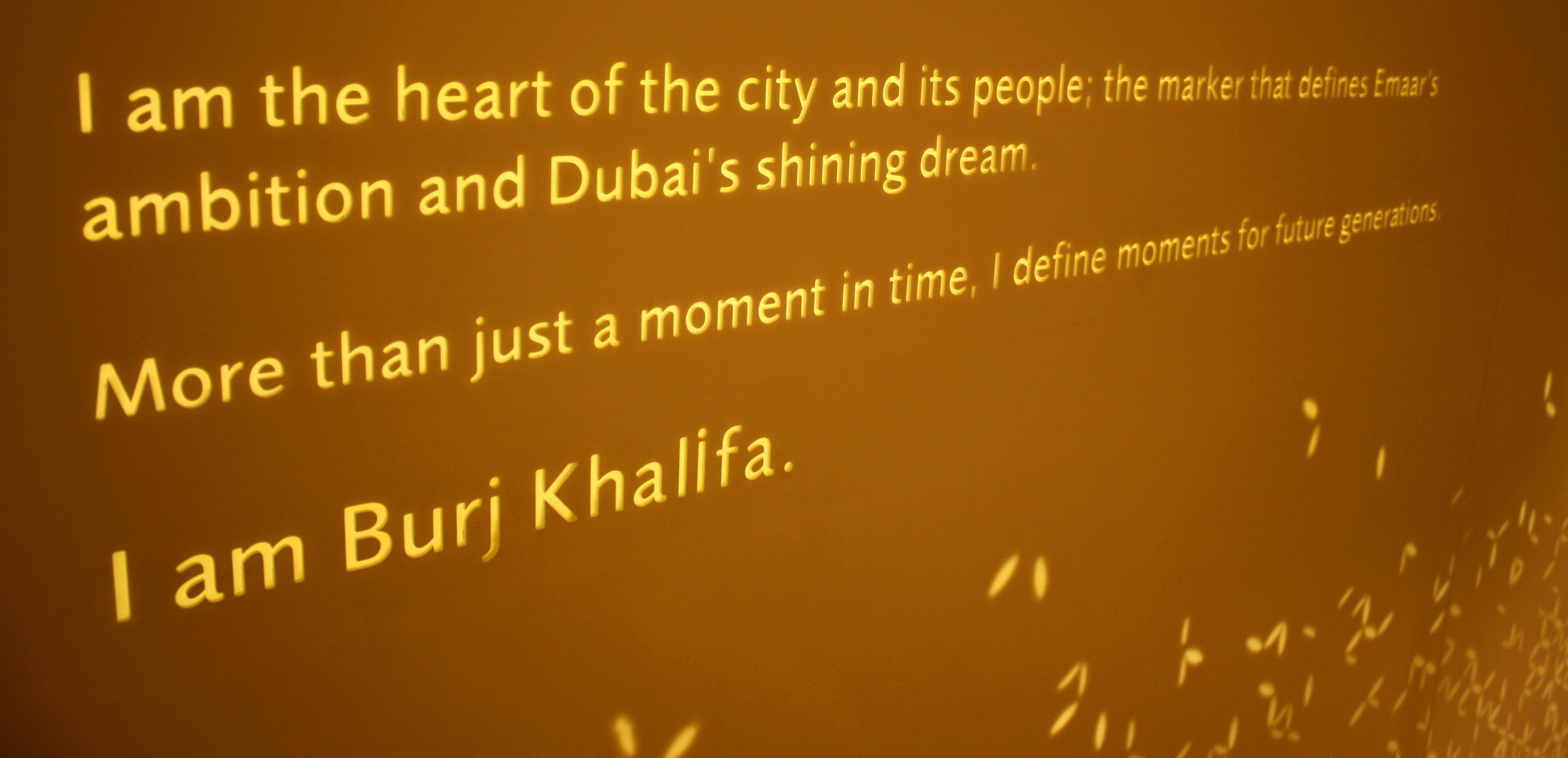
A visit to the 127th floor of the Burj Khalifa requires a reservation, made easily in person at the Dubai Mall entrance or for a fraction of the cost, on their secure website. We opted for a an evening visit in order to see the city lit up after the sun went down. I would recommend experiencing the fountain show from both ground level and from the 127th floor. The shows run from 6-11pm weekends, starting every thirty minutes, but make sure to cover your camera and tighten your shala because the spray reaches far into the audience.
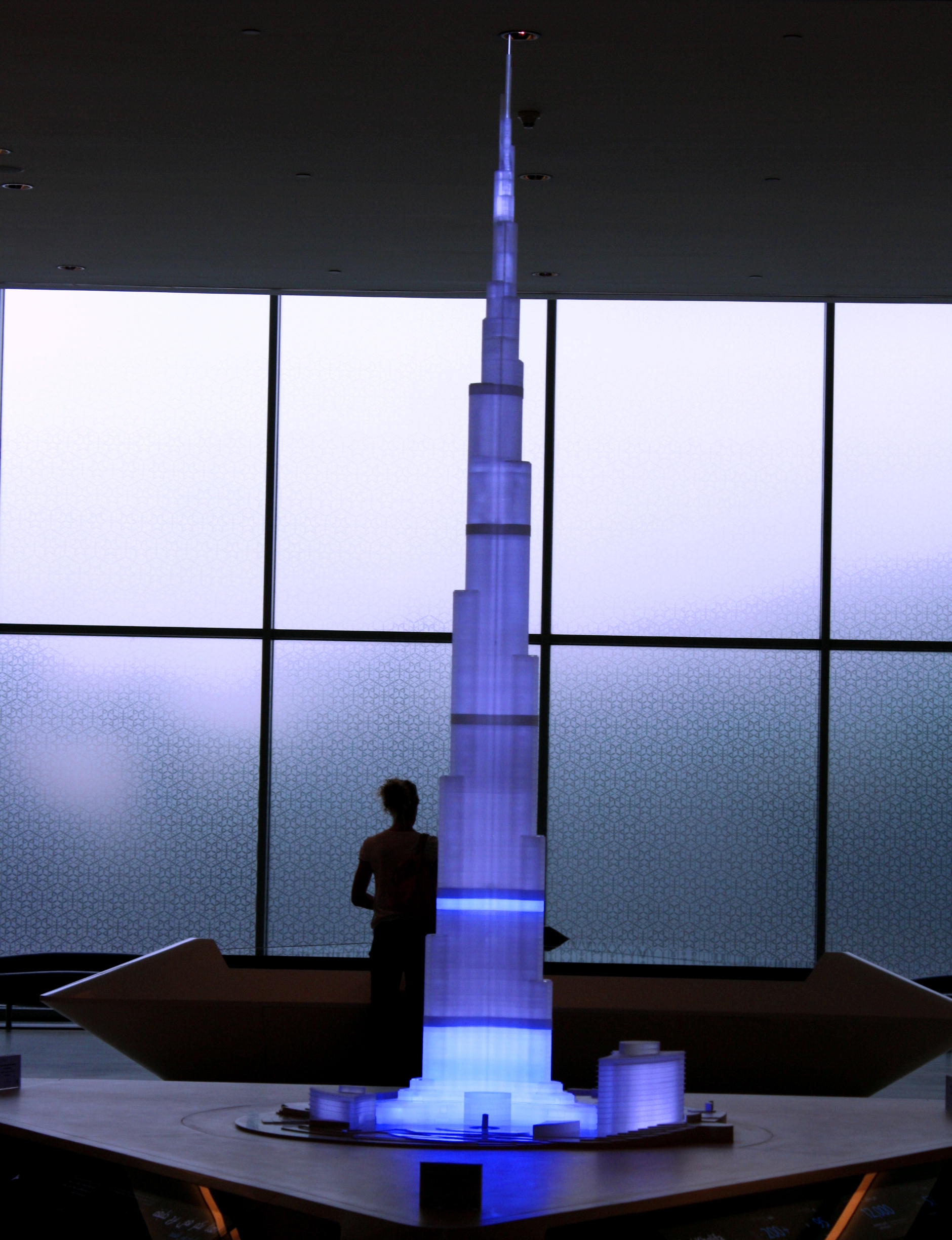
Dubai’s Burj Khalifa has been surrounded by controversy since its construction began in 2004. Completed in six years, the building is said to have taken 22 million man-hours, from men who later reported cases of exploitation in the form of low wages and poor living conditions while completing the project. While the total cost of construction reached 1.5 Billion USD, the cost of neglected social responsibility and misery for workers was much greater. It is estimated that laborers, primarily from South Asia, earned as little as $2 USD per day and were forced to continue working as employers confiscated passports. These men often worked 14 hours a day and there are reports of shortages in water and safety eqipment. In 2004 and again in 2006 workers attempted strikes in protest of their unfair labor laws, but were further opressed by police forces. By 2007, 4,000 workers were imprisoned and then deported for participating in protests. Standing in stark contrast to the conditions laborers faced during its construction, the Burj Khalifa is a reminder of the cost of such rapid growth.
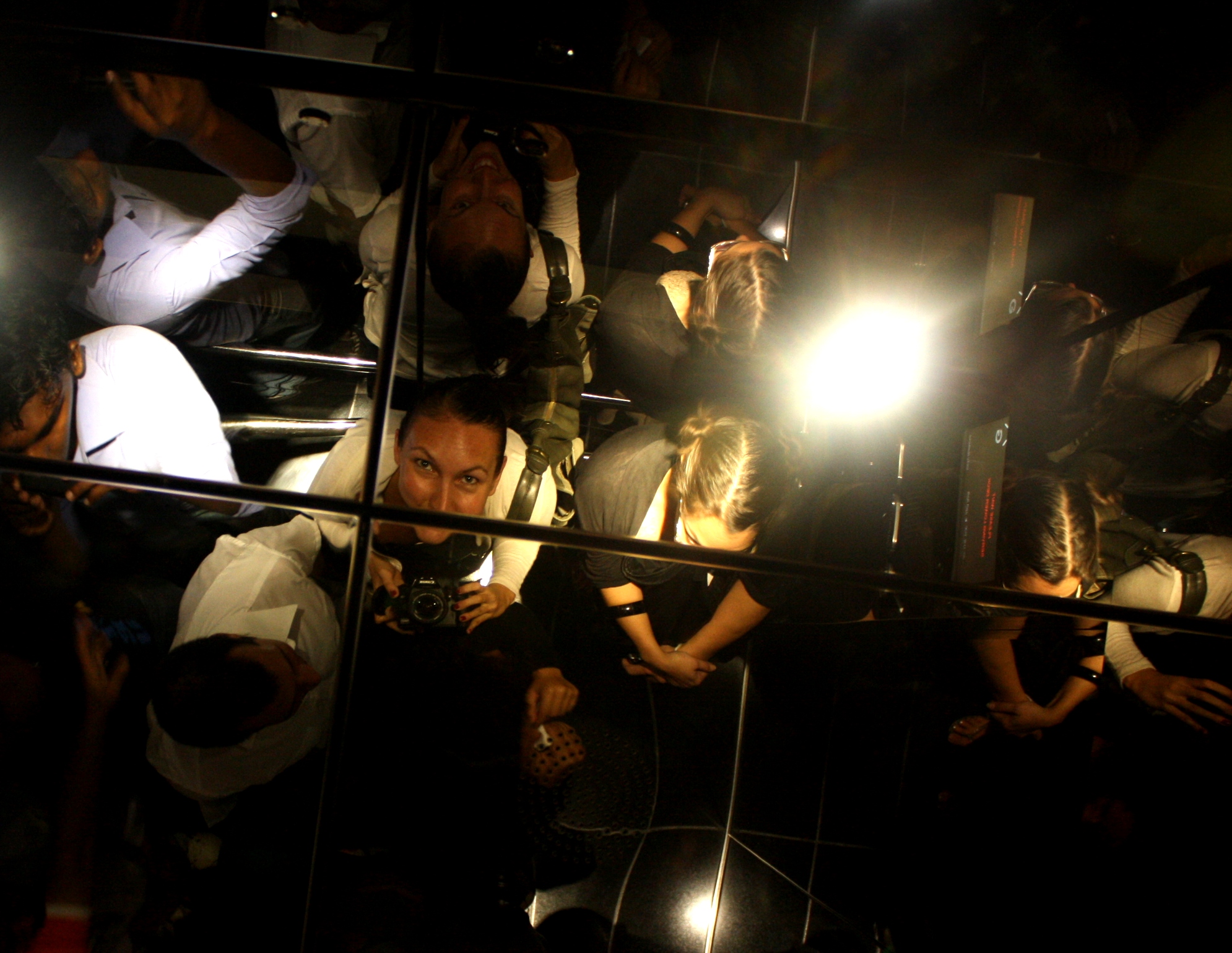
Descending the tallest building in the world I heard that little “tick” you make when you have checked another “biggest”, “tallest”, or “oldest” off your travel list. A trip to the Burj Khalifa is not however your run of the mill roadside attraction. With over 28,000 glass panels this impressive sky scraper towers above the innovative city that is Dubai, reminding us that in the United Arab Emirates, the sky may not be the limit.
A is for Abaya, B is for Betsey Johnson
Posted on June 15, 2011 12 Comments

I don’t like to be told what to do. Tricky character trait when faced with the challenge of camouflaging one’s self in the fabric of a culture not your own. After failed attempts to acclimate on the scene by drinking too much tequila in Mexico, or by wearing stilettos on Italian cobblestone until my feet resembled a fresh tomato, I have a new approach to camouflage, actual camouflage! If I can’t weave myself into the fabric of Arabic culture then why not slide my skin into the fabric of the traditional Arabic garb? The abaya stands in my mind as the cornerstone of the world’s often misinterpreted view of Islam. It seems that I have become so fascinated by the history behind the long black veil that I am now wearing one.
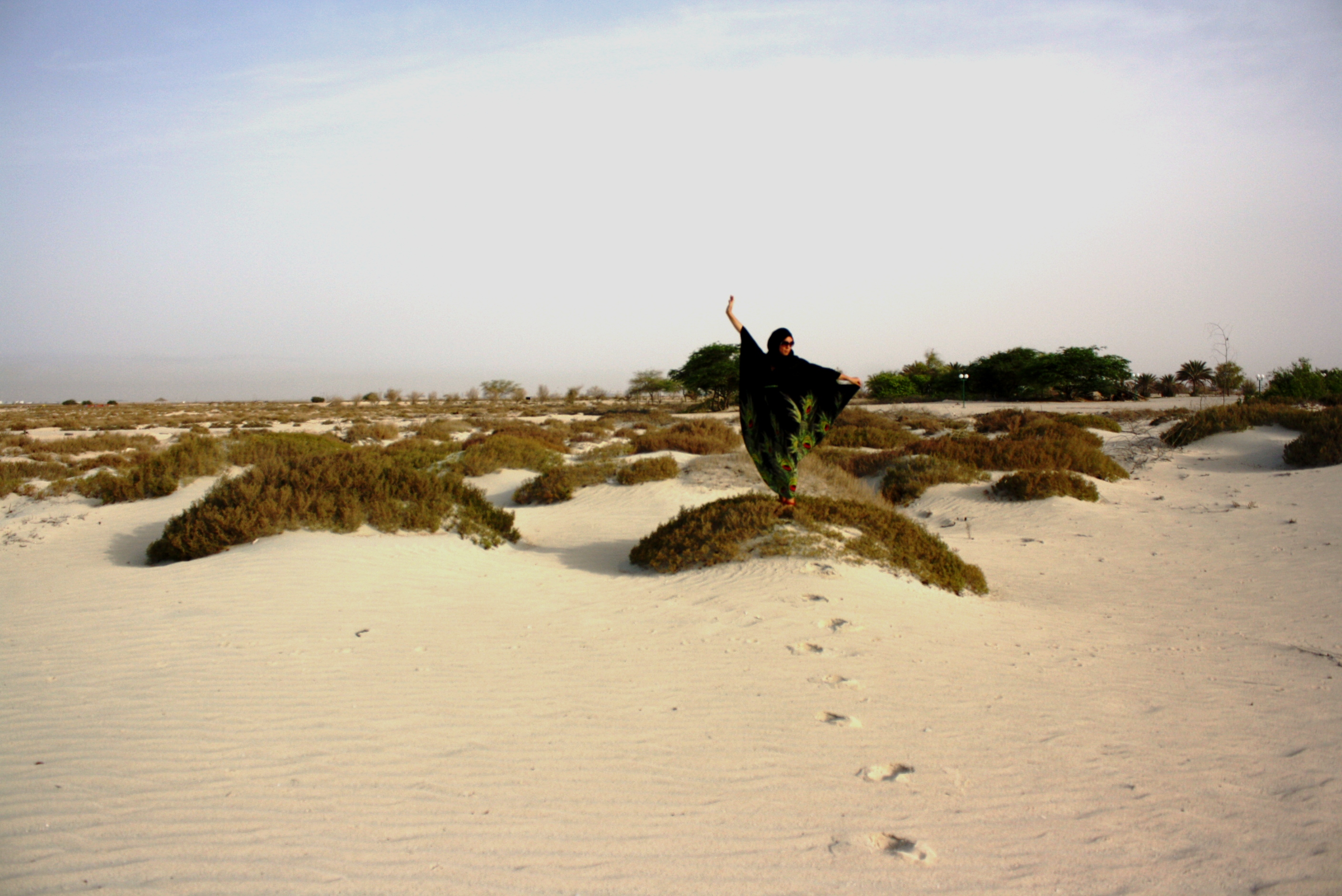
I was doing what any party dress whore would be doing on a Saturday afternoon in Dubai, perusing Betsey Johnson for some Summer crazy. “Too much zebra there…the bedazzled mermaid train might weigh me down a bit…wait…is that what I think it is?” On a very special rack, in a very special store I found the ultimate, oxymoronic outfit: A Betsey Johnson abaya. Long, black, with just a hint of flourish in the form of peacock feathers making their way up the train of this otherwise somber gown. SOLD! After carrying my purchase around the Ibn Batuta mall, observing women window shop through their sheer, black veils, I pondered further the origins of the abaya I now owned.
For initial research I turned to Wall Street Journal correspondent Geraldine Brooks. Brooks, who spent six years covering the Middle East, has written a frank collection of essays in Nine Parts of Desire, The Hidden World of Islamic Women. Her book stems from her experience working, living and traveling with the women of Islam directly following the death of Iranian religious leader Ayatollah Khomeini. The timing of Brooks’ trip to the Middle East coincided with a turning point in Islamic history, while the world watched and questioned 1300 years of religion. Brooks points to The Chapter of the Light from the Koran in which it instructs women to “…Lower their gaze and be modest, and to display of their adornment only that which is apparent, and to draw their veils…” This chapter in Muslim religious text dates back to the time of Muhammad when it became important for men to view women only from “behind a curtain” in order to preserve a woman’s dignity and lead Muslim men away from temptation. The interpretation of this passage in the Koran has been dissected by theologians, historians, Christians and Muslims alike. But if it is one thing I have learned about culture and religion, these speculations don’t matter.

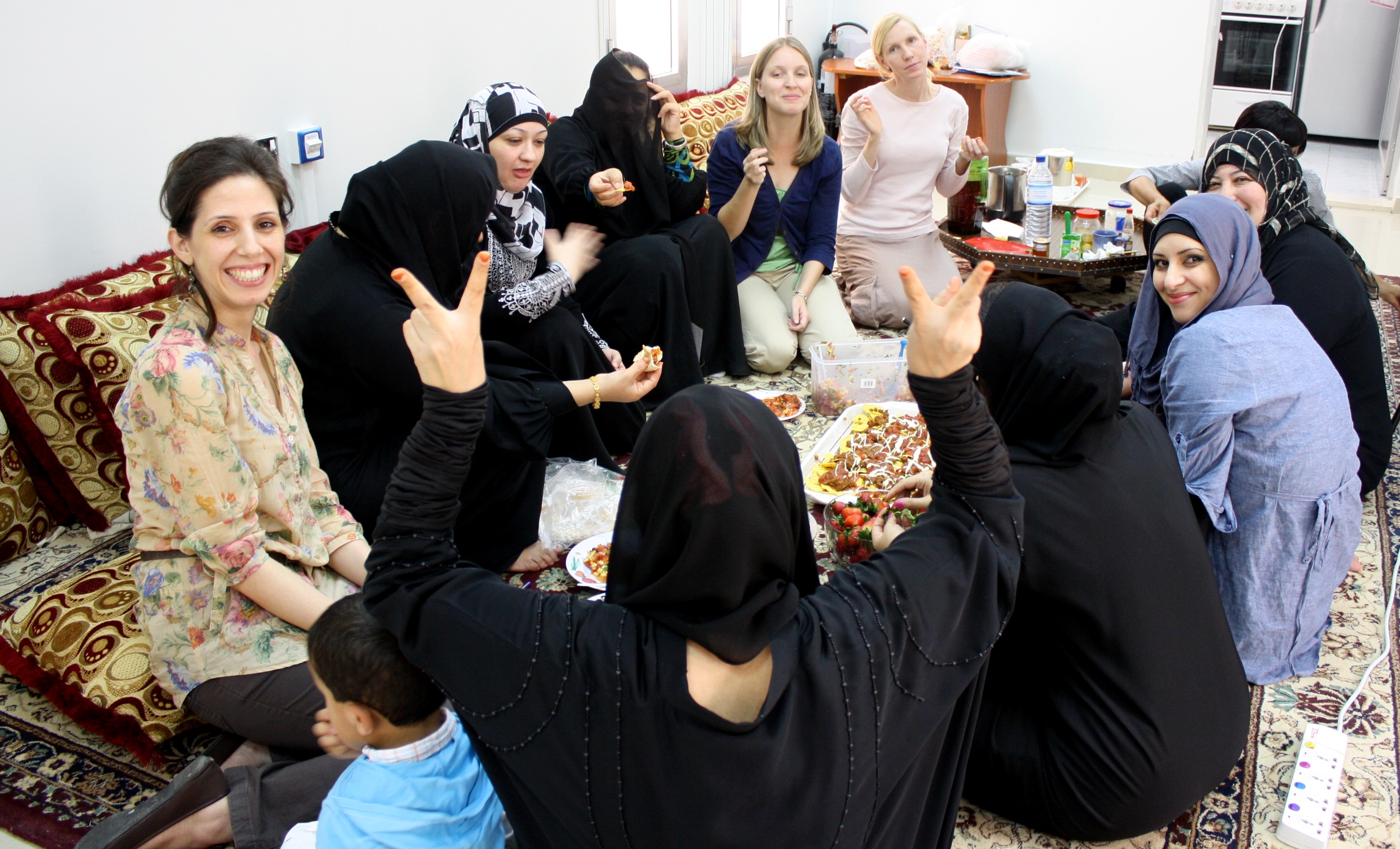
When I was living in the Northern Italian home to the Shroud of Turin, I discovered that for the devout Catholics, the carbon dating on the shroud to determine if it in deed was pre-dated to the time of Jesus Christ, was a pointless exercise. It was in fact the absence of the Shroud, on its trips to a lab in London, that raised the most upset and discussion among the Italian Catholics. For Muslim women, the question of possible misinterpretation of The Chapter of the Light makes little difference in their devotional practice. From my experience working with a staff of Muslim women, the veil is entirely a choice, important as much to their religion as to their exercises in social freedom. The veil allows these women to go out in public gaze, confident that they are preserving their virtuosity.
During his eight year rule of Iran, Mohammad Rezā Shāh Pahlavi imposed a modernization of the Middle East that again questioned women’s rights, particularly their dress. Women were discouraged from wearing their veils in an attempt to westernize the Arab state under the Shāh’s rule. The result was Muslim women retracting from public, leaving their jobs, their education, and staying in doors where they could avoid the gaze from men outside their immediate family. The veil symbolizes a discourse in Muslim culture that can not be easily radicalized and abandoned.
The women I have befriended in the UAE wear their abayas and veils as a symbol of their devotion, they wear them because their mothers and grandmothers wore have worn them since the time of Muhamed. The surprising twist is that they wear them as a fashion statement too! Slouchy Z is just one of the fashion houses to modernize the abaya, following fashion trends from the West and incorporating these into their designs for the Spring/Summer 2011 collection. Although the garment’s roots are sewn into the cultural heritage of the Middle East, the Abaya must also function as a piece of clothing, changing from one decade to the next. Within the all female staff in the school where I teach, a wide range of abaya interpretations can be found. Some women opt for a somber, black robe, while others find flourish wherever possible, carrying jewels sewn to hemlines and wide, Morticia Addams inspired sleeves. My Abaya represents my attempt to understand and participate in this 1300 year old tradition of covering oneself, and at the same time bringing the party back to party dress wherever in the world I find myself.
Happy Summer dress shopping!
Summer Kick-Off, Road Trip to the Liwa Oasis
Posted on May 28, 2011 3 Comments
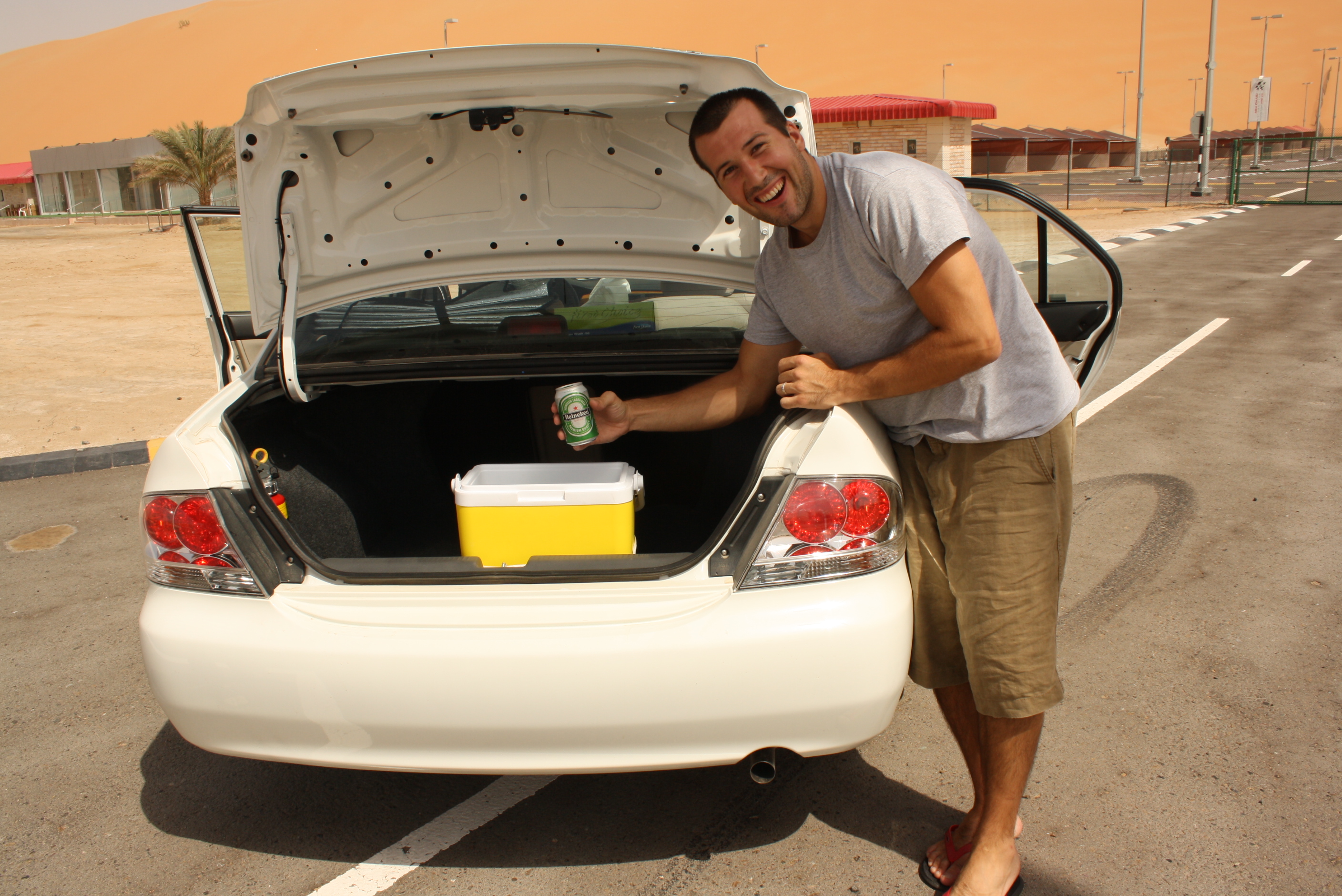
Summer is on the sandy horizon and for a Pacific Northwest girl that means one thing, Road Trip! Problem 1) My international driver’s license is not valid in the UAE…go figure? Problem 2) In an Islam nation alcohol is prohibited for purchase unless an alcohol license is obtained, which I am working on. But come on, a road trip without a cold beer at the end? Problem 3) Arab taxi drivers are hit and miss when it comes to things like speed limits, air conditioning and hands-off their passengers policies. I had just about given up on my day dream of cruising independently down one of the UAE’s sand swept highways, dotted with camel farms and trust funds riding around on quad bikes. But that’s what friends are for, to hold you to all of your daydreams. And that is just what my friends did, took me on my best summer road trip yet. We drove through the Al-Gharbia desert to the Liwa Oasis, home to one of the world’s largest sand dunes and none of your typical roadside blueberry stands.
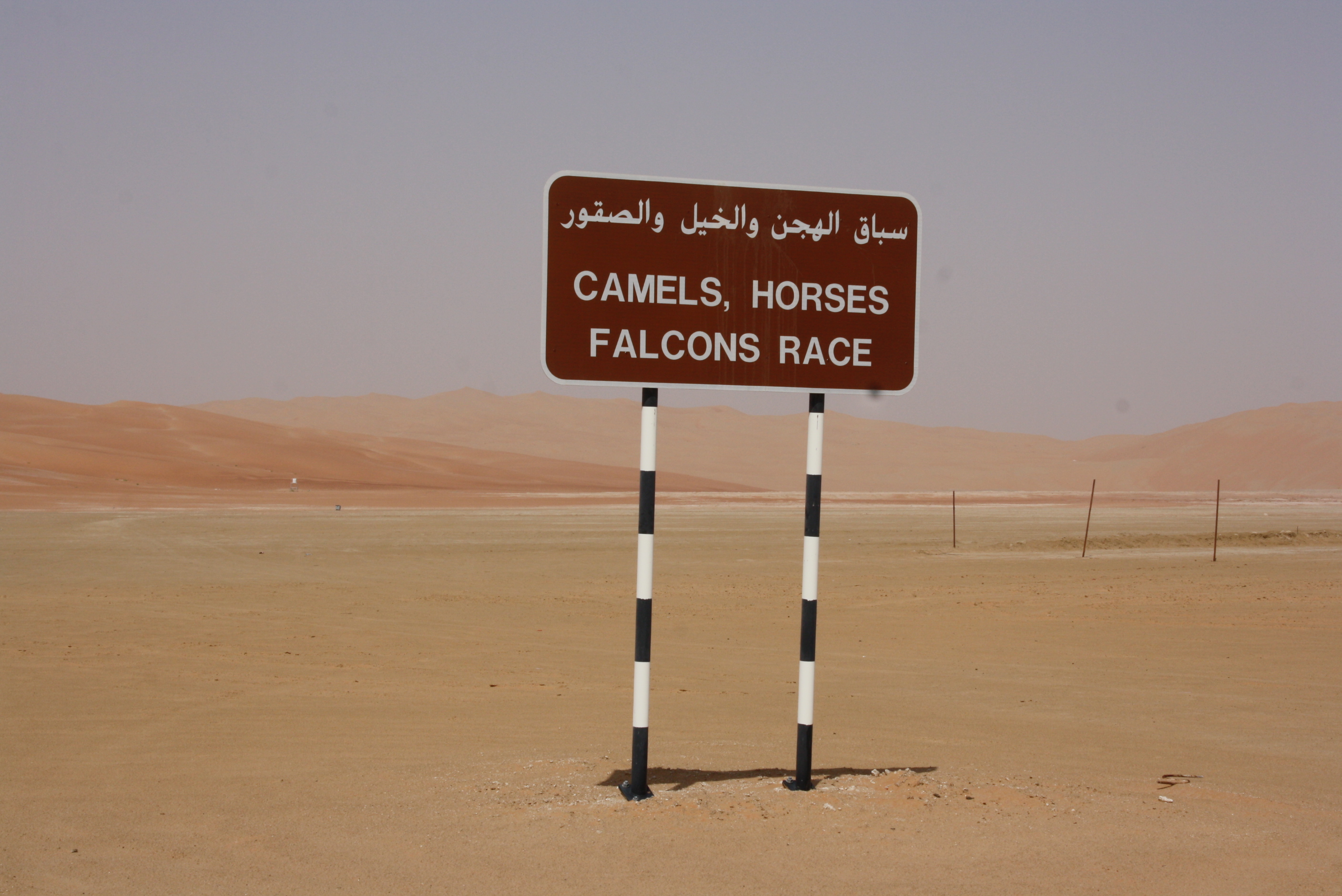
Liwa is a special place to Emirates nationals as it is the birthplace of the Al-Nahyan and Maktoum tribes, now the ruling families of Abu-Dhabi and Dubai. Just outside Liwa City, off of the main highway is Moreeb Hill, standing at a neck cranking 300m tall. Teenagers gather at the base of this sloping sand dune at the annual Liwa International Festival held in February to participate in and witness sand boarding, car racing, falconry, camel racing and other traditionally Emirati sports.
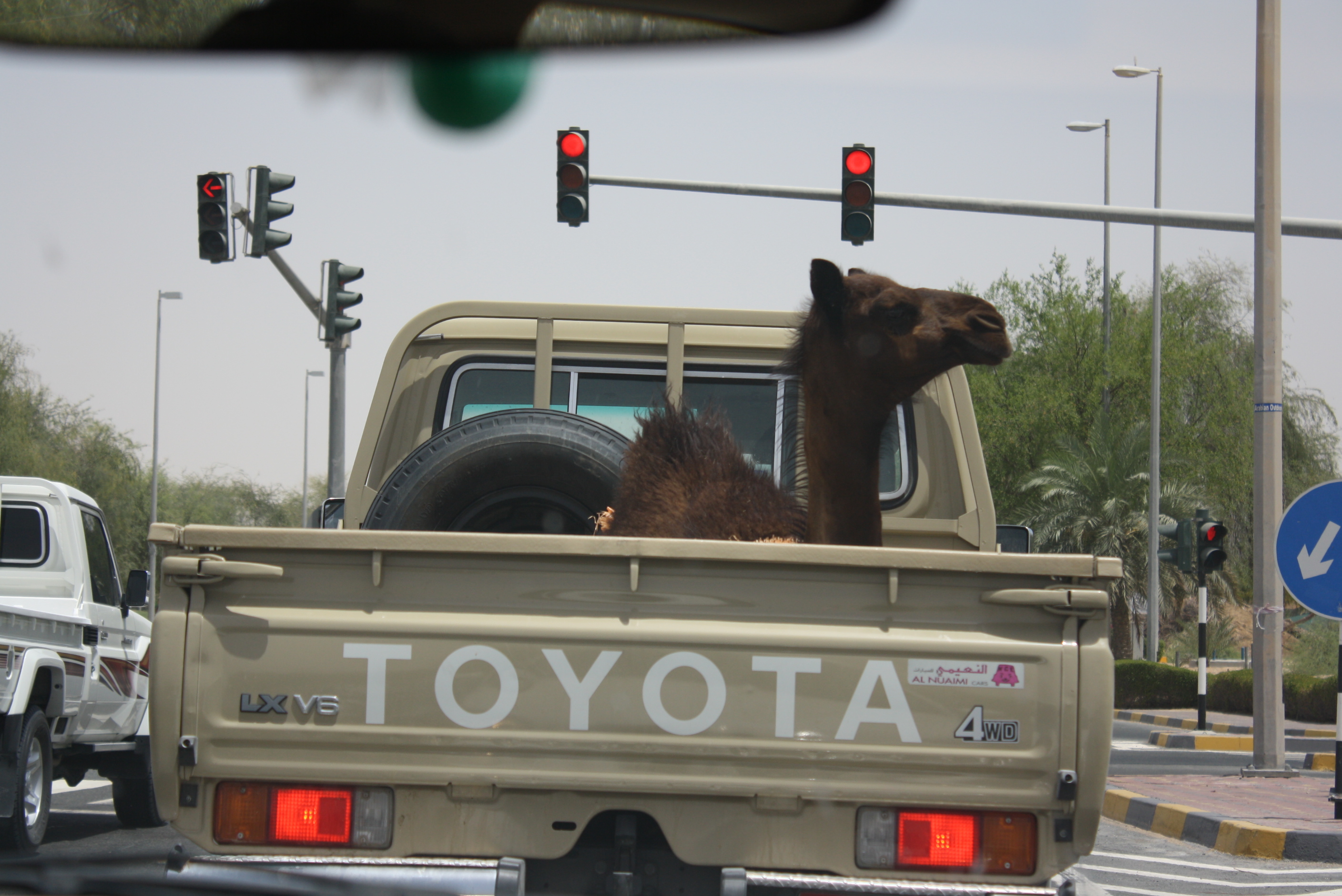
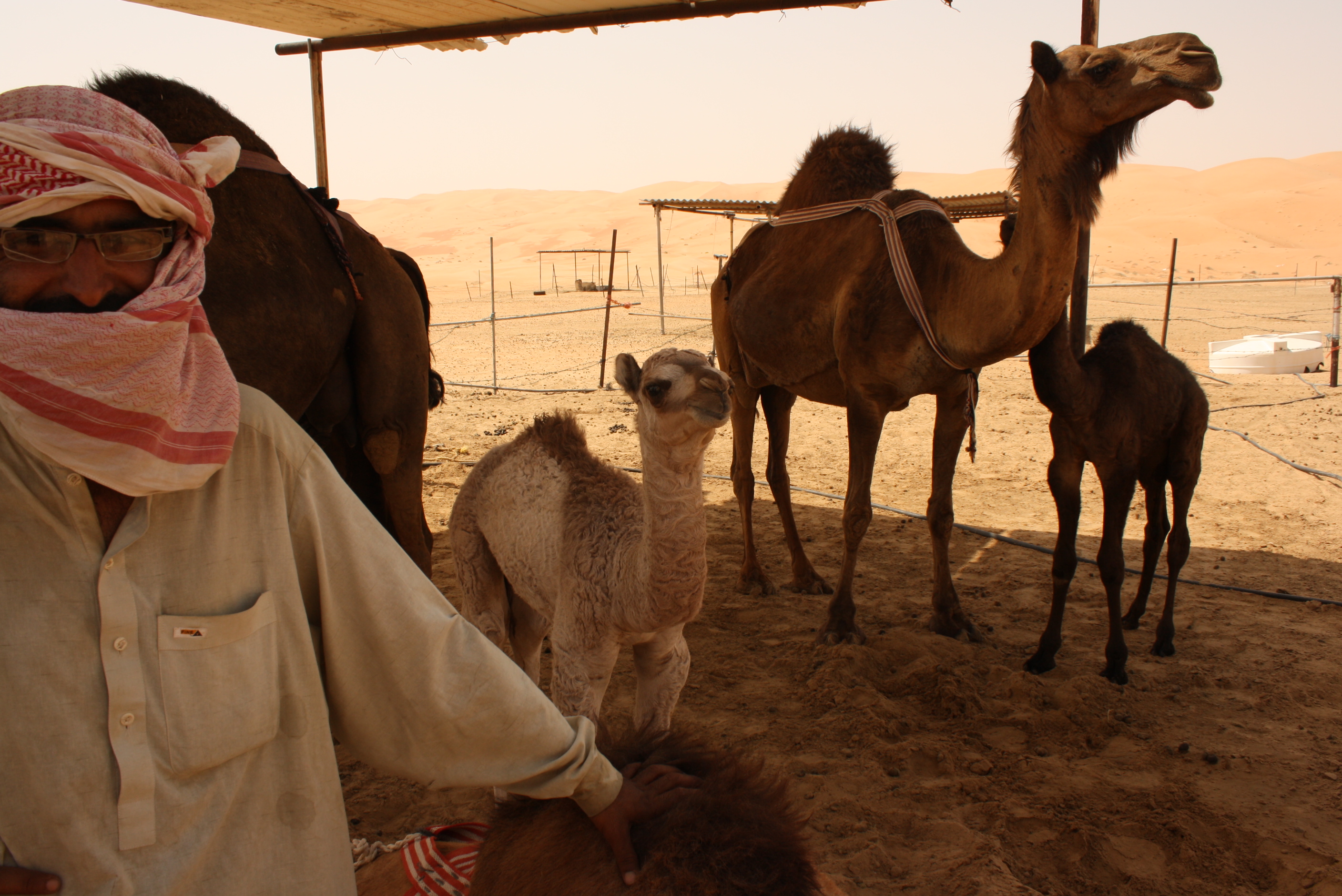
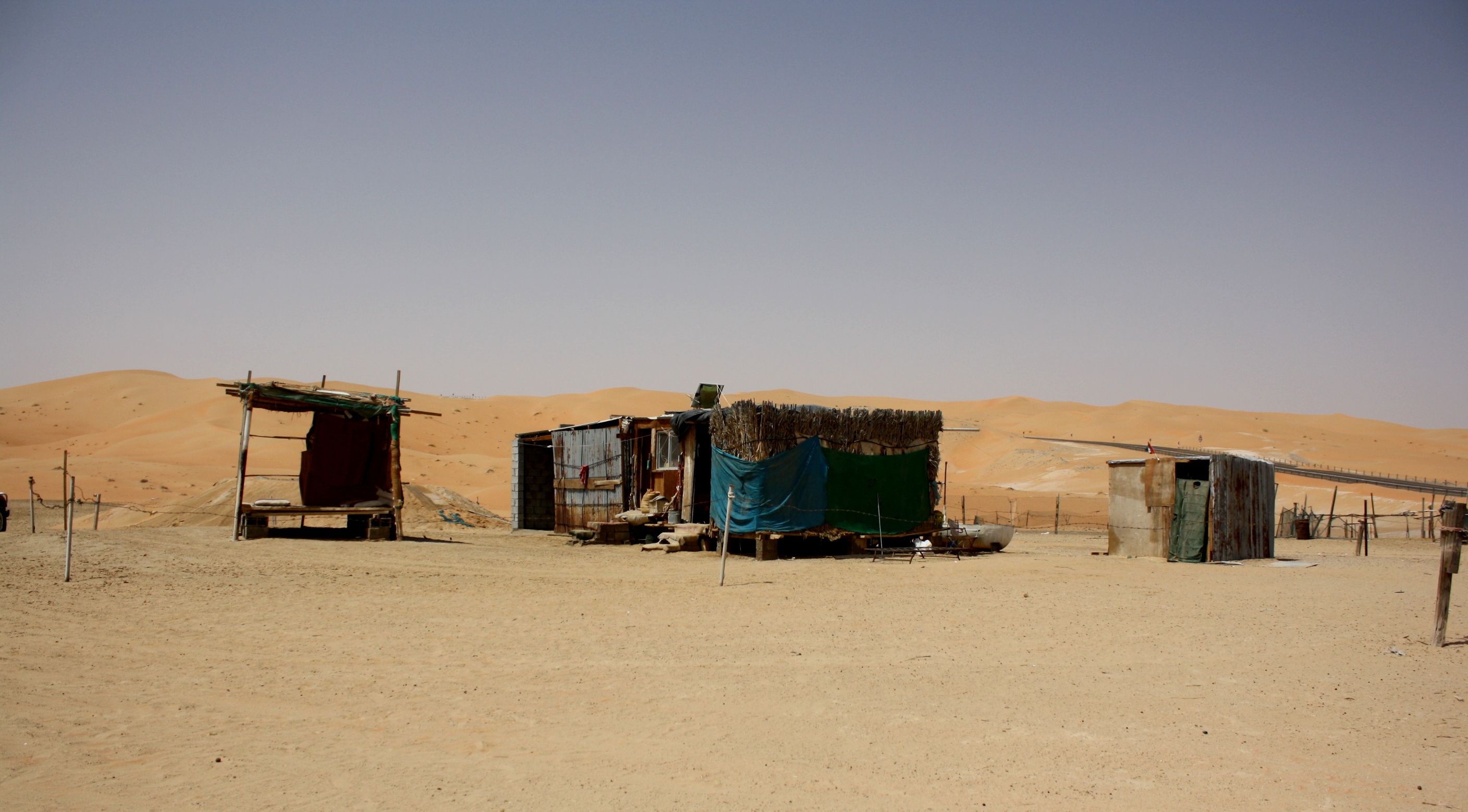
Typical of any road trip are roadside attractions, and in the UAE, few desert farmers have taken inspiration from Tom Robbins’ classic novel. Instead roadside camel farms make up for their lack of whimsy with raw desert appeal. We stopped to take a peek at one of the more remote farms, situated in the valley created by two sloping dunes. The farmer, a man from Pakistan named Samir motioned for us to get out of our car and come see his heard of single humped camels. Samir’s home is a one room shack built from parts resembling pieces fallen off of the large water trucks that cross the desert. It boasted a “sun deck” with a lawn chair perfectly positioned to receive the 120 F rays on a typical Arabian afternoon. Samir showed us his camels, their babies and a few straggler chickens who had taken shade under a water trough. Deprived of any female attention, our host took a particular liking to me, and we left before taking a camel ride with the groping farmer.
The UAE is as polarized as one nation can be, with its development rocketing toward a Jetson aged utopia, and a vast desert harboring traditions and secrets of a near past. It is only when I return to my home in Abu Dhabi’s Western region, hours from a skyscraper, that I watch a country’s landscape move back in time. There exists a fleeting glimpse of what the geography of this land once was, and is predicted to disappear in favor of steel and glass, laying in the shadow of the Burj Khalifa. But for now visitors to the UAE get a rare look at past and future of a developing nation, by simply embarking on a weekend road trip.
108 for Japan: Complete!
Posted on May 20, 2011 Leave a Comment
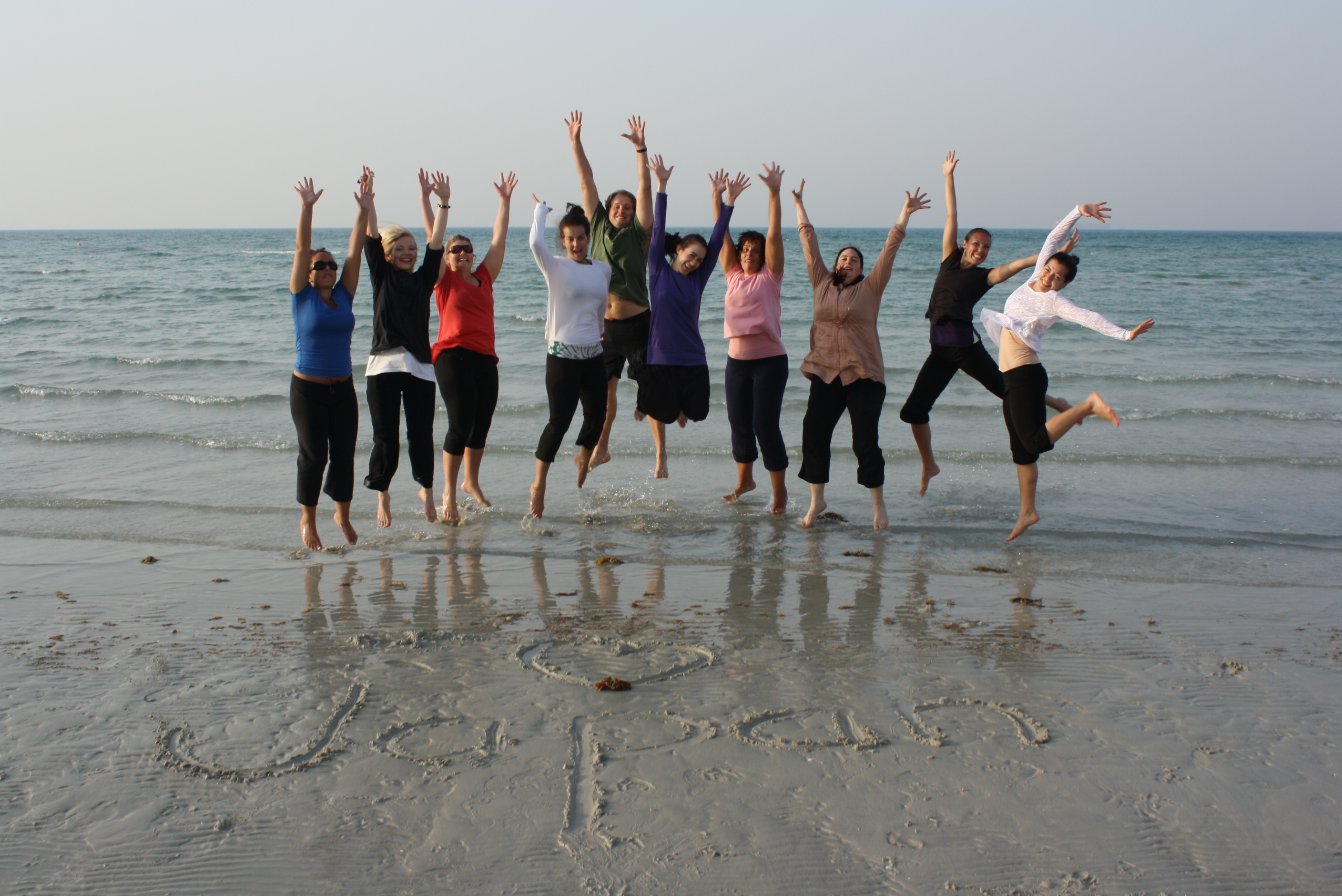
Little satisfies me more than doing my part to create a better world, and physical exercise. You can imagine then how elated I was Friday morning after completing 108 Sun Salutations for our Japan Aishteru fundraiser. The event was a huge success both in terms of monies raised and participation across the globe. Yogis from Sequim Washington, Seattle, Tucson, Ohio, Chicago, Johannesburg, Mumbai, Banares, Rishikesh, Honolulu, and Abu Dhabi, completed their sun salutations with Japan as the focus of each breath. I was so proud to be part of this special project, conceived in the proactive mind of dear friend Jo Kelly and born out of huge enthusiasm by a group of selfless educators here in the UAE.
Thank you for supporting this cause and as always this blog, with your emails and comments.
“Yoga exists in the world because everything is linked.”
Desikashar
A World of Music, WOMAD Festival Abu Dhabi
Posted on May 8, 2011 2 Comments
I used to be really in to the Putumayo world music albums and listened to everything from “French Cafe” to “North African Groove.” These albums allowed me to close my eyes and get far away from my actual self, not yet traveled, and live an imagined life where I was changing the world, jumping off waterfalls, and dancing to a hole in the wall Cuban band fueled by never ending sangria. These day dreams would last for at least the 3 minutes and forty five second duration of the song, when I would wake to the realization that I had dreamt right through my bus stop and was going to have to walk up sehome hill if I wanted to make it to my Geology lab.
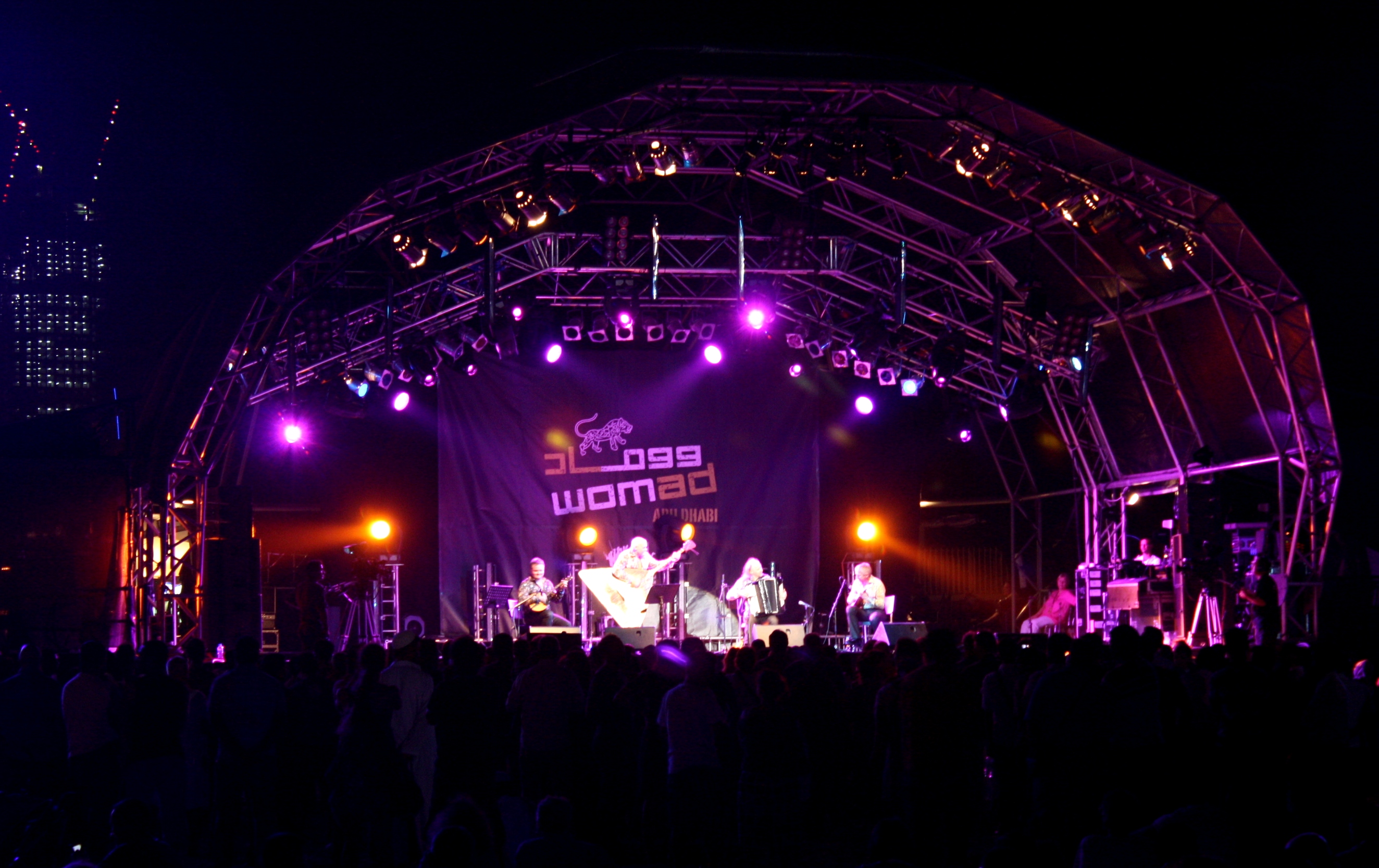
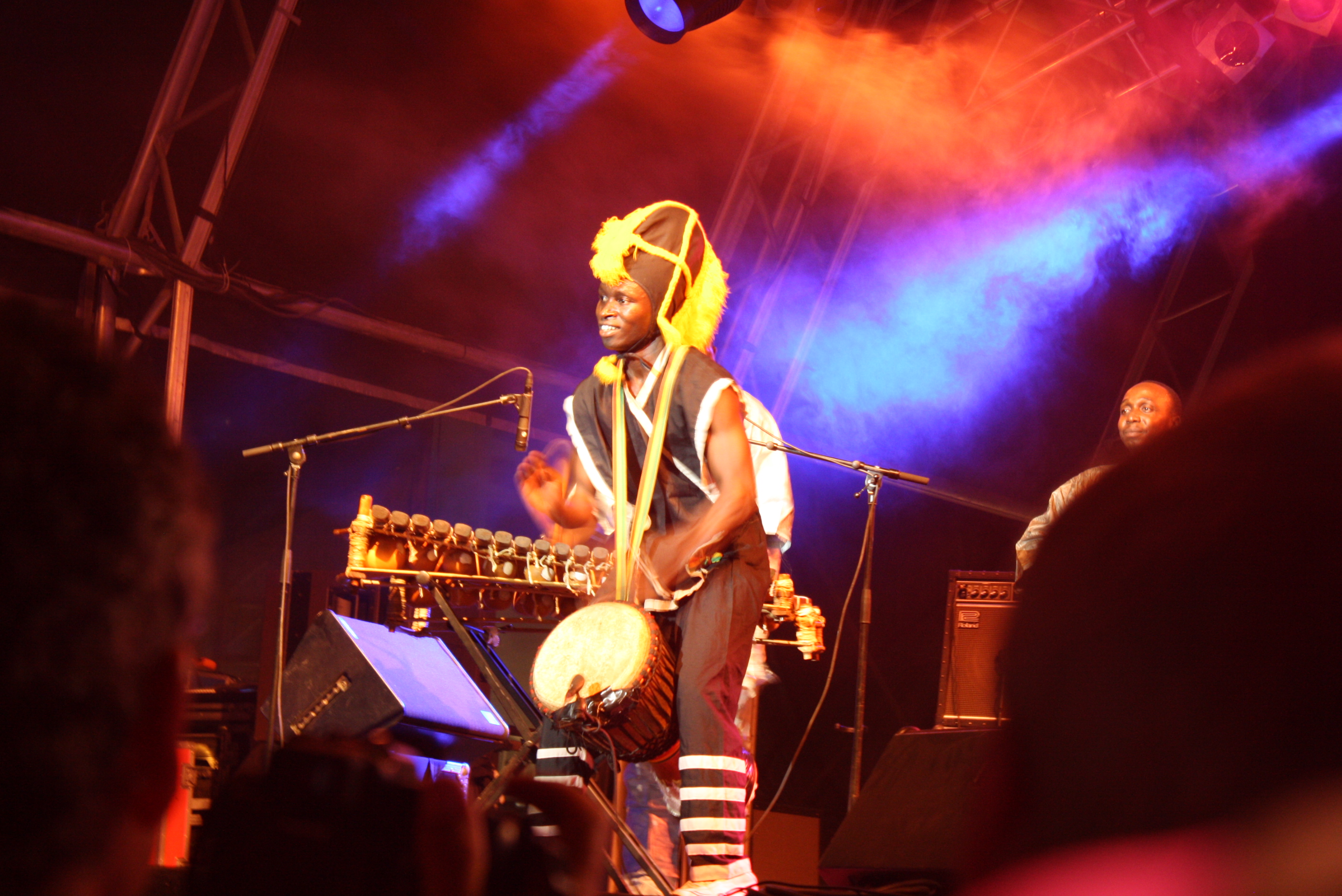
Years after passing Geology class and leaving my home town, I still love these albums. Now, instead of providing the soundtrack to an infinite list of imagined adventures, they are reminiscent of places I have actually seen, people I have salsa danced with, and exotic cuisine I have helped prepare. Our auditory sense has the ability to transport the mind to a re-lived memory or to create a whole new, imagined experience. The world music genre is especially intriguing because it can do both of these things at once: remind and inspire. This rang and sang true for me last month when I attended World Of Music Arts and Dance WOMAD located on Abu Dhabi’s corniche, during one of those perfectly breezy Middle Eastern Spring evenings. In one sitting I heard French folk, reggae, Iraqi jazz, African drumming and a very unique hybrid of Celtic trans…River Trans? This festival was like the ultimate mix CD with the mixed crowd of world music patrons to match.
The corniche is a prime strip of waterfront property extending four kilometers with a public beach, picnic spots, and facilities for athletes. Event planners set up two stages on opposite ends of the beach utilizing that old party trick where you space out your seating throughout the venue to encourage guests to move about and mingle. Fitting with the multi-cultural theme there were booths set up selling traditional abayas, Indian bead work and African drums.
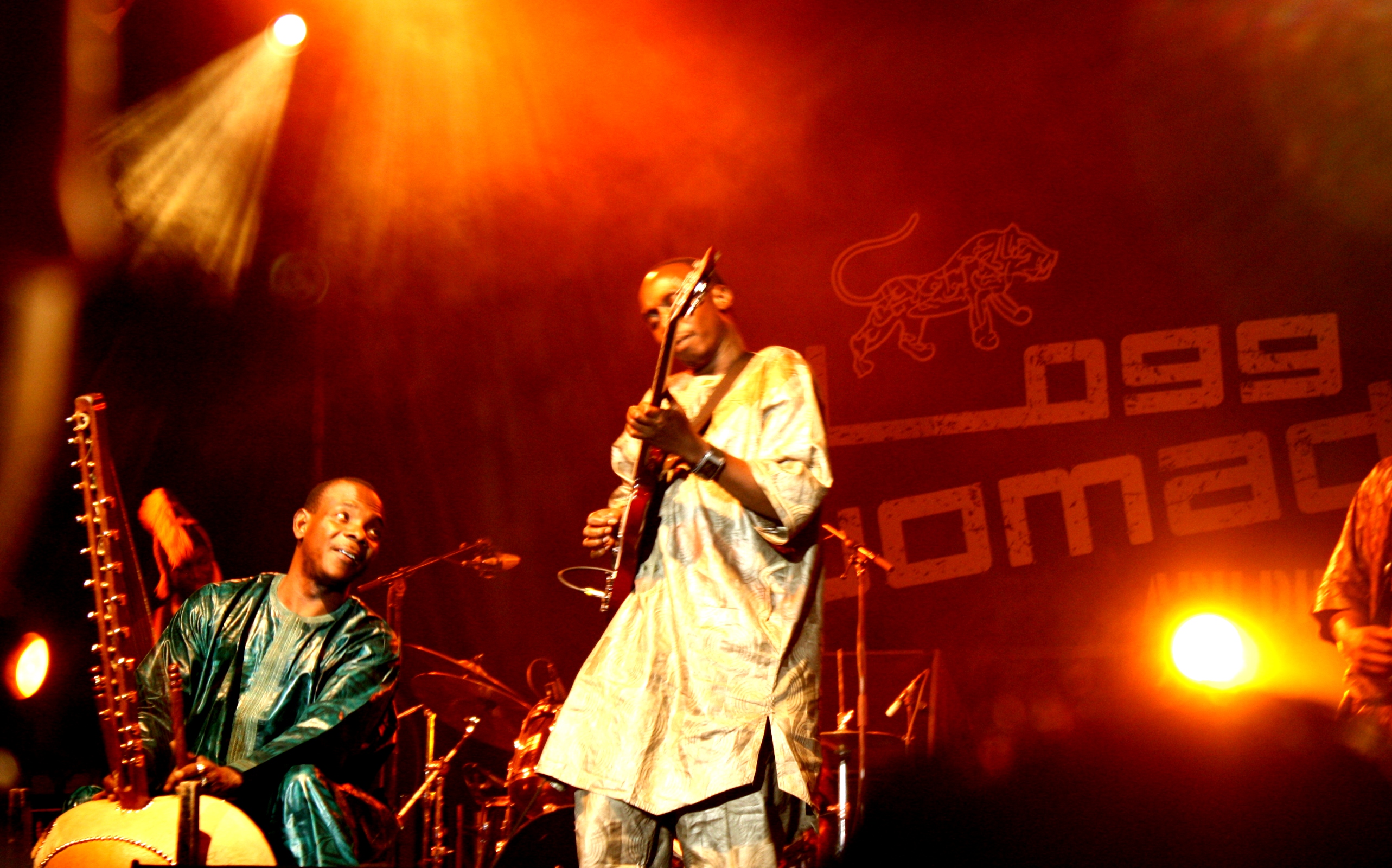
After an inspiring performance by West African Kora harp master Toumani Diabate, music patrons migrated toward the bohemian sound of the eleven stringed Oud. Hungarian born musician Omar Bashir, best known for his mastery of the Oud was inspired at the age of five by his father musician Munir Bashir. Omar’s sound, best described as Arabic Jazz provided an intoxicating and peaceful lullaby to woo even the wildest WOMAD crowd. As I drifted off into a day dream world I couldn’t help but notice the colorful crowd illuminated by a fat and silvery moon. Rastas slowed danced with Arabian beauties and I cozied into the sand with new friends and mad appreciation for a festival that epitomizes world music.
Project Surya: We Love Japan!
Posted on April 15, 2011 1 Comment
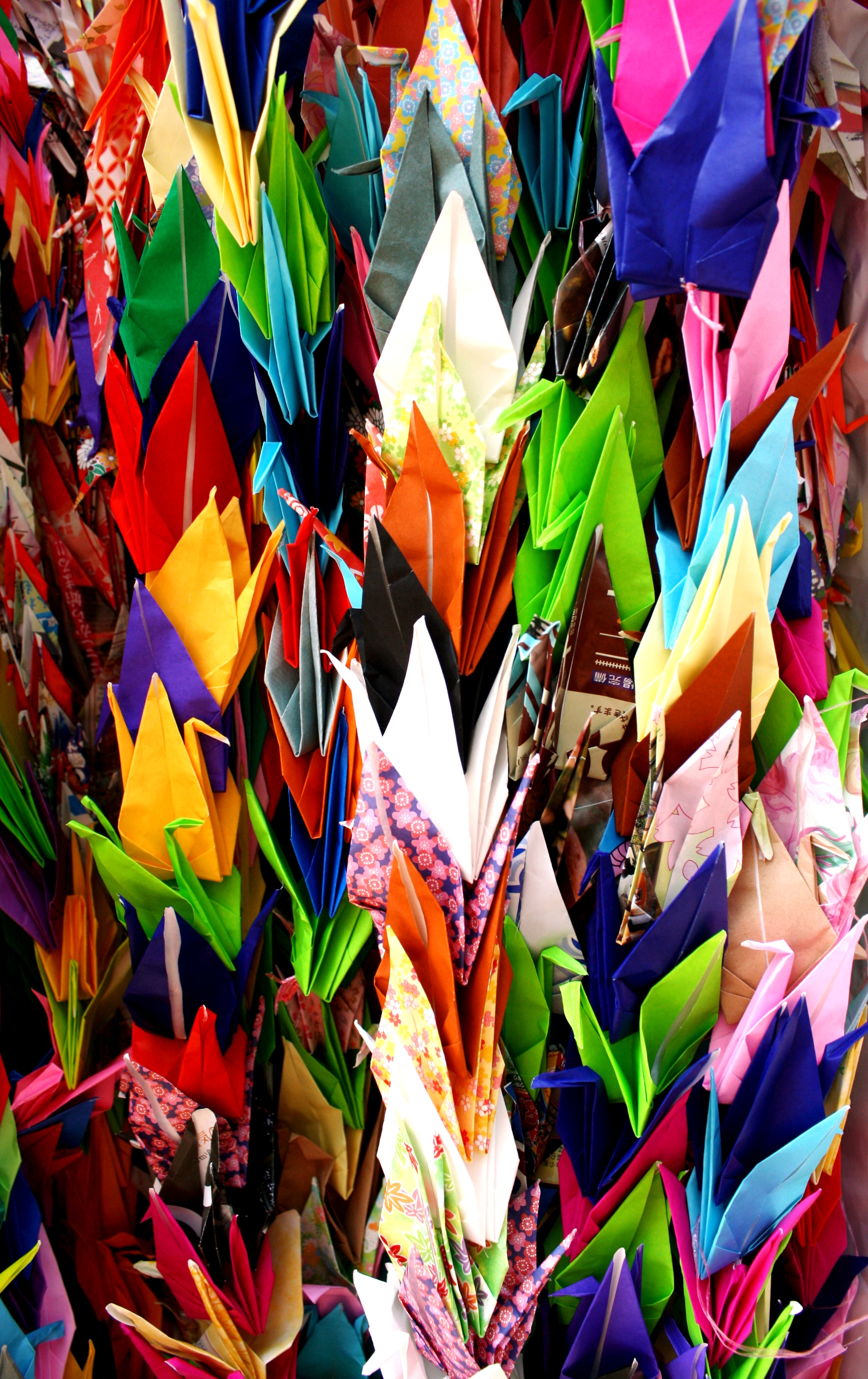
This is a heads up about a special project I am participating in to raise awareness and funds to help Japan. The project is called Japan Aishteru “We love Japan” and aims to provide aid after Japan’s recent earthquake and tsunami. After last year’s visit to Japan and watching this devastating story unfold I have felt saddened and helpless at the struggles this amazing country is facing. In order to show support, a group of women have pledged to dedicate 108 sun salutes through Project Surya in order to raise awareness and funds for our brothers and sisters in Japan.
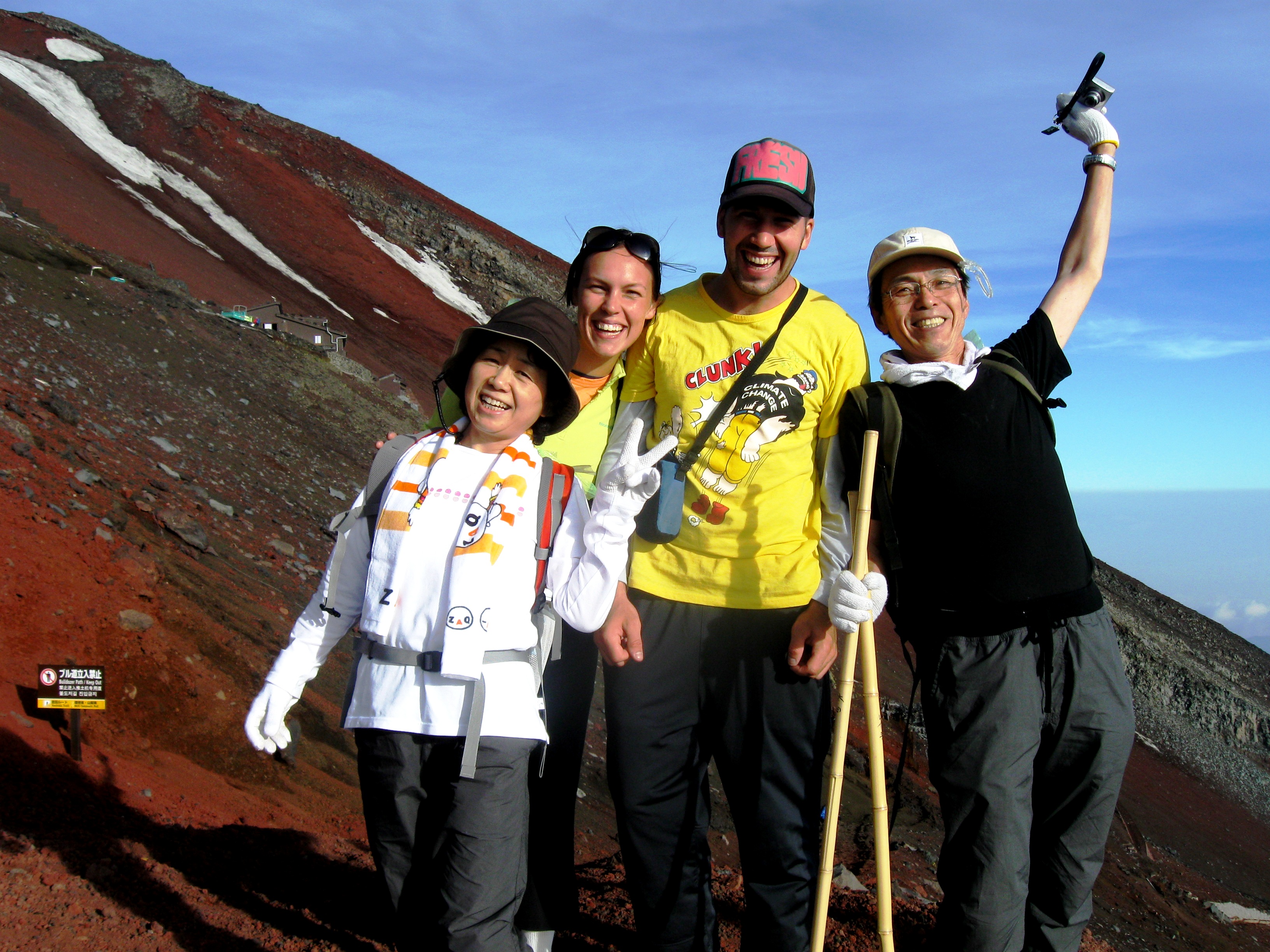
The FAQS:
An estimated 30,000 people were killed in the 9.0-earthquake and tsunami that tore through Japan 250 miles northeast of Tokyo on March 10, 2011. Over 157,600 people are currently in shelters, near the epicenter of the quake, 150,000 houses in eight prefectures are without running water and 3.2 million homes are without electricity following the strong aftershock. Japan has been left with an estimated cost of over $300 billion, this is the most expensive natural disaster in the history of our existence.
Please visit Project Surya’s web-page to find out the number of ways you can become involved in this project.
Thank you for your support!
Friends and Phở: A Week in Saigon
Posted on April 12, 2011 1 Comment
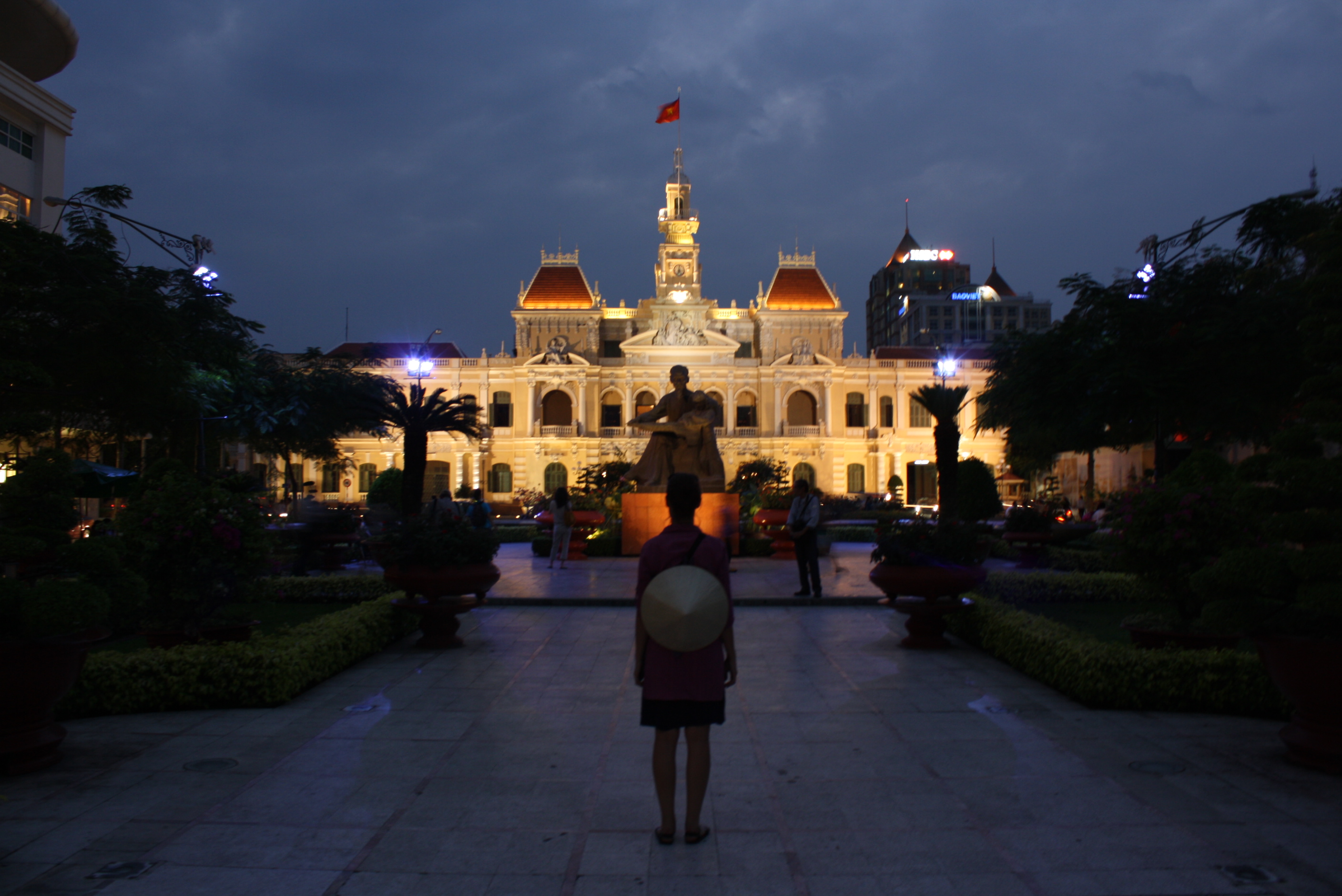
They say you can never go home again. A tricky saying when your home has spanned three countries in six months. Don’t get me wrong, I in no way feel sorry for myself, in fact this popular phrase has freed me up to the fun and challenging task of taking the concept of “home” with me in my backpack. I felt at home in Korea, not that I ever got used to often being the tallest in a room, or that I grew accustom to kimchi for breakfast, but it was my friends who made my home there. Naturally our last day on the way to the Seoul airport is heart wrenching even now to remember, until I realized the advantage of having seriously nomadic friends. Oh the places you’ll go! With six of these bosom buddies having relocated to Saigon and this city being among the 75 cities I want to visit this year (life is short OK!) it was a no brainer that Matt and my first break from the desert would be to re-live our Korea glory days in Vietnam!
Matt and I had just over a week in Vietnam so we chose a very small radius of area to cover, reflective of the pace in which I prefer to travel: leisurely, with enough time to sample traditional cuisine, get tricked into drinking too much with locals, and picking up some truly unique souvenirs along the way. Our base was Saigon where our gracious hosts offered us a bed, a scooter and a place to rest our hookah. I was made aware of the government presence shortly after arriving when the owner of our host’s apartment asked for copies of our passports during our stay. I stepped outside to a stream of scooters decorated with the star of the communist flag and although I spent a year five hours from the North Korean border, this was my first face-to-face with a truly socialist regime. With that said, I think it is impossible to fit Saigon under any one umbrella term. This city beats to a whole new genre from its scooters that outnumber drivers, twenty-four hour pho, expat scene and surrounding green hills laced with the history of a not so distant war.
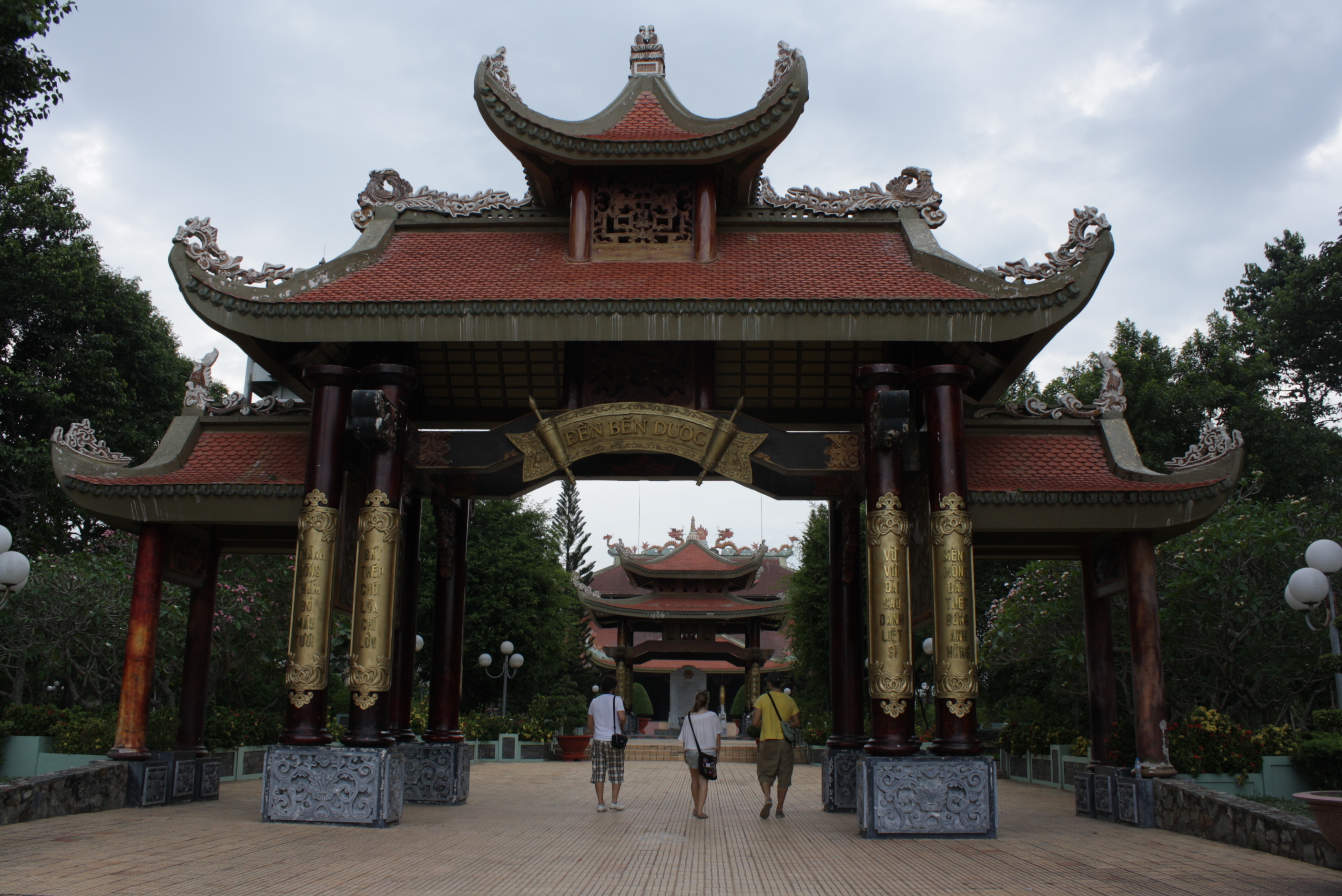
These nearby, lush hills of Củ Chi set the stage for our first day in Vietnam. It had been six months since we said good-bye to our retro, Korean scooter with its red and orange flames, so the moment we feasted our eyes on a city wall-to-wall in two-wheeled madness, we wanted on! The trip to the tunnels should take under two hours from the city, but characteristic of my preferred pace of travel, I like to stop for drinks, food cart fare, photo opportunities and the occasional flat tire.
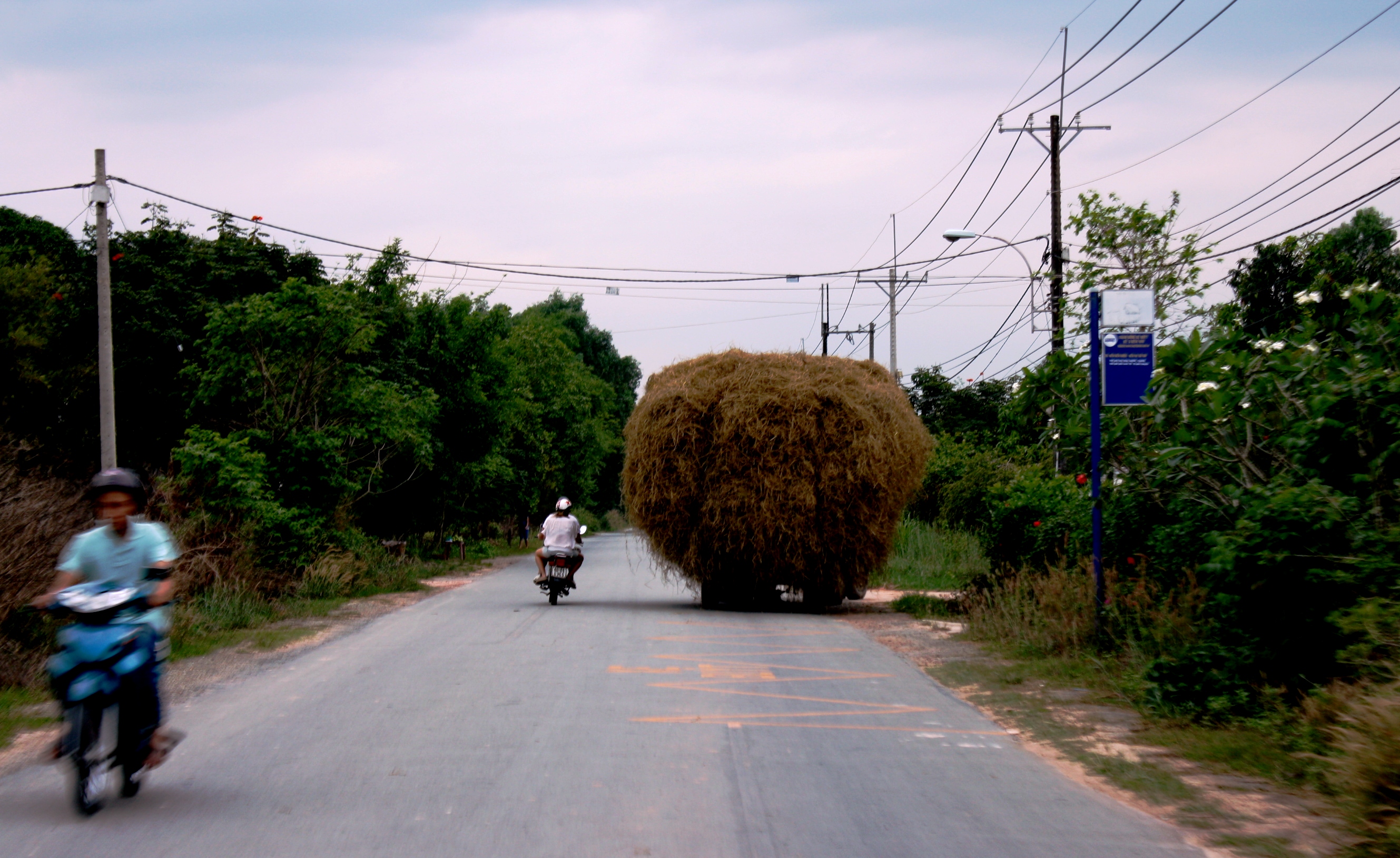
The city faded behind us after a quick tire repair and was replaced by the green rice fields so reminiscent of the Vietnam we see in postcards. An occasional ox drawn cart, communist propaganda poster and spring roll stand completed my visual sketch of the countryside. The tunnels presented a chance however to explore a less picturesque history. Our guide, a retired soldier who served in the Vietnam War, led us underground, neglecting to mention the meter tall, dark crawl space we were sharing with the bats that spend their days roaming from one passageway to the next. The network of tunnels and underground meeting rooms were used by the Viet Cong leading up the 1968 Tet offensive and eventually the seizure of Saigon in 1975.
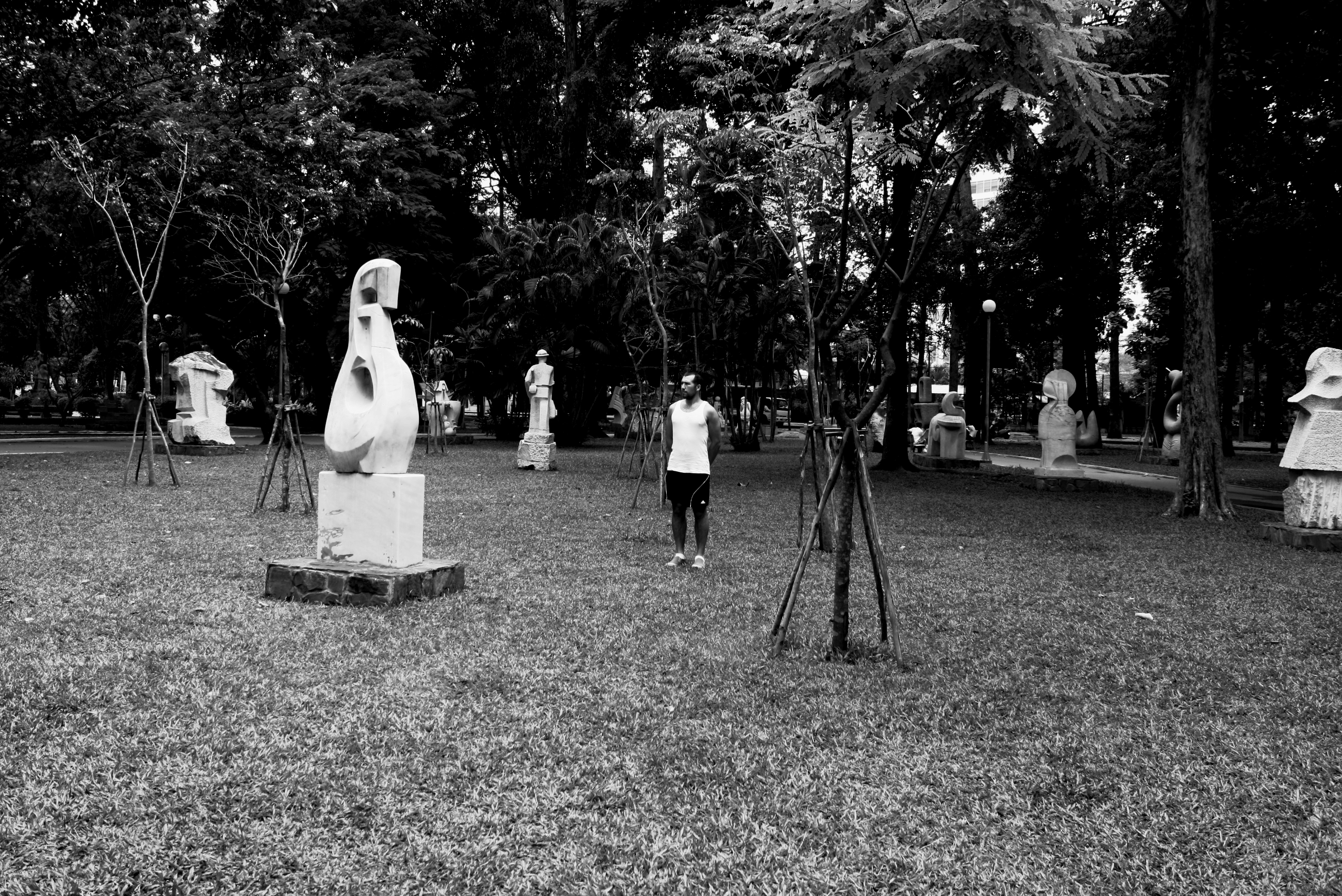
After making it out if the tunnels without turning into the newest member of the Twilight gang, my curiosity for the history of Saigon led me to the War Remnants museum. The museum was a must for me in understanding the city’s transition from Saigon to Ho Chi Minh. Additionally I make a point of taking in at least one natural history museum, or fine art collection on any city stop, as these places tend to provide a few hours of quiet reflection on the bustle I encounter in trying to experience a city on foot.
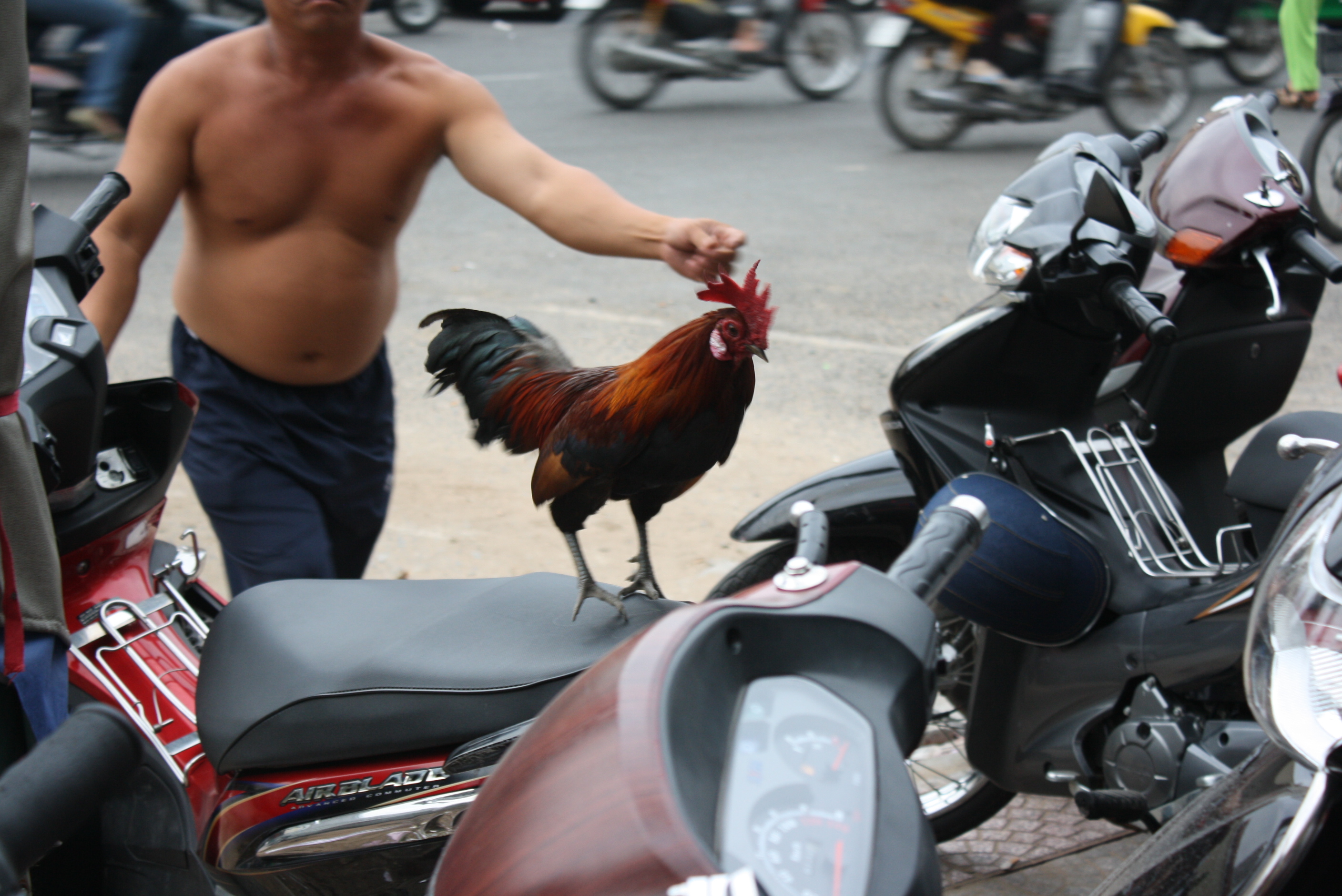
The entrance is difficult to miss, with left over US tanks and shell casings lining the driveway. I was tapped on the shoulder by the stub of an arm, attached to a man who wanted only to know my citizenship. I hesitated wondering if I could pass as Dutch and then swallowed my pride and whispered “American.” The man looked at me as if he had already known and picked me out of the crowd as someone who carried so much embarrassment and guilt upon seeing the propaganda in the War museum that I would gladly hand over the contents of my wallet. He was right. This living image of the continued suffering brought about by war rang loud inside the museum walls, and for the remainder of my time in the city.
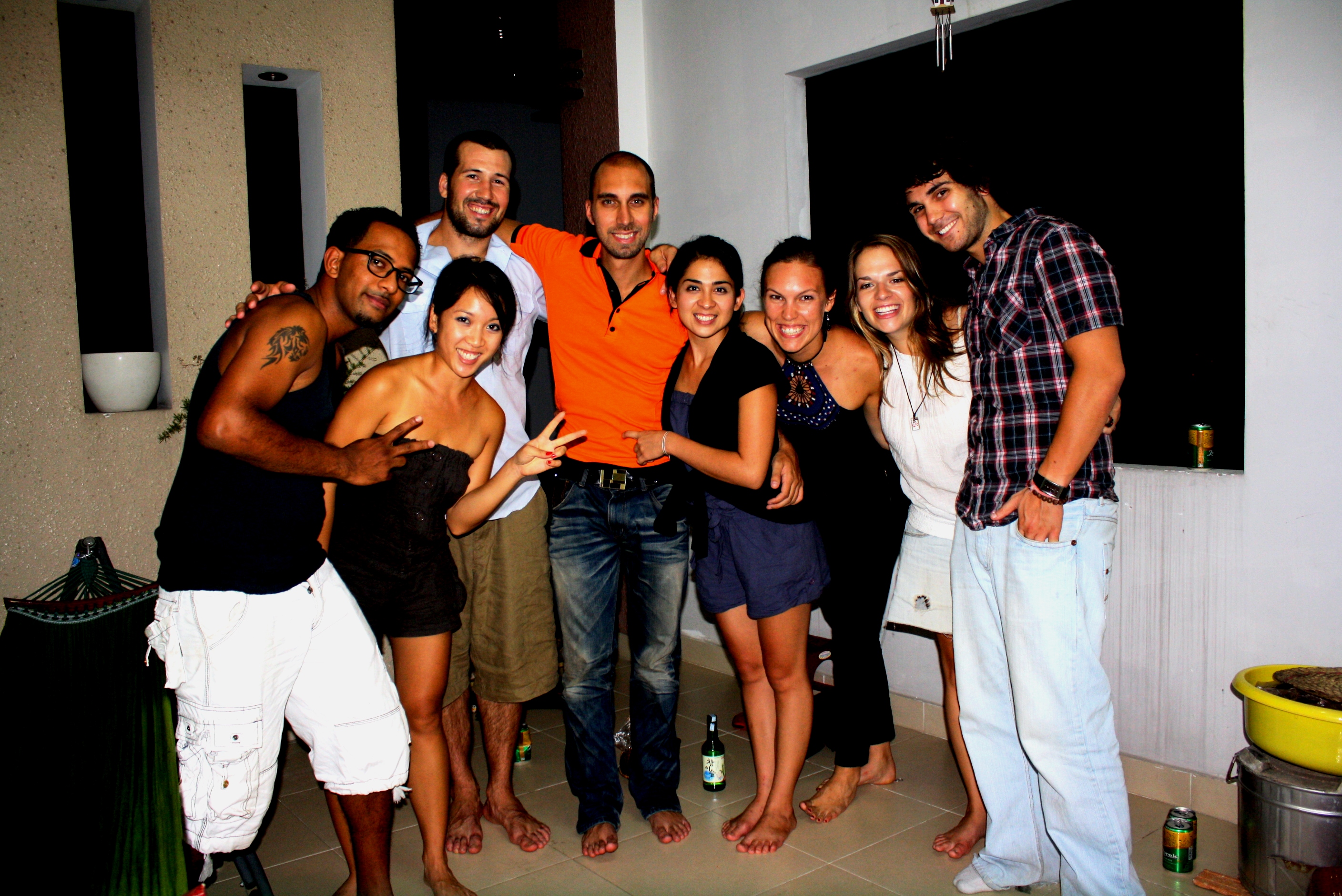
Although the museum left my head in a rebellious cloud of propaganda and uncertainty about my country as well as the one I was traveling, I stepped back out into Saigon for a night out with my Korean comrades. We hit up Pham Ngu Lao, district 1 where I overheard a group of expats talking about Bob Dylan giving a concert after nearly forty years of singing anti-war anthems heavily inspired by the Vietnam war. I wondered if Bob Dylan too felt the same full circle sensation I had as I attempted to come home again, seeing my friends here in this new setting. We found a Korean restaurant and the Hangeul seemed to flow faster than soju as we reminisced on our year together. This group has found a new home in Saigon, a city that has initiated them amidst communist stars, crispy rolls and spider webs of traffic. Just in case our old nomad neighbors had any thoughts of forgetting about us as they acclimate to their new city I made sure to leave a little token of my affection in the form of a stray kitten, once white, and in need of some love from fellow nomads.
A Taste of Dubai
Posted on March 12, 2011 3 Comments
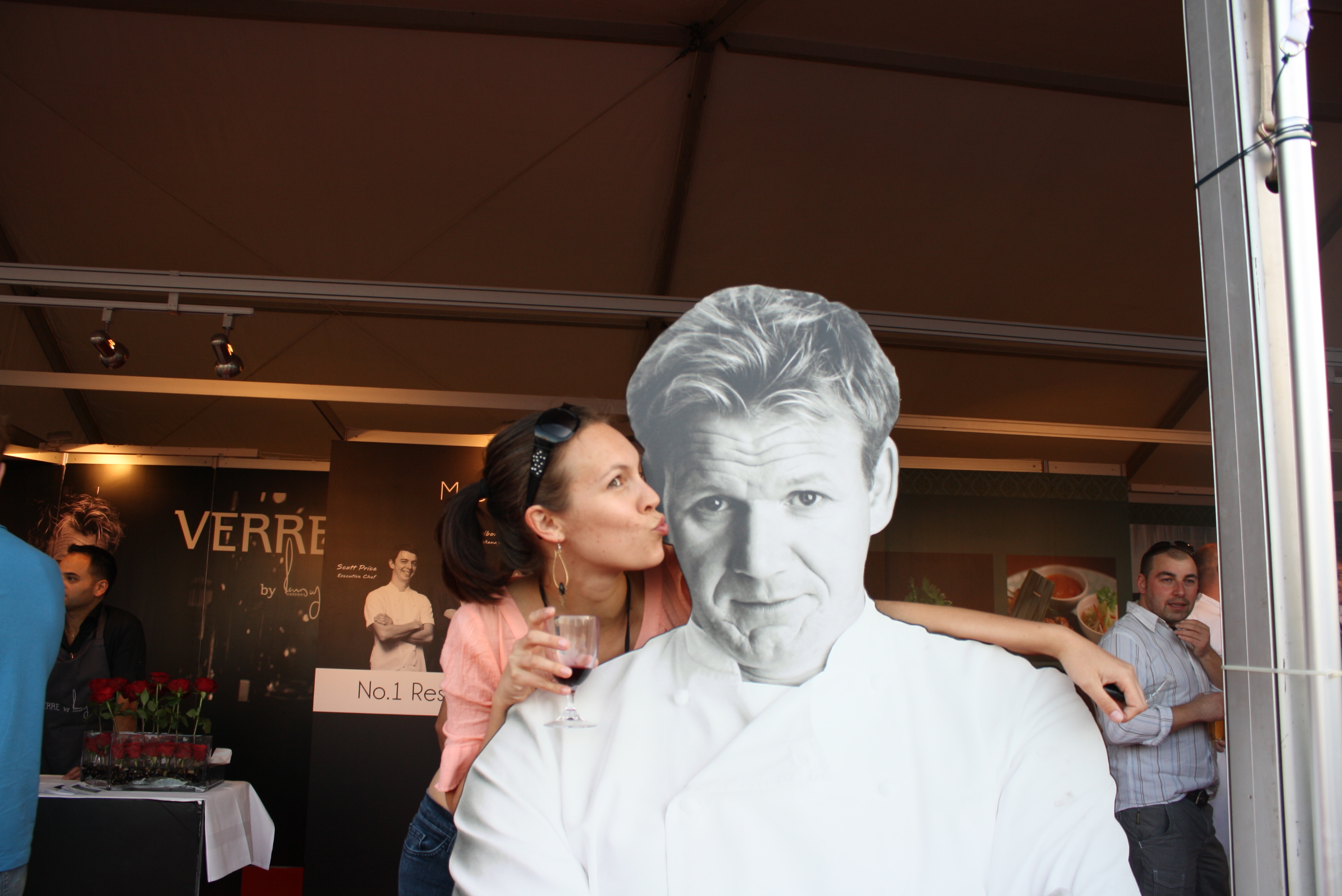
Every city has its niche. None compete with Chicago Blues, Melbourne street art, or Hong Kong Dim sum chefs. If I were to pin-point Dubai’s most notable expertise it would be the city’s deliberate interweaving of architectural styles, cultures, fashions and cuisine. There was no better representation of this than last weekend’s Taste of Dubai set to a pan sizzling soundtrack and against the backdrop of media city. The yearly event boasted big name chefs Gary Rhodes, Jun Tanaka, and a sampling from restaurants new to the Dubai scene like the much talked about Ivy, set to open in May. The best part of the event, besides a gorgeous day, plenty of schmoozing and the goody bags was of course the ample wine selection…which is why most of my reporting comes from my experiences earlier in the day….before I came out of the lady’s wearing a different pair of shoes?
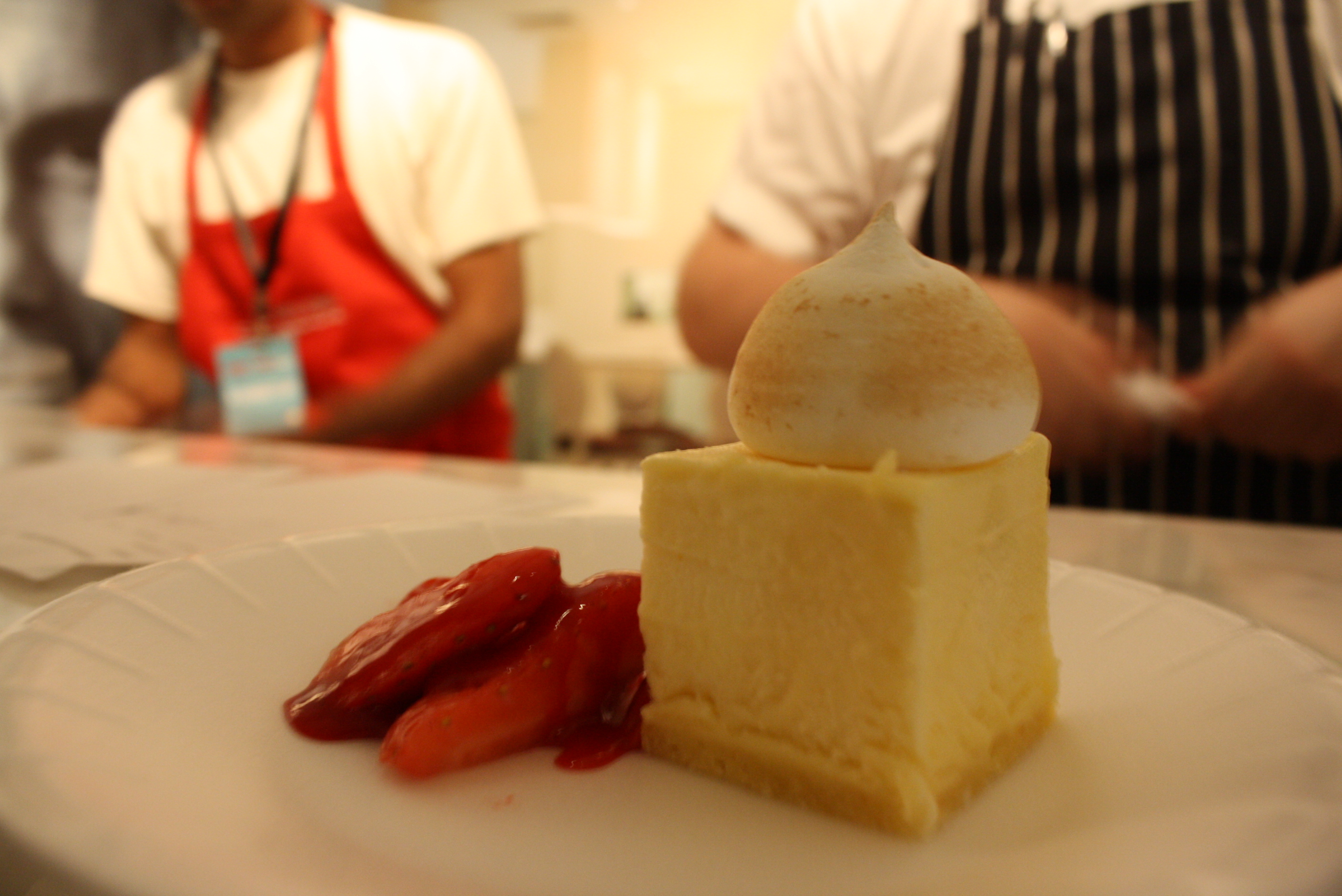
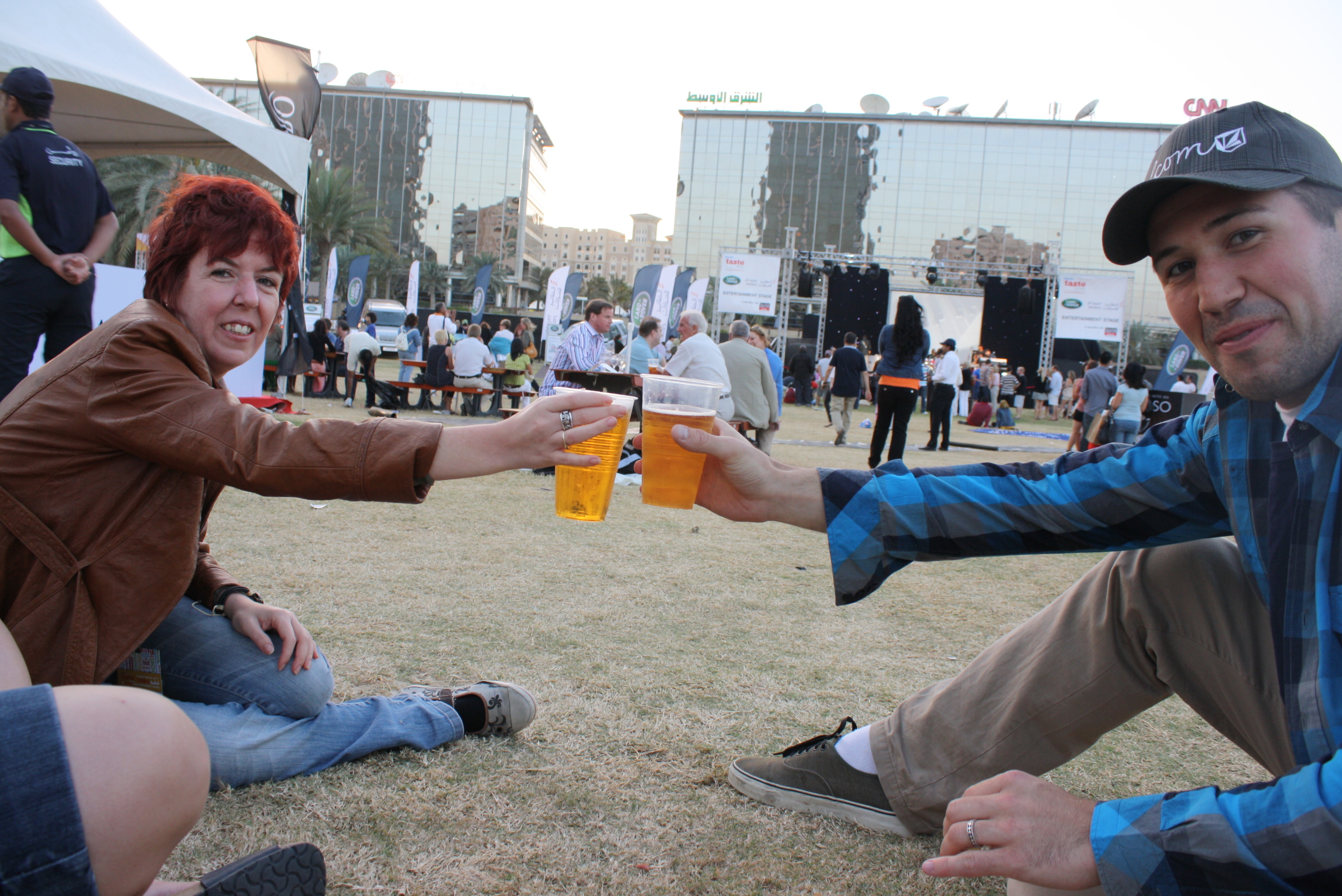
Dubai is a four hour trek from our home in the Western Ruwais desert, but I woke with a craving for tapas and the big city so we made the trip, checking into the event without even dropping our bags at the hotel first. The festival celebrated its fourth year in style with twenty-two restaurants serving up International fare. Between cigar pairings in the MMI lounge and crispy fish n’ chips it was difficult to decipher a favorite tasting, until I got to Certo. Chef Matteo Bertuletti’s rumored goat cheese, blueberry and porcini ravioli dish had me happily in line. An hour later, finished with my ravioli I was still in the Certo tent, Montalcino in one hand and strawberries drenched in balsamic in another, convincing me that returning to Italy would ensure that I never went hungry again.
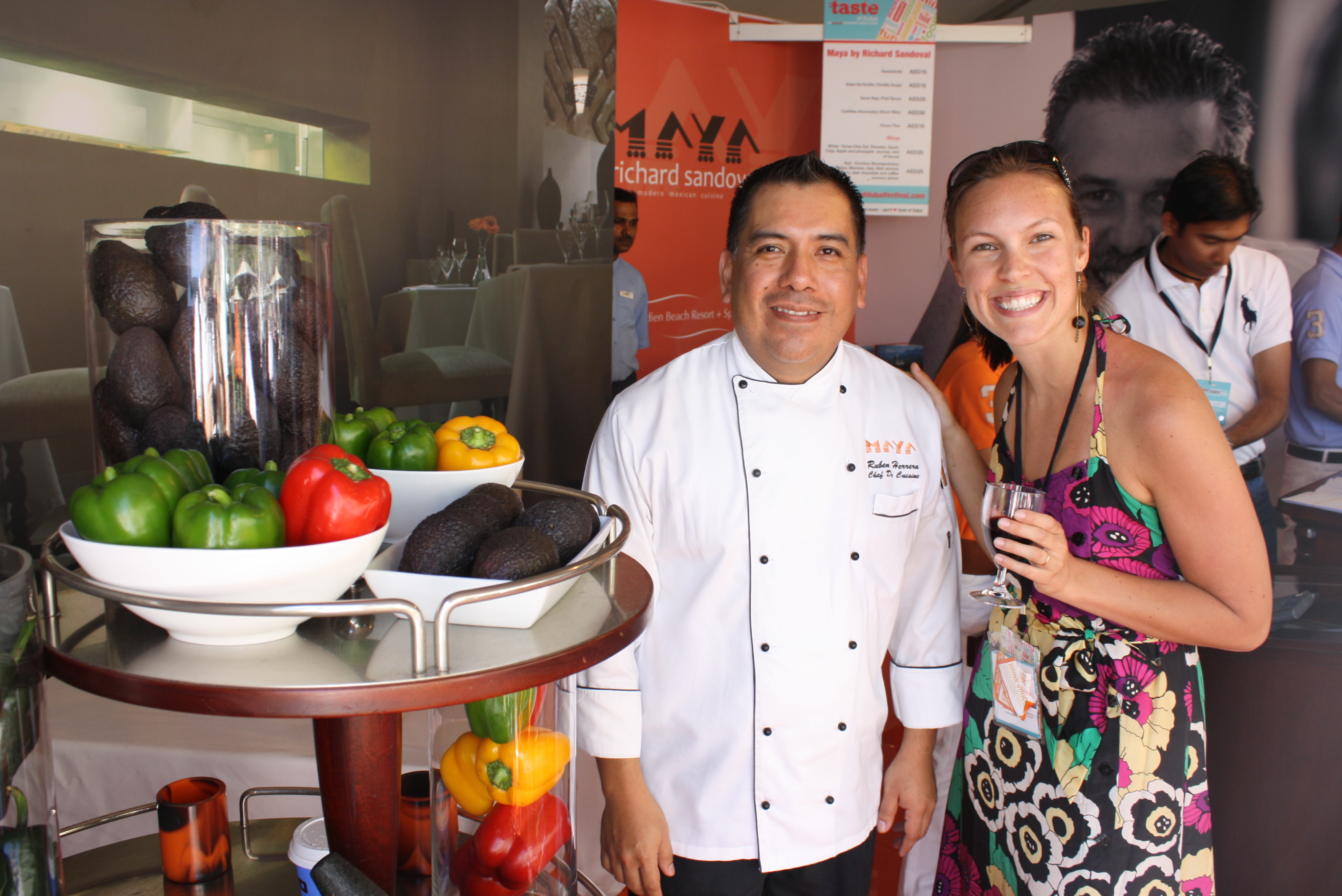
With so much international food abundantly available in the UAE it is a shame to admit I still have a list of fare that I consistently miss while living overseas. Avocados is on that list for me, a really pricey and rare treat in many parts of the world, so you can imagine my version of a zig-zagged b-line upon spying a table of beautiful Has avocados ripe as can be. The man standing next to this table was of course an added bonus, Ruben Herrera executive chef of Maya by Richard Sandoval located inside Le Royal Méridien Beach Resort and Spa. Ruben was gracious enough to whip up some guacamole for us and let me pick his brain about the challenges of bringing Mexican food to an international audience. Ingredients for many dishes, from a simple pico de gayo to chile relleno are often difficult to find and Ruben remarked on his resistance to settle for anything but the most fresh and traditional ingredients. The hotel offers a weekend lunch at 300AED for use of all pools and facilities as well as lunch from Maya. Advance bookings required.
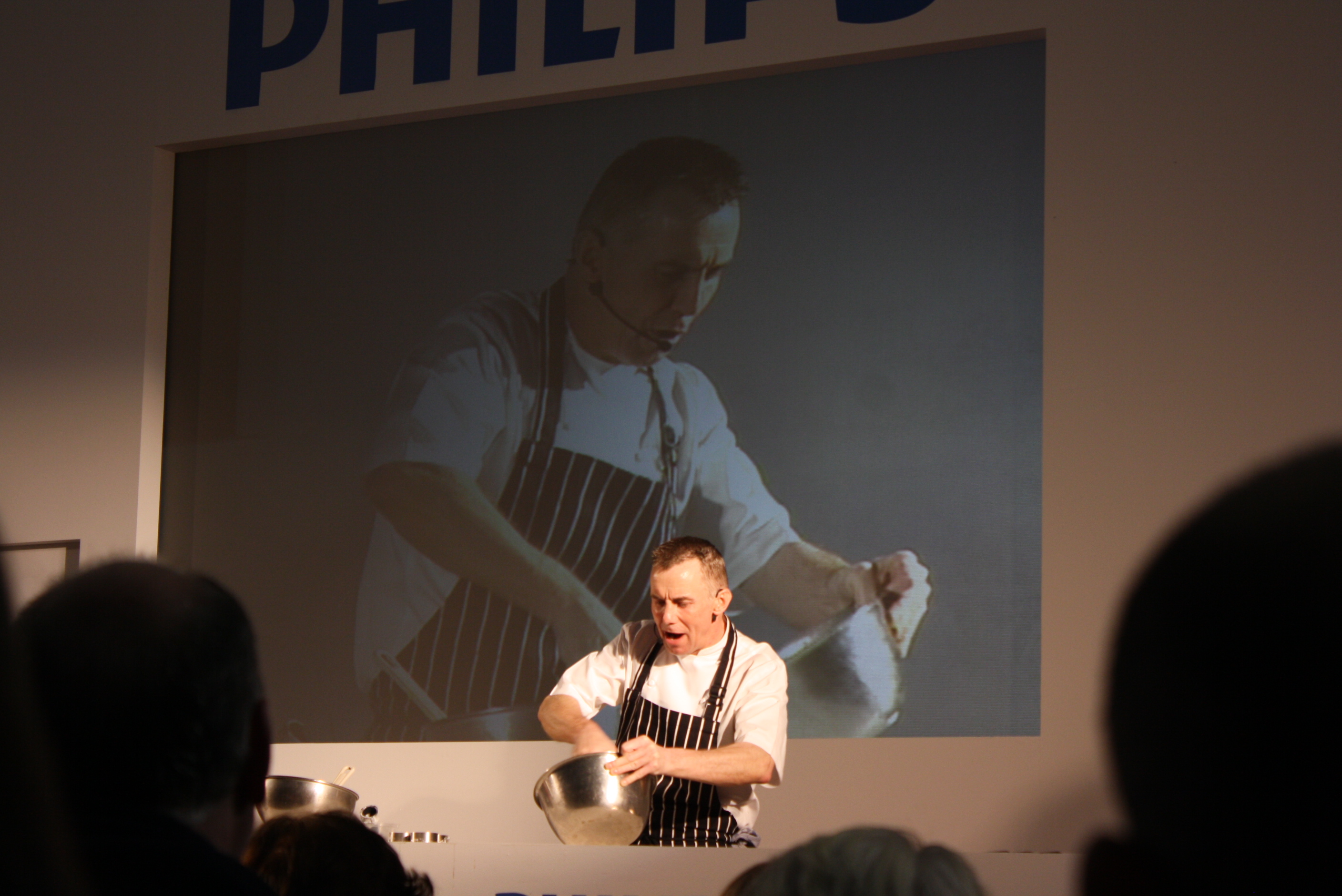
The celebrity stage and cooking demo classes brought food patrons, amateur chefs and culinary celebrities together in a fun way! Well known for over a dozen cook books and television show “Rhodes around Britain,” chef Gary Rhodes excited the crowd about his food and even gave a few pointers after admitting his aversion to mechanized tools in favor of an old fashioned “hand whipped” approach. Prior to chef Rhodes was the impeccable Jun Tanaka who prepared steamed sea bass in an orange glaze so mouth-watering that the stage was rushed faster than a Justin Bieber concert in order to snag a bite.

With the evening winding down I grabbed a spot in the last cooking class of the evening with the adorable and highly talented chef Scott Price from Verre, to prepare a seared sea bass and cauliflower puree. Always the good student I grabbed a station in the front and made sure my apron cleared the bunsen burner, can’t say the same for other chefs during our course. With the menu translated into nine languages, cooking with chefs I have only previously seen on the food network who have travelled tremendous distances, and drinking an Asti Spumante imported from a region I have not visited in nearly six years, I saw Dubai not merely a melting pot for culture but as a city epitomising the postmodern ideal. Quick to grow into a world renowned hub for international cuisine, Dubai’s food makes this city a unique place to nosh. Hopefully I’ll see you back next year at Taste of Dubai!
Sand Sand Everywhere: First and Last Desert Safari
Posted on March 7, 2011 1 Comment

The sun may go down in the UAE but the fire still burns bright. Atop a tall spire, not quite as far in the desert distance as I would like is an instant reminder that I live in a country with the seventh largest oil reserve. This reminder, along with an expansive sand box for a backyard and a sea of women cloaked in black abayas, is exactly what I hoped for when I signed on for a year in the United Arab Emirates: to be culture shocked beyond a recognizable doubt…or anything recognizable for that matter. Oddly enough I search for these giant torches in the sky as something to break up the monotony of sand, on evenings when I could swear no life force besides myself is stirring across mile after mile of desert. While wandering through the desert may feel futile, camping in the desert is just the adventure necessary to bring this landscape to life, and I was fortunate enough to see for myself last week as I embarked on my first desert safari with Happy Linkers tour company.
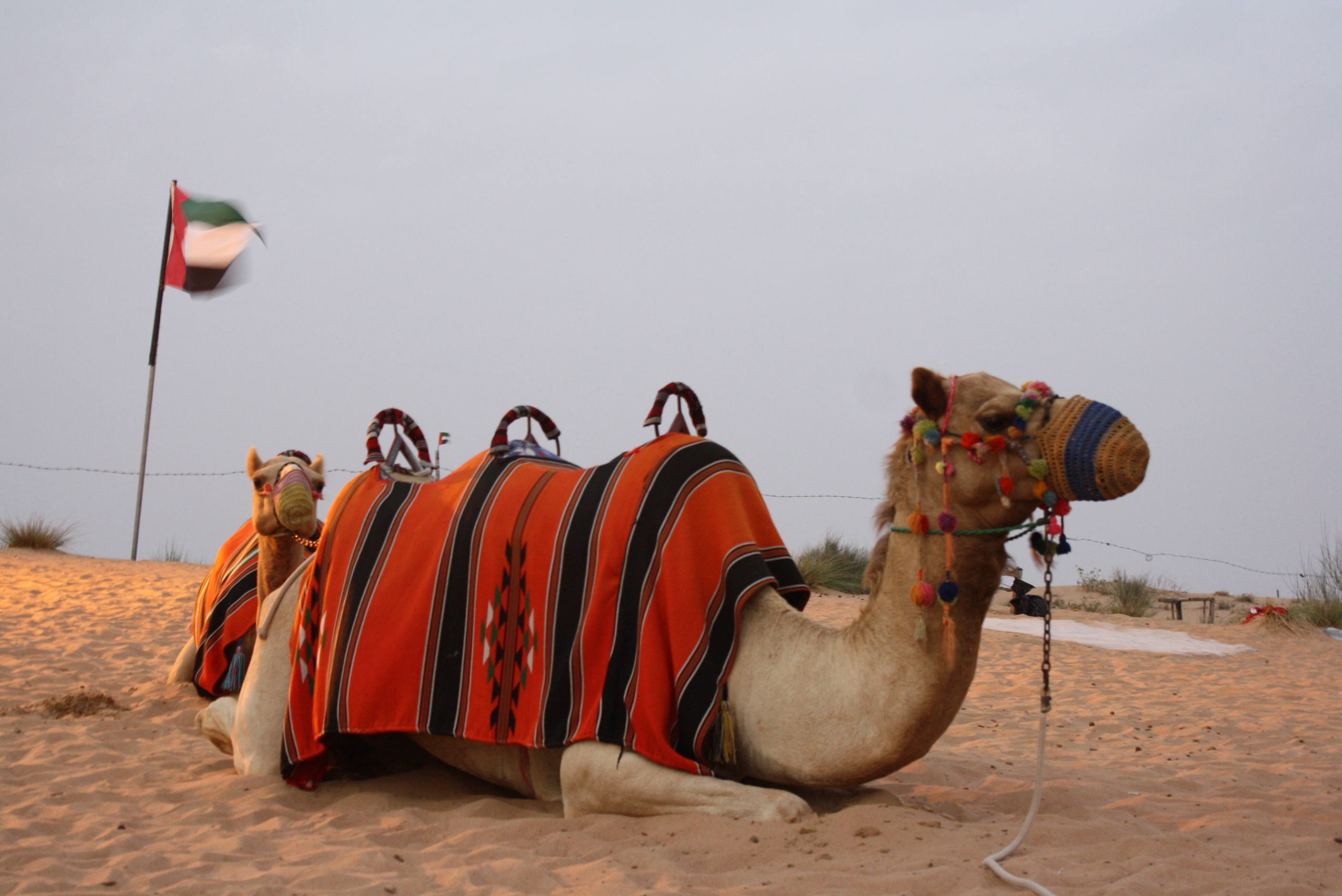
Happy Linkers operates daily trips out of Dubai with pick-ups from the Dubai Mall. So, along with fifty SABIS teachers I dawned my smartest camel riding attire and rode deep in to the Arabian desert for a night to remember. By 10 PM, hands fully henna’d, lungs brimming with sheesha, and visions of belly dance fairies shimmying in my head, the hot, white sky over the Arabian desert had switched off and the headliner entertainment came on, full horse….I mean full force. The “Horse Dance” is based off a long standing adoration with the Arabian breed, dating back nearly 4500 years. The show itself was reminiscent of a fantastic Halloween costume a friend galloped around Bellingham in whereby he represented the front half of a unicorn, laying the weight of the back half on a pair of roller skates. He easily zip from one party to the next without slowing down enough to have his tail pulled. The two men operating the horse for the safari performance must have a system worked out or at least a coin toss before shows to flip for who gets stuck in the rear.
After some Arabian rump shaking, sword swallowing and whirling dervishes, the desert reminded me of its presence and vastness by doing something that any “I told you so” landscape might do. Just when I was beginning to think of the desert as predictable, that same white sky that had just a few hours earlier cooled itself into a an indigo night cover, opened up its menacing eyes and cried great big rain drops onto our camp. I ran for a tent, Matt ran under a camel and just like that I had been tricked by the land.
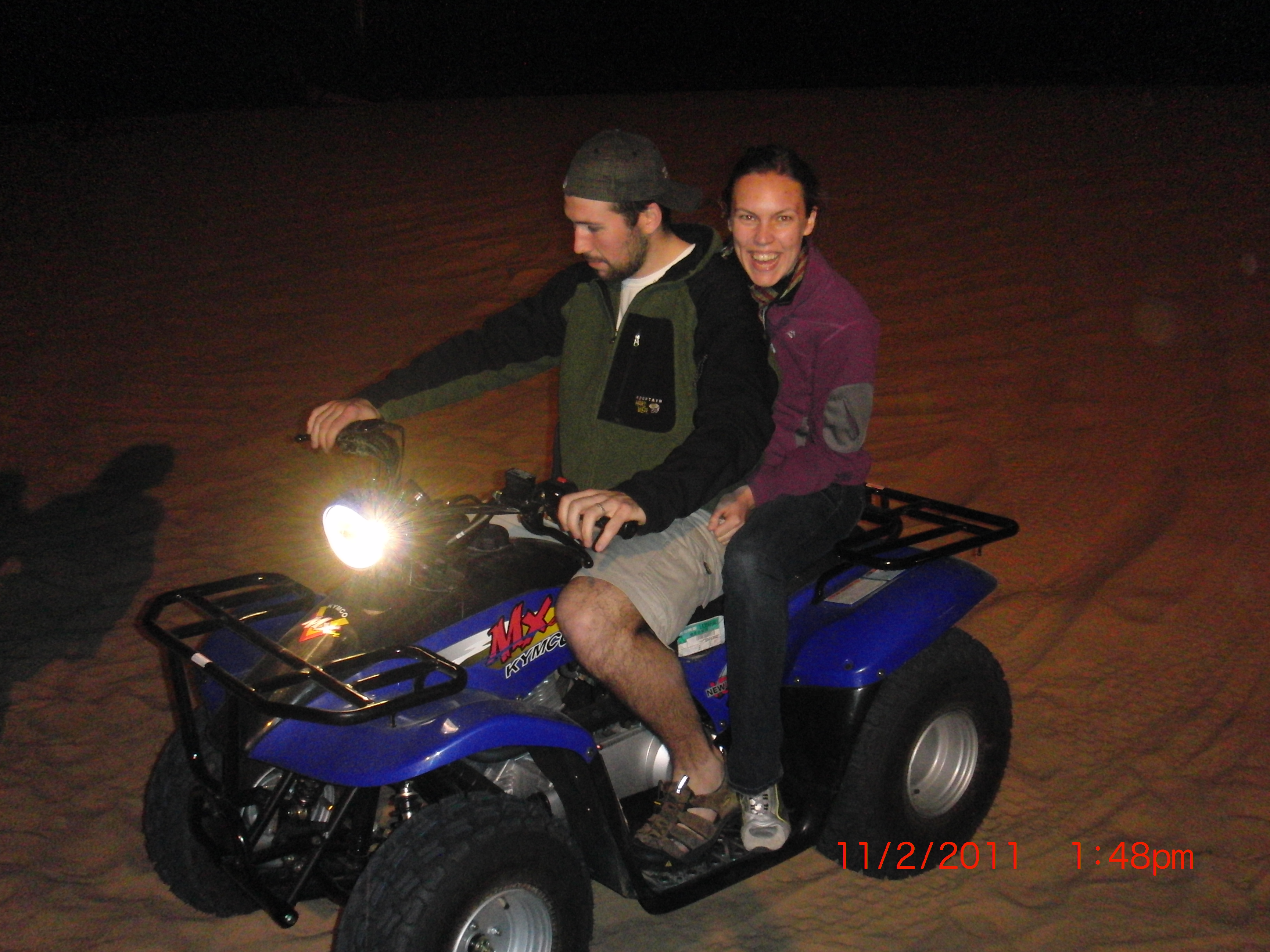
The safari was my first and last time I will sign on to willingly sleep in the desert as a recreational activity, not necessarily because when the unmistakably hot sun goes out the temperature quickly drops, not because camels are far from being cuddly creatures and not because a sand pillow is much less comfortable than a bean bag chair, but because the desert scares me. It is as mysterious to me still as the first class lounge and as unpredictable as a Middle Eastern revolution. I am walking away with a losing record: Desert 1, Teach Travel Play nil.


 Teachtravelplay's Blog