A is for Abaya, B is for Betsey Johnson

I don’t like to be told what to do. Tricky character trait when faced with the challenge of camouflaging one’s self in the fabric of a culture not your own. After failed attempts to acclimate on the scene by drinking too much tequila in Mexico, or by wearing stilettos on Italian cobblestone until my feet resembled a fresh tomato, I have a new approach to camouflage, actual camouflage! If I can’t weave myself into the fabric of Arabic culture then why not slide my skin into the fabric of the traditional Arabic garb? The abaya stands in my mind as the cornerstone of the world’s often misinterpreted view of Islam. It seems that I have become so fascinated by the history behind the long black veil that I am now wearing one.
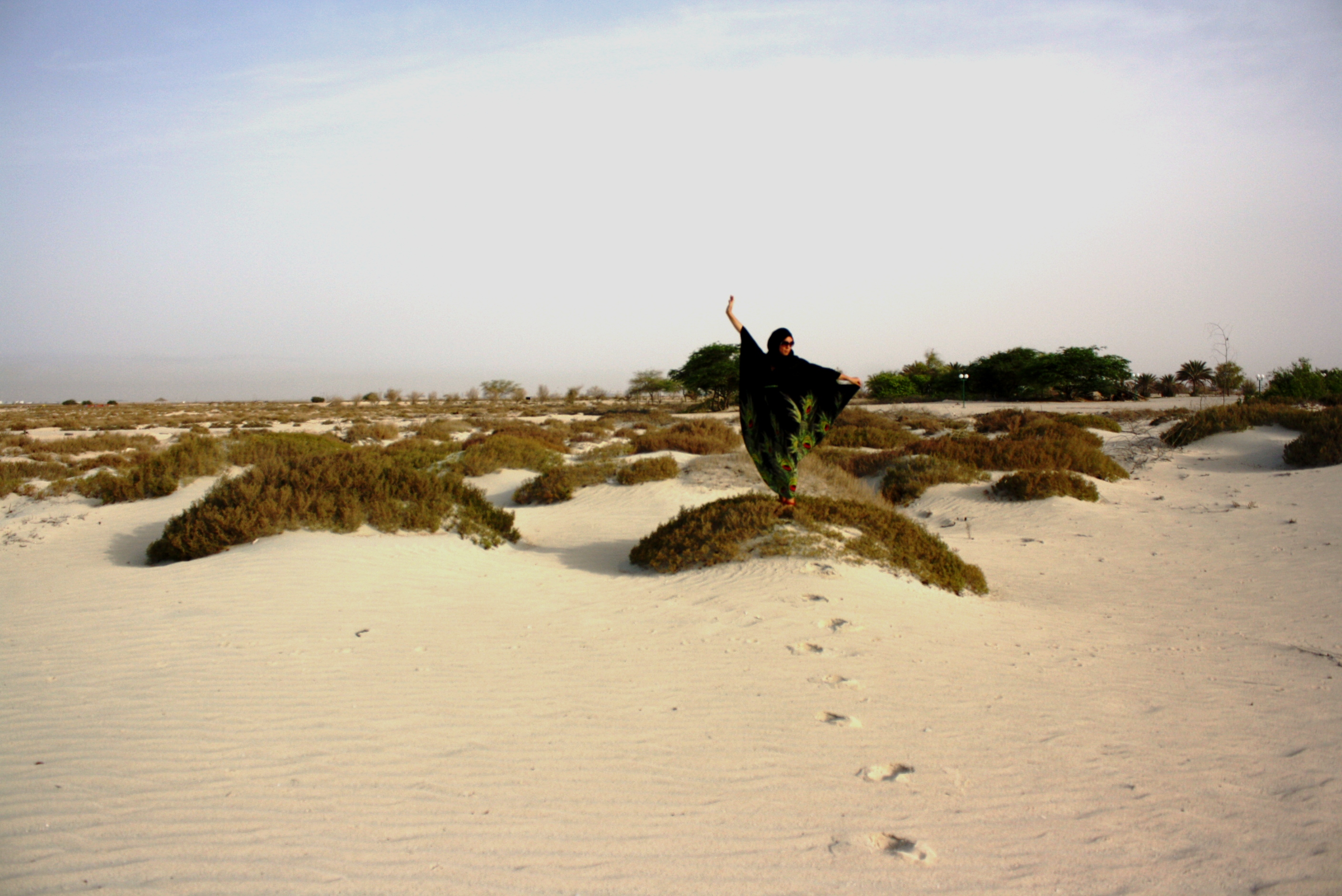
I was doing what any party dress whore would be doing on a Saturday afternoon in Dubai, perusing Betsey Johnson for some Summer crazy. “Too much zebra there…the bedazzled mermaid train might weigh me down a bit…wait…is that what I think it is?” On a very special rack, in a very special store I found the ultimate, oxymoronic outfit: A Betsey Johnson abaya. Long, black, with just a hint of flourish in the form of peacock feathers making their way up the train of this otherwise somber gown. SOLD! After carrying my purchase around the Ibn Batuta mall, observing women window shop through their sheer, black veils, I pondered further the origins of the abaya I now owned.
For initial research I turned to Wall Street Journal correspondent Geraldine Brooks. Brooks, who spent six years covering the Middle East, has written a frank collection of essays in Nine Parts of Desire, The Hidden World of Islamic Women. Her book stems from her experience working, living and traveling with the women of Islam directly following the death of Iranian religious leader Ayatollah Khomeini. The timing of Brooks’ trip to the Middle East coincided with a turning point in Islamic history, while the world watched and questioned 1300 years of religion. Brooks points to The Chapter of the Light from the Koran in which it instructs women to “…Lower their gaze and be modest, and to display of their adornment only that which is apparent, and to draw their veils…” This chapter in Muslim religious text dates back to the time of Muhammad when it became important for men to view women only from “behind a curtain” in order to preserve a woman’s dignity and lead Muslim men away from temptation. The interpretation of this passage in the Koran has been dissected by theologians, historians, Christians and Muslims alike. But if it is one thing I have learned about culture and religion, these speculations don’t matter.

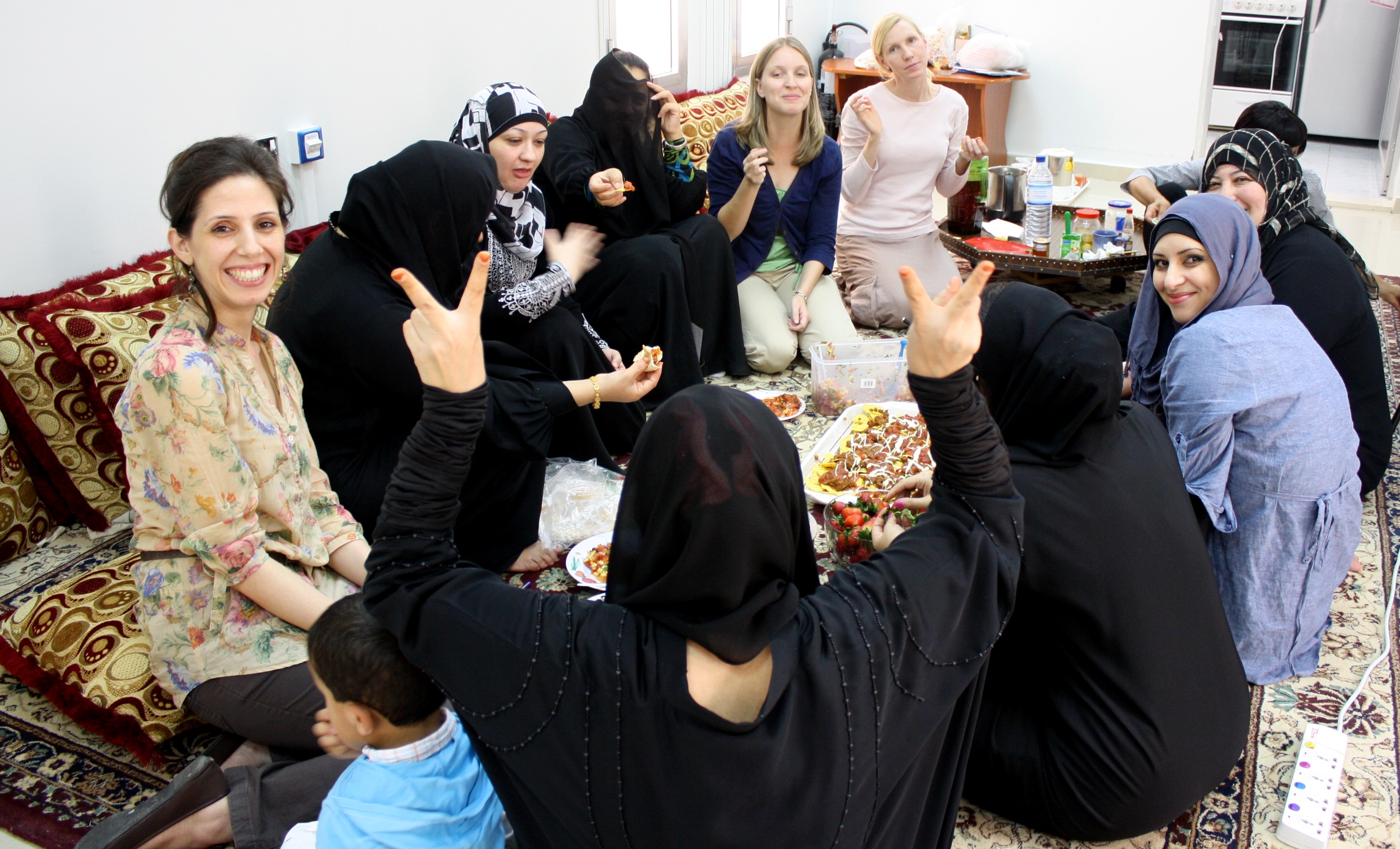
When I was living in the Northern Italian home to the Shroud of Turin, I discovered that for the devout Catholics, the carbon dating on the shroud to determine if it in deed was pre-dated to the time of Jesus Christ, was a pointless exercise. It was in fact the absence of the Shroud, on its trips to a lab in London, that raised the most upset and discussion among the Italian Catholics. For Muslim women, the question of possible misinterpretation of The Chapter of the Light makes little difference in their devotional practice. From my experience working with a staff of Muslim women, the veil is entirely a choice, important as much to their religion as to their exercises in social freedom. The veil allows these women to go out in public gaze, confident that they are preserving their virtuosity.
During his eight year rule of Iran, Mohammad Rezā Shāh Pahlavi imposed a modernization of the Middle East that again questioned women’s rights, particularly their dress. Women were discouraged from wearing their veils in an attempt to westernize the Arab state under the Shāh’s rule. The result was Muslim women retracting from public, leaving their jobs, their education, and staying in doors where they could avoid the gaze from men outside their immediate family. The veil symbolizes a discourse in Muslim culture that can not be easily radicalized and abandoned.
The women I have befriended in the UAE wear their abayas and veils as a symbol of their devotion, they wear them because their mothers and grandmothers wore have worn them since the time of Muhamed. The surprising twist is that they wear them as a fashion statement too! Slouchy Z is just one of the fashion houses to modernize the abaya, following fashion trends from the West and incorporating these into their designs for the Spring/Summer 2011 collection. Although the garment’s roots are sewn into the cultural heritage of the Middle East, the Abaya must also function as a piece of clothing, changing from one decade to the next. Within the all female staff in the school where I teach, a wide range of abaya interpretations can be found. Some women opt for a somber, black robe, while others find flourish wherever possible, carrying jewels sewn to hemlines and wide, Morticia Addams inspired sleeves. My Abaya represents my attempt to understand and participate in this 1300 year old tradition of covering oneself, and at the same time bringing the party back to party dress wherever in the world I find myself.
Happy Summer dress shopping!


 Teachtravelplay's Blog
Hey Emily,
Love the post. After growing up in Jeddah and wearing my abaya for 8 years, it’s still hard to explain to Americans what exactly the abaya means to people. When I lived there, the fanciest abayas got were a pretty, dark blue. It’s interesting to see the embellishment and expression that’s changing in that world.
Hope Dubai is awesome, and you guys are doing well. Look after yourselves!
-Lynsey
Thanks for reading! Do you still have your abaya? Would be fun to see expats in their garments now back home.
Nice
Oh my- what a photo shoot you had with your Abaya. I like the fact that you’ve educated us on the history and the culture. I was just thinking of you and this post last night so I snuck over to see if it was up. I got a little teary-eyed looking at such beautiful pictures of my Em. Miss you…
Thanx Salty! Many peep/abaya shoots to be had in the near future!
Hi Emily…
I like what you wrote about Dubai and I’m going on October 2011. I really really love your abaya from Betsey Johnson…so stunning !!!!! Could you give few information please, so I can visit Betsey Johnson shop in Dubai. If you don’t mind just email me : y_wiandari@yahoo.com
Is it expensive ?… 🙂 Thank you Emily xx
Living in Dubai myself, I liked your story so much, that I linked it to a photo on my blog (Michael’s World Through The Lens). Have a look, hope you like it.
http://www.mwttl.com/undercover-in-jemen
Michael
Hi Emily and Matt from the beautiful tropical rainforest of Sarawak.
(live in Bintulu; work in Tatau District in five Iban schools; get to one by river~love it)
I hope you continue your excellent blog this year since
‘I read about you~
before I met you and
I hope to read about you now!’
^ a musical reference your parents can sing for you…
See ya!
Bonnie Meehan
teacher, traveler, Canuck, and fan of this blog
Hi Bonnie! The rain forest is exactly where I want to be right now, what a great adventure you are on! Stay in touch, best wishes for a new year!
I am really looking forward to staying home soon (when I find home) and just reading your blog!
So, can you visit me in Borneo? You and Matt would likely want to hike up Mt. Kinabulu in Sabah for the sunrise (ropes and all… I’ll pass…). Where I live we can visit Semilajau, a beautiful National Park (near Bintulu) Everywhere here the green, the ocean, the rivers are a feast for the desert weary. It’s just sad about the environment though…
Emily,
You look gorgeous!!! Makes me want one… So much fun reading your blog!!!
Miss you guys.
Erin
It is very interesting to read about you and your abaya. I’m studying strategic communications in college right now, and I’m taking a class on global reputation management.
Just recently, we read about Dubai and the UAE, as well as the protests in Egypt and the incident of the women that was beaten and stripped almost naked in the street, revealing her blue bra. We had a lengthy class discussion about whether it would be ethical or not for Victoria’s Secret to get involved in the situation in Egypt because so many people had somehow managed to bring their brand into the issue just because the woman was wearing a blue bra. It was a very enlightening discussion. I was amazed at how westernized and biased public relations activities can be, and it was interesting to see how, by applying our newly learned communications skills to what we had learned about Dubai, the UAE, and the protests in Egypt, we learned that public relations, people, and cultures are often not as they seem.
My point in commenting on your blog post with such a lengthy story is just this: to say that it’s inspiring to hear about your experience with your abaya. So many people in the U.S. are under the impression that this garment is an oppressive one, but hearing about your story (especially after learning about what I’ve learned about in class) reminds me that it’s important to LEARN about different people before commenting on or interacting with them.
Thanks for your wonderful insights!
-TB